
Dirty Work Is A Ladder
How to gain influence through the mundane
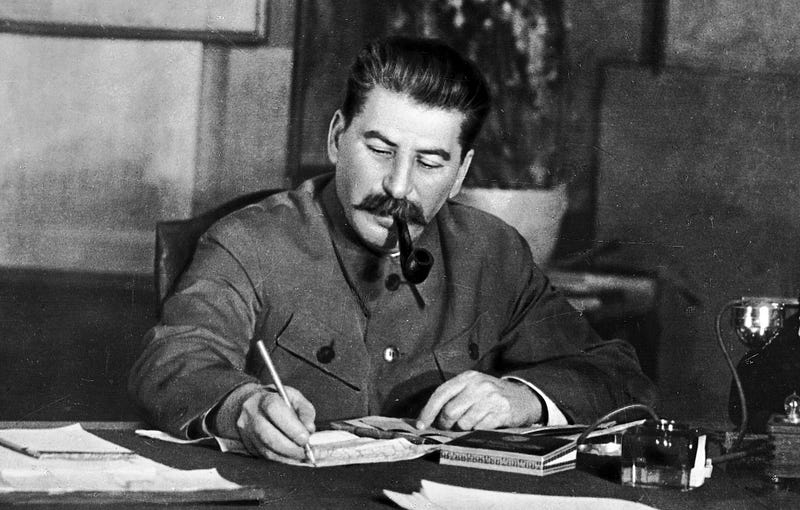
Joseph Stalin was an easy man to dislike. He was crude and boorish, with a pockmarked face and a leering smile. He spoke with a rough accent and was not a polished intellectual like his fellow Communists. He had no talent for public speaking or military command, and his contemporaries thought he was an “outstanding mediocrity,” unfit for leadership.
Despite these obstacles, he climbed the ranks of the Russian Communist Party and became dictator of the Soviet Union from the 1920s until his death in 1953. He practiced a strategy that was as simple as it was effective: he did the work no one else was willing to do.
Stalin’s Unlikely Rise
Leaders of the Communist Party like Vladimir Lenin, Leon Trotsky, and Grigory Zinovyev were regarded as brilliant intellectuals and dashing revolutionaries. They were busy men — between giving speeches and leading party conventions, they had no time for mundane administrative work. Fortunately, they had someone they could pass off all the boring grunt work to.
Someone needs to staff the agricultural inspection commissions? Low-level work, Stalin can handle it. Need a liaison between the political directorates and the secret police? Just paperwork, Stalin can handle it. Someone needs to oversee food procurement in the southern regions? Dirty business, have Stalin handle it.
By taking on every tiresome task that the party leadership handed off to him, Stalin gradually gained expertise and control over the sprawling Soviet bureaucracy. No committee work or tedious paperwork was beneath him. Rank-and-file party members came to see him as the man to impress — after all, he had appointed them, approved their budget, and oversaw their department work. He built up his cadres of loyal supporters throughout the Soviet Union and became an architect of the state’s byzantine political structures.
Lenin, the leader of the Soviet Union, was debilitated by a series of strokes in the early 1920s. He penned a letter before his death (possibly composed by his wife) in which he urged the party to remove Stalin from his party positions, worried that the arch-bureaucrat had gained too much power:
“Stalin is too crude, and… unacceptable in the position of General Secretary. I therefore propose to comrades that they should devise a means of removing him from this job and should appoint to this job someone else who is distinguished from comrade Stalin in… that he should be more tolerant, more polite and more attentive towards comrades, less capricious, etc.”
But Lenin was too late. When he died and a power struggle ensued among the Soviet elite, it was Stalin who held all the cards. The brilliant theorists and party luminaries who always looked down on Stalin found that they had no power to stop him. When Stalin’s rivals tried to remove him from power at the XIVth Party Congress in 1925, only a tiny minority of party elites supported them. The Central Committee, now under Stalin’s sway, voted them down in a landslide.
Doing The Dirty Work Gives You Power
Stalin was a monster of the 20th Century, but we can learn a valuable lesson from his rise to power. What he understood that his rivals didn’t was this: Dull administrative work lacks glory, but it is the lifeblood of a complex organization. This is as true in today’s corporations, nonprofits, and universities as it was in the Soviet Union.
If you can understand which departments handle what work, how it’s done, and who does it, you already have a tremendous advantage in your organization. If you can take the further step of having a hand in the administration itself — helping to draft project plans, sitting on hiring panels, reviewing internal audit reports — you will quietly gain influence and expertise in the inner workings of your organization.
Oftentimes we work under managers or leaders who are ‘big picture’ thinkers — they want to achieve a bold and ambitious vision, but they don’t have the time or interest to dirty their hands with the mundane work these visions require. This presents you with an opportunity: If you cannot gain influence and authority through a more direct path, you may be able to gradually master your ecosystem by taking on the necessary work others don’t want to do.
Understanding The Iceberg
The leadership of an organization is like the tip of the iceberg: it’s the visible part that attracts all the attention, but it’s less than 10% of the entire structure. Much of the actual work occurs ‘below the waterline’. This is the assembly line building products for a multinational conglomerate, the earth-mover equipment for a mining company, or the front-line workers in a big box retailer.
If you understand the 90% of the iceberg that is underwater — the ground level where the work is actually done — then you will come to know the organization better than the people who are nominally in charge.
There are many benefits to doing this kind of work. By doing it you can:
1) Gain a comprehensive mastery of your organization that others don’t have.
2) Build a robust network of contacts and colleagues well outside of the scope of your team.
3) Hone a diverse set of skills that most people with a narrow focus don’t have.
4) Anticipate threats and opportunities that would not be visible without the level of gritty detail that you will see.
5) Build credibility with your colleagues and leadership for being willing to get your hands dirty.
How To Get Started
You can begin by simply looking out for tasks and projects that others don’t want to do. Typically this work will be routine, tedious, and thankless, but by doing it you will gain expertise and build contacts throughout your organization. Common examples include:
- Build relationships with new hires, interns, and entry-level employees
- Learn about your company’s trust and safety issues, common customer complaints, or what your staff is grumbling about
- Volunteer to sit on hiring panels
- Manage minor third-party partnerships
- Perform internal audits or learn more about the company’s finances
- Visit branches, departments, or staff in the field
- Represent your organization at conferences, job fairs, or industry events
- Draft postmortem reports for projects or initiatives
- Work on internal/external presentations for your team or organization
Over time, opportunities will arise when you are the person who knows all the necessary teams involved. You anticipate the solution (or the problem) that no one else in the room knows about. You will have gained a greater level of credibility by putting in the time with your sleeves rolled up.
Examples
I worked with a project manager who was assigned to a major new business initiative at a large transportation company. His assignment was just to make sure all permits and licenses were acquired and maintained. It was a small administrative role with no authority or insight into the broader project.
By establishing a task-tracking and communication system between departments, other managers gradually came to rely on him to provide updates and act as a liaison with other teams. After several months, he was a stakeholder in weekly meetings for the Operations, Finance, Legal, and Real Estate teams, all of whom relied on him to keep them apprised of potential conflicts with the other departments. He had turned a quiet, thankless role into a node from which he could learn what other teams were working on and build relationships, which he later translated into a promotion with greatly enhanced responsibilities.
At a different company, a coworker of mine was tasked with drafting his team’s budget. Normally this would have been his manager’s responsibility, but the budget draft would pass through several revisions and an extensive approval process, so instead the manager assigned it to my coworker.
My colleague put in the necessary work to make a quality first-draft, which he made sure was circulated to the Vice President of the department. When the company went through a financial downturn and laid off 30% of its staff, my coworker was retained because the company leadership had seen his ability to handle the dry budget planning which had bored his manager.
When To Use This Strategy
This strategy will work best if you believe in the cause. Stalin was particularly effective at his plodding labor because he was a true believer in communism. Employing this method will have the most impact when your organization is in early formative stages or going through a time of turmoil and reorganization.
Do the administrative work with a purpose: to build your skills and understanding of your organization, while gaining expertise and influence. Don’t let others take advantage of you and don’t perform administrative work for its own sake, unless this is an area of career interest to you. Because this work is painstaking and often out of the public spotlight, you will have some freedom to grow and expand the actual responsibility to encompass other jobs, just as Stalin did.
Final Thoughts
Many ambitious people want to be the center of attention, but the person who understands how the system is plumbed will edge out the competition over time.
Someone willing to dive into the dirty work of an organization is more useful and more productive than their peers. Political maneuvering aside, a good manager and a healthy organization will recognize the person who works quietly and gets things done and will reward them.