
Digital Life IS Real Life
Accepting our digital sides as part of a healthy balance is a good thing.
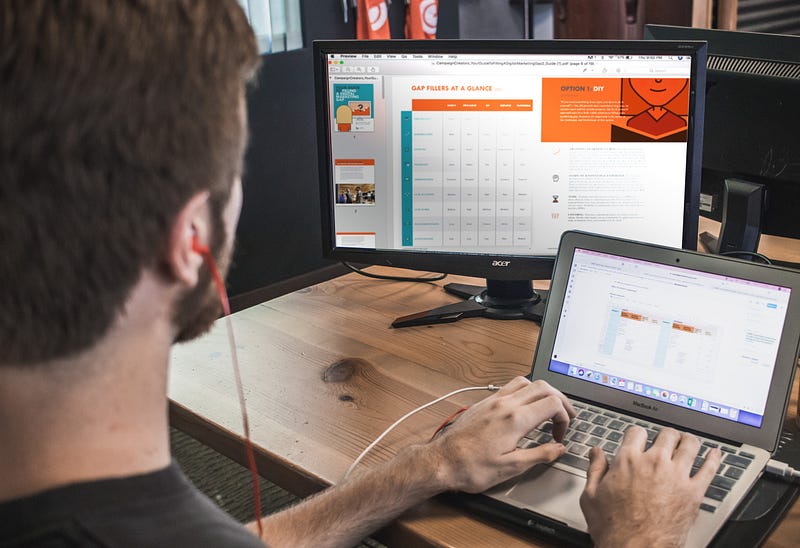
I was 15 or 16 when we received our first free AOL disc in the mail. We’d only had a PC in our home for a year or two, and the CD was a key to exploration of a whole new world. I was drawn into it immediately. As acronyms became part of our daily vernacular, some carried more weight than others. The most illicit was IRL: in real life. Dreaded by parents across the nation, IRL meant that you were sharing real information about yourself, or worse, planning on meeting someone from the digital world in person. The distinction we made between what we did online and what we did in our everyday lives was stark.
In the 23 years since then, digital life and physical life have become so entwined they’re impossible to separate. Many of us sit in front of a computer at work for 8+ hours a day. We carry miniature computers in our pockets, and wear smart watches that can read your heart rate and answer your phone calls. When we don’t have data or wifi, we are hobbled.
The development of our technological world has brought the rich growth of a new realm. Facebook, Instagram, Reddit, MMORPGs, chat programs, and subject-specific social networks like FetLife, Scitable, and Crunchyroll all bring the opportunity to connect with people in ways that weren’t available 25 years ago.
Meaningful relationships don’t require face time.
The concept and practice of forming a meaningful relationship without close proximity isn’t a new one. Catherine the Great and Voltaire never met, but they were pen pals for 15 years; Edith Wharton and Henry James nurtured a life-long friendship based in letters; and Sigmund Freud and Martha Bernays wrote each other over 1500 letters while separated during their engagement. In modern times, camp besties still become pen pals became friends who corresponded for 60 years. Letter writing has long been used between mentors and their mentees, between colleagues, political allies, world leaders, and lovers to develop lasting, meaningful connections.
I admit that I was an early adapter to the idea that online relationships could be just as real as ones where you met someone at work, school, or a backyard bbq. The belief that you can’t make real connections digitally has certainly diminished since my teen years, but it’s still going strong. Somehow, the connection between online correspondence and the written correspondence of times past isn’t made.
Part generational, it’s also based in misunderstanding or mistrusting technology. It’s not surprising that doubt persists in people who take things at face value. Heartwarming stories about love found on Instagram and friendships forged through online gift exchanges don’t draw ratings like that story about the woman who got chopped up by her online date and stuffed in a recycling bin. It’s the same phenomenon that leads people to believe crime rates are rising when they’re really falling: we’re being exposed to the negatives more than the positives.
Digital life IS real life.
Discounting relationships, connections,and friendships because they happen electronically discounts large parts of our very real lives. Creating a separation between my online life and my “real life” does a disservice to people and communities who have made huge differences in how things have gone for me, especially in the past 5 years. Beyond that, it is downplaying how much my digital life has contributed to my finding myself and becoming the person I’m meant to be.
Facebook groups and networking sites are not games, they are real communities full of real people with real desires and hearts, real feelings and ideas. The relationships and bonds we form with these people ARE real relationships. The support, bonding, and exploration we can find within this strange series of tubes may not be tangible, but it is absolutely solid.
I have had an exclusively phone-call based fling, and an phone call/text based long-distance relationship. Both of those were real. I never met those men outside of that context, but the connection we felt with each other and the chemistry was genuine and hotter than some ‘IRL’ dates I’ve been on.
Digital communities provide space and validation.
Exploring online communities is a way to connect with people that we wouldn’t connect with otherwise, to meet people we might not have met in our daily lives. It can be a safe way to feel less alone and start to understand that we’re not freaks after all, even if we feel that way sometimes. A place to realize that the arbitrary guidelines and norms and standards that society has pounded into us are not the only way, nor the right way for many of us.
People exist in an infinite number of situations. For introverts, exploring online before doing so in the physical world provides comfort. It can be a place to dip our toes, to find out there are people like us, and to gain confidence. For people who are limited by geography or circumstance, digital life can provide a a place they can connect until they can get somewhere with fellow like-minded people.
Our online lives don’t stop at the edge of the screen.
I recently read a piece of writing in an online forum where the writer talked about online life vs. real life. Most of it had to do with how she feels things here that she doesn’t feel in the ‘real world’ — desired, accepted, comfortable, attractive, sexy etc. The piece stuck with me, and eventually I realized why.
Our online lives absolutely carry over into our physical existence. There’s a difference between keeping your activities private and keeping your true self and personality hidden. I found a valuable online community on FetLife, before I was open about being polyamorous or kinky. I learned things about myself I never could have without the support of the sex-positive community. I don’t necessarily walk around shouting about being non-monogamous, loving rope, and having a submissive side. Still, this is who I am all the time.
The joy I feel from spending time exploring these sides of myself? It shines through every day. No matter who I’m talking to. The confidence I get from knowing someone liked something I wrote about being tied up, or enjoyed my photos, or told that I am lovely or beautiful is not only with me when I am sitting at my laptop or scrolling on my phone. It lingers to times I’m at work or out with my friends. The way I feel about the world and about love and relationships and intimacy? They bled into my everyday life and changed my outlook on the world even before I was ready to talk publicly about them.
Negative interactions online have real effects.
On the flip side of all that positivity, it’s necessary to recognize that the harmful effects that negative digital interactions can have are very real. We need to stop treating online hate speech, threats, and assaults as if they’re less serious and damaging as ones made in the physical world.
When I receive unsolicited pictures of mens’ genitals (read: dic pics), one of my go-to responses is to tell them they’re assaulting me. Some people would balk at this and tell me it’s not assault, it’s just a photo. But it’s pornography and I didn’t ask to see it. To me, a penis is a penis. It doesn’t really do a lot of damage to my psyche, it makes me feel annoyed and disrespected. For some people, though? People with a history of sexual assault or gender dysphoria or numerous other things? It could be extremely triggering and damaging.
If a man walked up to me on the street and whipped it out, saying “look what you did to me by existing,” he would be arrested. I’m not suggesting that we arrest every guy who sends an x-rated picture. But it’s far past time that people understand it’s a serious offense that has real effects on the person receiving their messages.
Accepting digital life as part of a healthy balance is a good thing.
Digital communities and social media can certainly be an escape, but if you are happiest online, it doesn’t have to be the only place that you feel happy. If you feel beautiful when you’re there, then you are beautiful. Not just when you’re online, but always.
If you feel accepted here, then you are accepted as a person, and if you run into people who don’t accept you when you’re out in the world? Screw them! There will always be people who don’t find you attractive or don’t like you for whatever reason. Not everyone can get along all the time. But that doesn’t mean that they are the majority or that you know what people are thinking. It certainly doesn’t mean that you aren’t perfect, worth it, amazing, beautiful, desirable, and wonderful.
Accepting our digital sides as part of the balance of who we are as people is important. Recognizing that it’s okay to form real connections this way, that there are healthy sides to screens and benefits to social media is not something we should be apprehensive about.