
Digital Health- a revolution
We are facing a real conceptual revolution in the approach to health, which brings with it not only new opportunities related to the treatment of diseases, diagnosis and therapies.
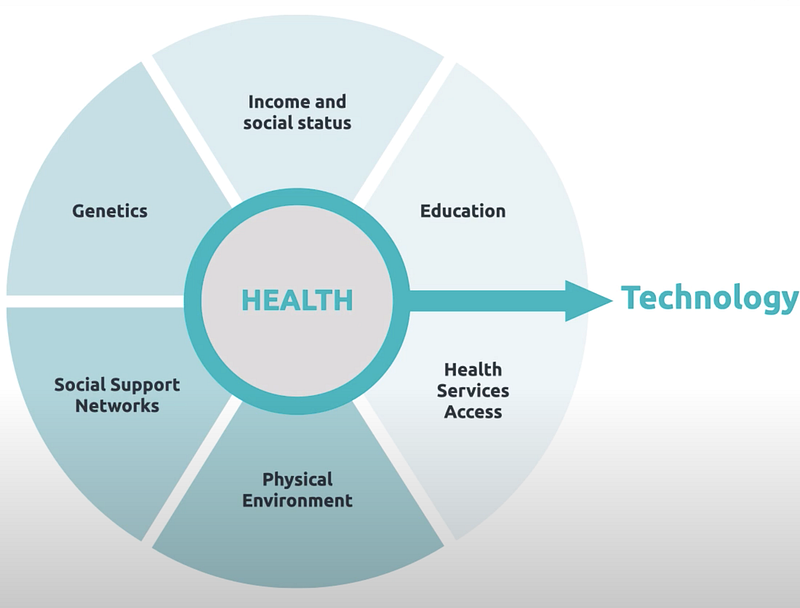
Digital is part of our lives, we are surrounded by digital objects always connected to the net.Our health is affected by a number of factors on which technology has a significant impact. Often our ability to treat ourselves or access care is influenced by where we live and our ability to access information to treat ourselves.
As Roberto Ascione, CEO of Healthware Group, says in the following video that inspired this article, no major innovation that has improved our lives has come from multinationals, but always from startups.Because big companies usually think about meeting today’s demands, the task of designing the future is typically left to startups.
The COVID-19 pandemic crisis has increased investment in health-related startups, raising $8.5B in Q1 alone. these investments allow start-ups to take risks and give the way to what will be the market of the future.
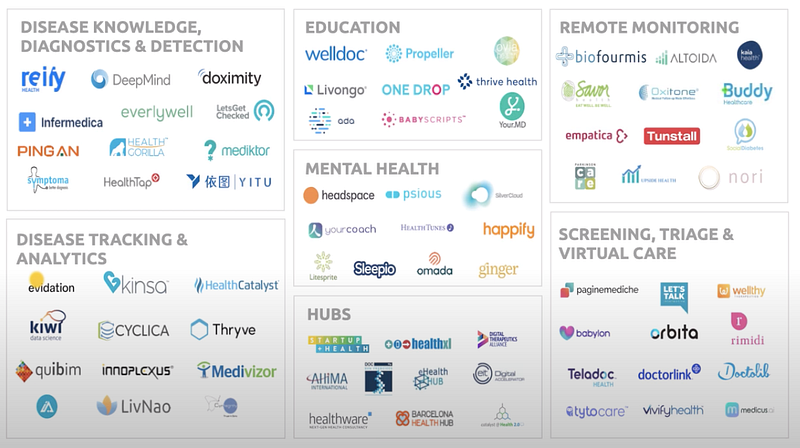
Thanks to digitalhealth many diseases can be treated better than in the past, such as type 2 diabetes, and digital is making it easier to take care of oneself by designing more efficient and less ‘embarrassing’ devices to use in public encouraging better adherence to therapy. What is very important is that the startup is committed to designing the product according to people’s unmet needs.
By analysing the data recorded by the devices, we are able to monitor certain diseases in order to predict how our biological values will evolve in the short term and to take the necessary precautions to protect my health.
Thanks to digitalhealth, an economic strategy for prevention should be created, i.e. active prevention that follows the user on a daily basis. now there are also wearable devices that could monitor my health, such as smartphones or mobile phones. Today there are half a million health apps, but only a fraction of them are reliable and certified to provide real digital therapies.
In practice, the future of prevention is to have a preventive behaviour on a daily basis, and thanks to technology, the relationship between doctor and patient should be improved.
the new paradigm is to move from the conception of the patient to the consumer of health.
This is because, since we have free access to the internet to acquire information, we can all go and look for a symptom to understand what it is in order to find out how to treat ourselves. This represents a problem of misinformation which, fortunately, Google has remedied by creating algorithms capable of giving greater weight to authoritative sources. All this developed more during the covid -19 pandemic to avoid being bombarded with fake news that was dangerous for our care.
In addition, some platforms are developing chatbots using artificial intelligence algorithms that, upon receiving information about your symptoms, direct you to relevant content or put you in contact with a medical specialist via telemedicine services.
Basically, in the future, AI will provide us with a filter to access the most appropriate treatment and streamline healthcare services creating efficiency and lowering costs.
In the future, it will be necessary to provide financial incentives for prevention in order to lower the costs of managing personal health by focusing on the wellbeing of the individual in order to anticipate the onset of problems or make them less serious.


