avatarJoel A. Johnson

Free AI web copilot to create summaries, insights and extended knowledge, download it at here

2445

Abstract

merican culture, since these posts would be seen by anyone searching for information on BET.</p><figure id="a364"><img src="https://cdn-images-1.readmedium.com/v2/resize:fit:800/1*Wj1qz5Q6H3zCQoQZDSB0iQ.jpeg"><figcaption>Photo by <a href="https://unsplash.com/@lukechesser?utm_source=unsplash&amp;utm_medium=referral&amp;utm_content=creditCopyText">Luke Chesser</a> on <a href="https://unsplash.com/s/photos/wikipedia?utm_source=unsplash&amp;utm_medium=referral&amp;utm_content=creditCopyText">Unsplash</a></figcaption></figure><p id="1f9e">I continued to write a few more articles, using what references I find on the internet regarding the topics. I considered these articles of good quality in regards to basic grammar and structure. To my frustration, sources for my topics were few and far between. Search results would show blurbs in digital magazines such as Variety or Hollywood Reporter, but often nothing definitive. I even tried to source information from Black Entertainment Television official website to no avail. This was a crucial flaw that contributed to the downfall of many of my Wikipedia articles. I was innocent of that fact as I gleefully published them.</p><figure id="8a11"><img src="https://cdn-images-1.readmedium.com/v2/resize:fit:800/1*UJLJ4yeAtkzjF6g46wOMxw.jpeg"><figcaption>Pouncing party | Image by <a href="https://pixabay.com/users/birgl-6508325/?utm_source=link-attribution&amp;utm_medium=referral&amp;utm_campaign=image&amp;utm_content=4052454">birgl</a> from <a href="https://pixabay.com/?utm_source=link-attribution&amp;utm_medium=referral&amp;utm_campaign=image&amp;utm_content=4052454">Pixabay</a></figcaption></figure><p id="5360">What I found out soon enough was that the golden rule of Wikipedia is that its entries shouldn’t manage to be the “primary source of information” on a topic. Apparently, to that end, there is a “new entry scouting party” waiting to pounce on posts that fail to have a mysterious number of “credible references”. Several of my articles came up for consideration for deletion within a month of posting them. They were also marked as “stubs" that required more references. I was painfully unaware how virulent the editorial response to my articles would be. The article on Sherry Carter, a host of both Video LP and the flagship show on BET, Video Soul, was deleted despite my protests in the “Talk" section of the article where the consideration for deletion notice was post

Options

ed.</p><figure id="a816"><img src="https://cdn-images-1.readmedium.com/v2/resize:fit:800/1*lc47Bu71ZF8-zYYyKdZ5ag.png"><figcaption>Image by <a href="https://pixabay.com/users/silviap_design-1583911/?utm_source=link-attribution&amp;utm_medium=referral&amp;utm_campaign=image&amp;utm_content=1980045">SilviaP_Design</a> from <a href="https://pixabay.com/?utm_source=link-attribution&amp;utm_medium=referral&amp;utm_campaign=image&amp;utm_content=1980045">Pixabay</a></figcaption></figure><p id="31a9">In my protests, I made the valid claim that shows on similar networks like MTV were not “policed to oblivion” as the BET section of Wikipedia seems to be. I pointed out several MTV show entries that had -no references-, yet were available to be read undisturbed for years. I’d never heard of many of them. These complaints fell on deaf ears. There doesn’t seem to be an overall arbiter of grievances for Wikipedia. Mob rule seems to thrive, and they target BET entries in particular. An entertainment show called “Screen Scene”, which profiled many notable African-American celebrities and entertainment ventures was also deleted despite it running for several seasons and having several references.</p><figure id="44db"><img src="https://cdn-images-1.readmedium.com/v2/resize:fit:800/1*bAu5aqyOLcUl1s7UZNwzzA.jpeg"><figcaption>Image by <a href="https://pixabay.com/users/heatherpaque-753865/?utm_source=link-attribution&amp;utm_medium=referral&amp;utm_campaign=image&amp;utm_content=652560">HeatherPaque</a> from <a href="https://pixabay.com/?utm_source=link-attribution&amp;utm_medium=referral&amp;utm_campaign=image&amp;utm_content=652560">Pixabay</a></figcaption></figure><p id="7fff">Ultimately, I know that Wikipedia is a volunteer outfit. It also is a not-for-profit due to the fundraiser requests that appear on the site every six months or so. For the mainstream public, the issue I’ve raised is not even on their radar because they don’t receive this degree of editorial reaction on their article entries. However, I suspect that my experience is not an isolated case. Being an African-<b>American,</b> having these entries that honor the efforts of entertainers and hosts who express the culture…having that legacy anchored in posterity for future generations to reference and build upon is important for the culture to thrive. I’ve come to believe that Wikipedia isn’t the ideal platform to accomplish this goal.</p></article></body>

Digital Discrimination

How Wikipedia simulates real-life racism
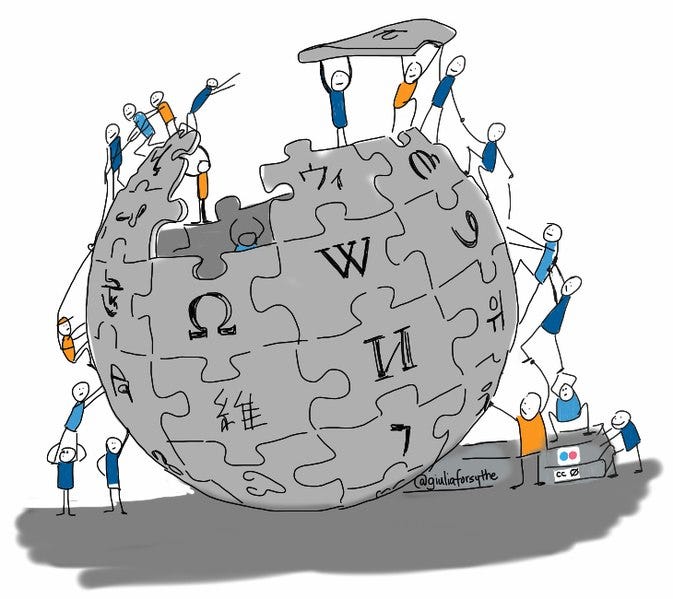
Giulia Forsythe (gforsythe), CC0, via Wikimedia Commons

United States discrimination and racism is a strange beast. It can rear its ugly head to discredit your efforts as an African-American, yet is challenging to prove outright unless a video undoubtedly displays the sinister actions at work. The results, whether or not they are dire, aren’t enough to have authorities step in to take corrective measures, if there are “authorities” at all.

In this case, it was about writing. About 2007, the writing bug had bit me. I had tried to look up information on a significant TV series or personality, but could not find sources with complete content online. This was a totally strange predicament because I’d spent hours watching this show/ personality on the Black Entertainment Television cable network. I knew I wasn’t the only viewer, so I was at a loss as to why profile articles didn’t appear in the Google search results. I decided to address this issue by writing a half-dozen articles on Wikipedia. For those unfamiliar, Wikipedia is an online encyclopedia that is written / maintained by the internet. No one had ever shared that they’ve posted articles to Wikipedia, so I was going to be the guinea pig of my social circles.

Unknown author, Public domain, via Wikimedia Commons

I started with updating an article for a show called “Video LP”. This was a series that aired every weekday at 4pm CT on BET, which is a national cable network. I had a crush on the host, Sherry Carter, who always impeccably dressed for a night out at an upscale club. She had a model figure, which added to the allure. I updated the article, and wrote another one on Sherry herself for good measure. Being a media pack rat, I had the show on VHS. I took a few screenshots to add to the articles. I thought I was contributing to the legacy of the African-American culture, since these posts would be seen by anyone searching for information on BET.
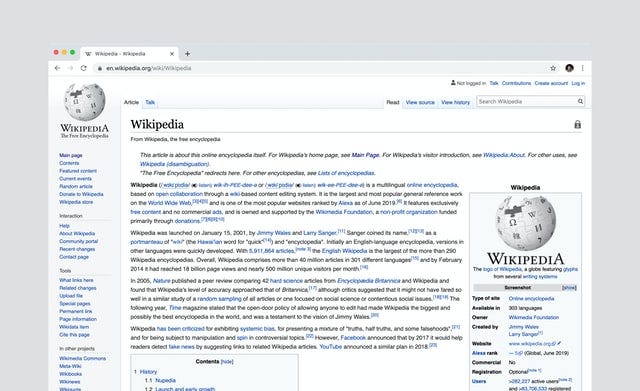
Photo by Luke Chesser on Unsplash

I continued to write a few more articles, using what references I find on the internet regarding the topics. I considered these articles of good quality in regards to basic grammar and structure. To my frustration, sources for my topics were few and far between. Search results would show blurbs in digital magazines such as Variety or Hollywood Reporter, but often nothing definitive. I even tried to source information from Black Entertainment Television official website to no avail. This was a crucial flaw that contributed to the downfall of many of my Wikipedia articles. I was innocent of that fact as I gleefully published them.
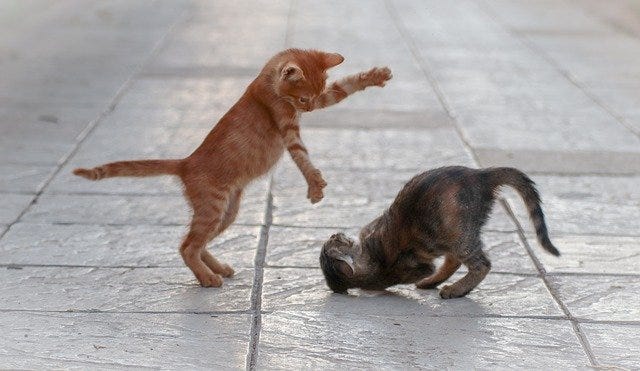
Pouncing party | Image by birgl from Pixabay

What I found out soon enough was that the golden rule of Wikipedia is that its entries shouldn’t manage to be the “primary source of information” on a topic. Apparently, to that end, there is a “new entry scouting party” waiting to pounce on posts that fail to have a mysterious number of “credible references”. Several of my articles came up for consideration for deletion within a month of posting them. They were also marked as “stubs" that required more references. I was painfully unaware how virulent the editorial response to my articles would be. The article on Sherry Carter, a host of both Video LP and the flagship show on BET, Video Soul, was deleted despite my protests in the “Talk" section of the article where the consideration for deletion notice was posted.
Image by SilviaP_Design from Pixabay

In my protests, I made the valid claim that shows on similar networks like MTV were not “policed to oblivion” as the BET section of Wikipedia seems to be. I pointed out several MTV show entries that had *-no references-*, yet were available to be read undisturbed for years. I’d never heard of many of them. These complaints fell on deaf ears. There doesn’t seem to be an overall arbiter of grievances for Wikipedia. Mob rule seems to thrive, and they target BET entries in particular. An entertainment show called “Screen Scene”, which profiled many notable African-American celebrities and entertainment ventures was also deleted despite it running for several seasons and having several references.

Image by HeatherPaque from Pixabay

Ultimately, I know that Wikipedia is a volunteer outfit. It also is a not-for-profit due to the fundraiser requests that appear on the site every six months or so. For the mainstream public, the issue I’ve raised is not even on their radar because they don’t receive this degree of editorial reaction on their article entries. However, I suspect that my experience is not an isolated case. Being an African-American, having these entries that honor the efforts of entertainers and hosts who express the culture…having that legacy anchored in posterity for future generations to reference and build upon is important for the culture to thrive. I’ve come to believe that Wikipedia isn’t the ideal platform to accomplish this goal.

Wikipedia
Discrimination
Writing
Mob Rule
Simulation
Recommended from ReadMedium