
Different ways to Journal — First, Make It Easy to Start
Journaling can jumpstart your life, but it’s not always easy to do consistently. Here are a few ways to get started.
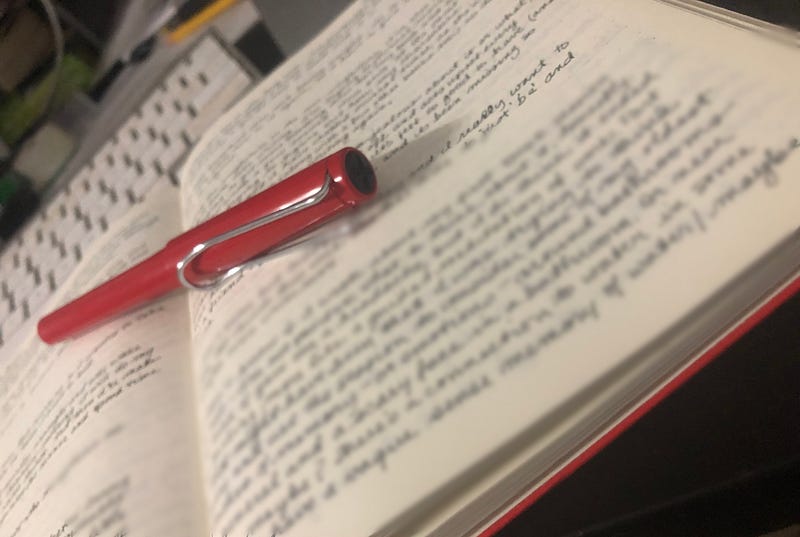
When I first started learning about journaling, I was sure I’d found the thing I needed all my life. I wrote by hand in my journal every morning and found it helped me with my morning routine and emotional healing.
Then I found out I was doing it wrong.
I was still reading about journaling, only now I started reading about how other, smarter, people journaled. And the way I journaled was nothing like the way they journaled.
They had specific questions they answered every day, some focused on how they were going to achieve their goals in their journal every day, and yet others only journaled as part of three pages — no more, no less.
I was doing it all wrong!
Or was I?
Making Thing Complicated
Maybe this has happened to you? Maybe you even gave up on journaling because it seemed too hard to keep it up? Maybe you’ve been trying to journal using the same process some guru wrote about and you’ve despaired over ever being able to journal consistently.
If so, I have some good news for you.
Journaling is not hard, you can do it consistently, and it can help you.
You just have to understand that there are multiple ways to journal. And each kind of journaling can be done by itself or in addition to the others. You have to decide what type of journaling works best for you. And start small!
This article is a quick and dirty intro to different types of journaling and how they can help you. And also how easy they are. Forget a big chunk of what you’ve heard before. Don’t make it complicated.
3 Most Common Types of Journaling
Most people think about writing their ‘Dear Diary’ when they were kids when they think of journaling. While you can use your journal like a diary, there are lots of different ways to journal. Make it work for your needs.
Most journaling falls under a few types:
- Stream-of-Consciousness: This is an ongoing type of journaling, either for a specific amount of time or throughout the day.
- Function or Purpose journaling: This type of journaling is for sticking to goals, writing for a specific function, or combined with another type (like Morning Pages, which combine Stream of Consciousness with Function/Purpose)
- To-dos, Task Management, & Projects: this type of journaling, which includes bullet journaling, Getting Things Done, and other systems / task management philosophies. It helps with prioritizing your to-do list or projects.
To start journaling, decide what your journaling goal is, then pick out the right type of journaling to work on that goal.
Journaling Goals
If you’ve ever journaled before, you already know that there are different ways to journal but maybe you never stopped to consider that you should have a goal in mind for your journaling too.
Why?
Because you’ll journal differently if you just want to get all the thoughts out of your head versus keeping yourself focused on attaining your goals. And you might journal different if you want to keep track of everything you’re writing or even reference it for another project (say, a book or a blog post).
So, what are your goals? Here’s a few questions to get you started figuring that out:
- Do you want to get the thoughts out of your head so you can concentrate on what’s important?
- Do you want to make sure you’re keeping track of your goals and what you’re doing to achieve them each day?
- Are you wanting to set up or enhance your morning routine?
- Do you want to be able to refer back to what you’ve written? Do you want to use it for articles or even a book project down the line?
- How important is it for you to be able to find journal entries on specific topics and/or points in time?
The Journaling Types (and which of those goals they’d work best for)
First, a caveat: There are infinitely more ways to journal than the ones I’m listing here. Do some research if you like, and you’ll find dozens of different ways people journal.
Just don’t forget that research isn’t journaling — don’t spend time researching how you want to journal when you could instead just start journaling!
Morning Pages — Free Writing
Morning Pages arose from a book written by Julia Cameron. She wrote about writing by hand every morning and writing three pages of stream-of-consciousness journaling just to get the clutter out of your head so that you could focus on being creative.
Morning pages were what she called this effort, and it’s a type of stream-of-consciousness journaling where you just write the thoughts that are in your head at that moment.
There are variations on this type of journaling.
- Some people prefer to use prompts and free-write their answers, which gives their morning pages a bit more structure.
- Others use this time to journal about affirmations, prayers, or other specific topics every day.
- Still others don’t do this in the morning, they do it at different times of the day
- Other people focus on their mental well-being, working through different questions with a goal on improving their mental health.
Which goal they work best for…
Morning pages are best suited for getting the thoughts out of your head, and most people do them in the morning as a way to clear their head before they work on a creative writing project.
Free writing in general is a great way to help focus your writing efforts, and I do it often. It’s flexible and can adapt to your needs. Set a timer (or don’t!) and write, or use a thought-provoking question to guide your freewriting. When you do it as part of journaling it can help you work through personal things you might want to write further about. Work with or without guiding questions or prompts.
I use a variation of morning pages myself every morning. I only write one page by hand (my writing is small!), and I usually use the time to write out an affirmation, visualize a couple goals I have for the day ahead, and sometimes end in a quick prayer. My way of doing it merges with the next kind of Journaling.
Function and Purpose Journaling — Journal for goal-setting and reviewing or some specific purpose
This type of journaling is very popular right now. Experts like Benjamin Hardy have written entire books on the subject. Usually the journaling is focused on goals, as in Hardy’s examples.
In this type of journaling, you either state or restate your overall goal (ie: I want to be a published writer) and the steps you are taking today to meet that goal. Sometimes this is mixed in with visualizing or doing affirmations too.
The whole goal is to reinforce goals or affirmations or something important to you. By journaling about it every day, you lock in your goals and are more able to clarify them and achieve them.
Which goal they work best for
This kind of journaling works best if in combination with free-writing or free-journaling, but it also works well with other types of journaling because you can do it for just a few minutes or you can do a longer session.
This is almost business-like journaling, since you’re going over goals and objectives and all that fun stuff, but we all have our own personal goals and dreams and this type of journaling can help us focus our efforts when we want to work for them.
Done in conjunction with bullet journaling or the Getting Things Done (or other) methodology, you can align your goals with the tasks you do each day and ensure you’re moving towards your own dreams every day.
To-dos, Task Management, & Projects
This type of journaling is usually combined with another type. Some people keep separate notebook for their task management and their free-writing journaling, and some people do it all in the same notebook.
The most common types of this type of journaling would be bullet journaling, using the Getting Things Done framework, or even just keeping a list of running to-dos with no framework behind it.
Some people practice what’s called interstitial journaling, where they quickly note down impressions, learnings, and other ideas in between tasks as they do them through the day. It’s an idea that mixes journaling and task management on the same page.
Which goal does this type of journaling work best for
Really this works best in combination with other kinds of journaling, but it’s a great way to keep track of different tasks and ideas throughout the day (or week, or month — whatever frequency you like). Task management doesn’t just have to be about work tasks, though that is what most of us think of. It can also center around personal projects and goals.
I practice bullet journaling (which I’ve written about before) and my daily log is similar to the interstitial journaling, except I keep it mostly to impressions or notes about the things I’ve worked on.
Simple Journaling Means Starting Small and Doing what Works for You
So here’s the thing. I do lots of types of journaling. Over the years I’ve found that journaling helps me stay organized, helps my memory issues, helps my depression and CPTSD, and even (or especially) helps me write more. I benefit so much from my journaling, I regularly research ways to do it more.
But you know how I started? I started in a ratty old notebook, doing a daily log for bullet journaling because it was the easiest first step forward. Over time, I added to that and built an entire morning routine around journaling.
I keep three regular notebooks by my side on my desk and they each are for different things:
- My Journal — I’ve done basic journaling many times over the years, but this journal marks the first time I’ve worked it into my routine and done it every day (even if I only wrote a paragraph). There are jumps in time because I don’t keep it perfectly, but I have three years’ worth of fairly consistent journaling
- My Gratitude and Prayer journal — this is new (I used to do this in my regular journal) — I started it after our pastor talked about being able to refer back to prayer requests over time because they used a small notebook just to track those.
- My Bullet Journal — the first journal I used every day and the long-running journal I’ve kept (I have them dating back to 2017)
The simple fact is, I could write without journaling, but I doubt I could write as well. And I know I wouldn’t write as much. And while bullet journaling isn’t about writing (I use it mostly for my day job, technical writing), it helps me empty my brain of all the chaff — all the things I’d worry over otherwise.
Whether I publish anything I’ve journaled or not, I’ve made personal discoveries, worked through pain and grief, prayed over friends and family, and lived a whole life through the pages of my different journals.
I invite you to do the same.
Start small.
But start journaling today.