
Different Memories: 3 Ways to Experiment with Memoir
The story doesn’t have to stop with the text
You’re unique. Why shouldn’t your memoir be?
Books are incredible things. They’re both the story and the box it came in. I learned to take books apart and put them back together, working in libraries. I still do it today, as a bookseller of old, occasionally rare, and otherwise unique books.
Bookbinding is a kind of meditative surgical procedure, and it gives you time to think about what books are, and what they can be. It was bookbinding, and two books in particular, that made me rethink what books—and the stories inside—can be:
- Mark Z. Danielewski’s House of Leaves
- Marissa Pessl’s Night Film
House of Leaves presents a story in a very unique way. It layers different threads of the story in text color, layout, includes outside references, and is genuinely a wonderful, haunting story.
Night Film experiments with mixed media — the book actually had an app at launch. Entire fake websites were made that exist within the world, and to tell the stories that happen outside the book.
These offer different ways of telling stories. What’s that mean for memoir: a genre that tends to be much more traditional?
Ask Michelle Dowd, the author of Forager: Notes for Surviving a Family Cult. She uses nature sketches and plant facts to help tell her story, in her memoir.
Here are a few ways to consider when telling your story.
A family history of memoir
One of the simplest, and one I never have seen a lot of, when I’ve worked with authors and sold books (and still do both): family histories.
You see this more often in fantasy and historical fiction. Lineage charts and genealogies.
If your memoir is dealing with a lot of different people, especially if you have an extended family making appearances — this can be very helpful for readers.
You can take the simpler route, and just add a chart. You can take inspiration from Forager if you’re good at art (or can find someone who is). Include sketches of your home, your family, and objects you love.
That adds layers to the story. It helps it feel more real.
You can take a more multimedia approach — have a link in your book to a simple Wiki site, or a place where more information is hosted.
Let your story live outside the book itself, and people will be more invested.
The rational archives
Another one of my favorite pieces of experimental literature is S., also called Ship of Theseus, by Doug Dorst and J.J. Abrams (yeah, the guy who got Lost).
It’s similar to House of Leaves in text, but it also includes what is nerds called feelies, back when the Apple ][+ was the raddest thing since microwave pancakes.
Feelies are a kind of prop. The best in the grand tradition of Carmen Sandiego and Shadow of the Comet felt ripped out of the game world. The original red hat lady came with a world atlas and a book of facts. Shadow of the Comet came with actual letters featured in the game.
S. is like that. It includes notes, a library checkout card, and other bits of ephemera, that help tell the story.
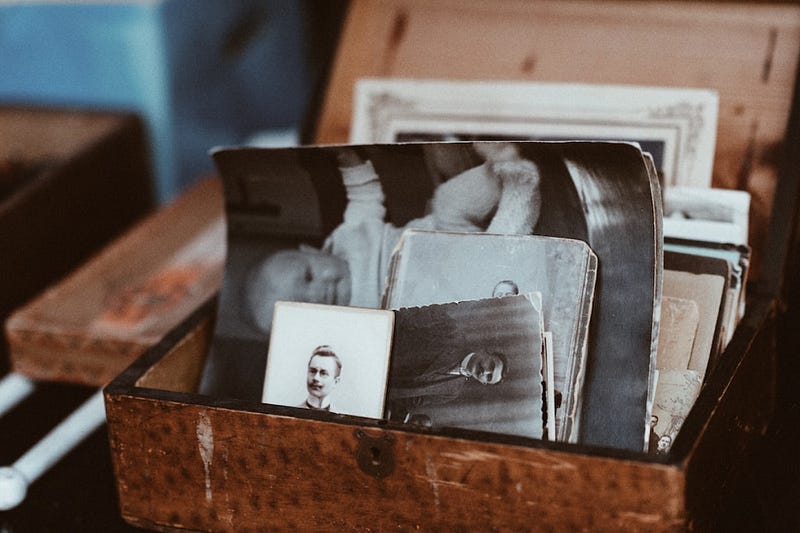
In geneaology, and underrated art is putting together a family archive. Old pictures, love letters, movie ticket stubs, the little pieces of everyday archaeology that make up a life and its history.
Memoirs can include these. Whether as reproductions or available on the author’s website or shared on a blog platform like here on Medium.
The things we can touch, are easier to relate to than the things we’re told.
This can also set your work apart, in a very competitive genre like memoir.
The You Cinematic Universe
I’ve talked before about curating memories for memoirs. That means there’s leftovers. And what do we do with leftovers?
If you’re me, you leave them in the fridge and forget they exist, but learn from the error of my ways.
I have another favorite thing to do with my leftovers though. Make something new out of them.
I love cooking. Ingredients are just ingredients until you make something out of them. Writing works the same way.
Each part of a story is just an ingredient until you put it all together. Make something new with ones you don’t use — ask where a lot of reporters get their ideas. It’s from the leftovers.
If you enjoy writing memoirs, there’s no rule that says you have to tell your whole life story in one go.
This is an excellent time to talk about my fellow Texan: the late master of the pen, Larry McMurtry.
His The Last Picture Show is, in a heavily fictionalized kind of way, a memoir. It’s a semi-autobiographical work, and it doesn’t exist all by itself. It’s the last in his first series.
Thalia: A Texas Trilogy (as it’s been collected before), is Horseman, Pass By, Leaving Cheyenne, and The Last Picture Show.
In that order, because I love y’all.
What McMurtry did was take pieces of his life, and make full-fledged stories out of different parts.
You can do this, too.
And there’s also nothing saying you can’t also be like he was — heavily fictionalize your life, and call it fiction. It’s always easier to write what you know.
McMurtry then took his life and his inspirations and delved into Texas history — the history of his home. Generations and generations worth of stories, that were born from his own life.
Most people think memoirs are one-and-done. They don’t have to be. You can develop an entire Youniverse of your work.
Whether you stick to memoir or start writing outside the lines.
The first rule of Memoir Club is that we don’t talk about autobiographies.
Autobiographies are histories. Their firm needs to be structured and more formal.
Memoirs don’t.
In a genre that tends to be very traditional — you don’t have to be.
It sets you apart from all those that are, if you choose creativity.
And after all, you’re a writer.
Why not choose creativity?


