
Difference Between Anxiety And Stress
Understanding the two sides of the Coin.
In the fast-paced world we live in, it’s easy to use the terms “anxiety” and “stress” interchangeably. They are two sides of the same coin, yet they are not the same.
While both experiences share some similarities, understanding the key differences between them is crucial for navigating their unique challenges and seeking appropriate support.
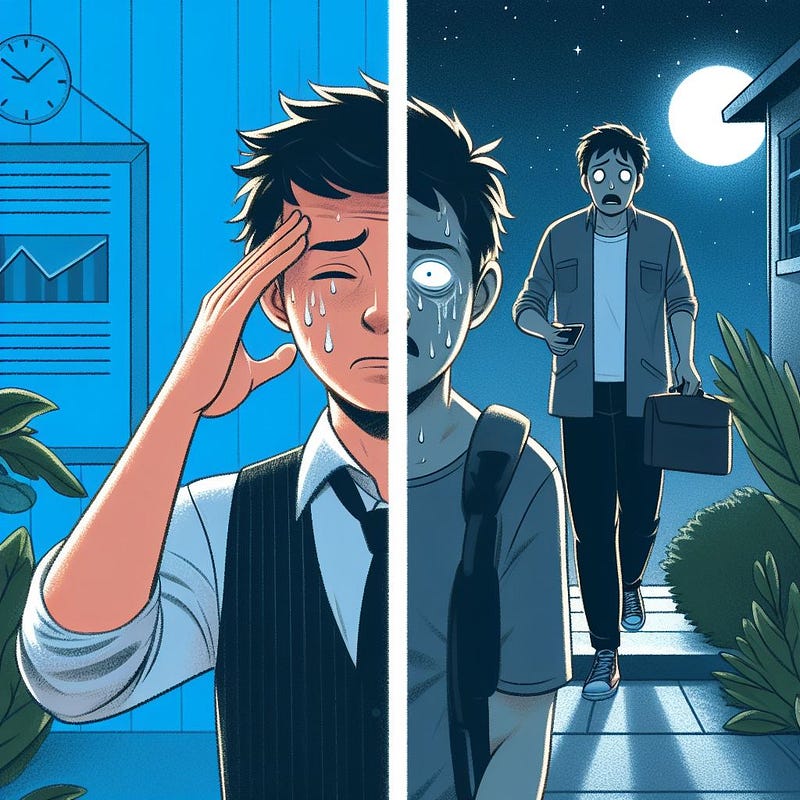
While preparing for a big presentation at work, your heart will race, your palms sweat, and your mind will race with potential pitfalls. This is a classic example of stress.
It’s a natural physiological response to a perceived threat or challenge, and it can manifest physically (increased heart rate, sweating) and emotionally (feeling overwhelmed, and frustrated).
Stress, in its acute form, can be beneficial. It fuels our focus and motivation, pushing us to perform our best. However, chronic stress, left unmanaged, can have detrimental consequences for our physical and mental well-being.
“Stress is the weight of life’s challenges, while anxiety is the shadow of its uncertainties.”
Now, consider this scenario: you’re walking home alone at night, and you hear footsteps behind you. Your body tenses up, your breath quickens and a sense of impending danger washes over you. This is anxiety.
Unlike stress, which is triggered by a specific, identifiable threat, anxiety can be generalized and persistent.
It often arises from unrealistic or exaggerated worries about future events or situations. It can manifest as constant worry, intrusive thoughts, and physical symptoms like rapid heartbeat, muscle tension, and difficulty sleeping.
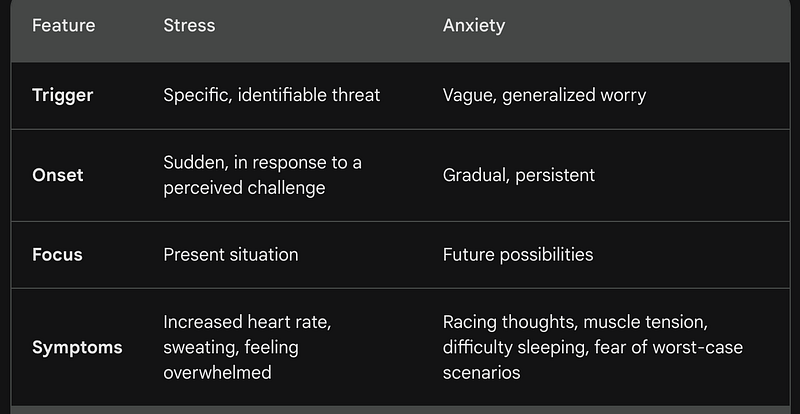
Here’s a table summarizing the key differences between anxiety and stress:
Understanding these distinctions is crucial for seeking appropriate support. If you’re experiencing stress, implementing stress-management techniques like relaxation exercises, mindfulness practices, and healthy lifestyle choices can be highly effective.
However, if you’re struggling with persistent, generalized anxiety, seeking professional help from a therapist or counsellor can equip you with the tools to manage your worries and improve your overall well-being.
Both stress and anxiety are normal human experiences, but understanding their differences empowers you to identify the root cause of your discomfort and take appropriate steps towards a calmer, more balanced life.
“Stress is juggling too many balls, anxiety is constantly worrying they’re all made of glass.”


