
Diet of Worms
And open-air Religion
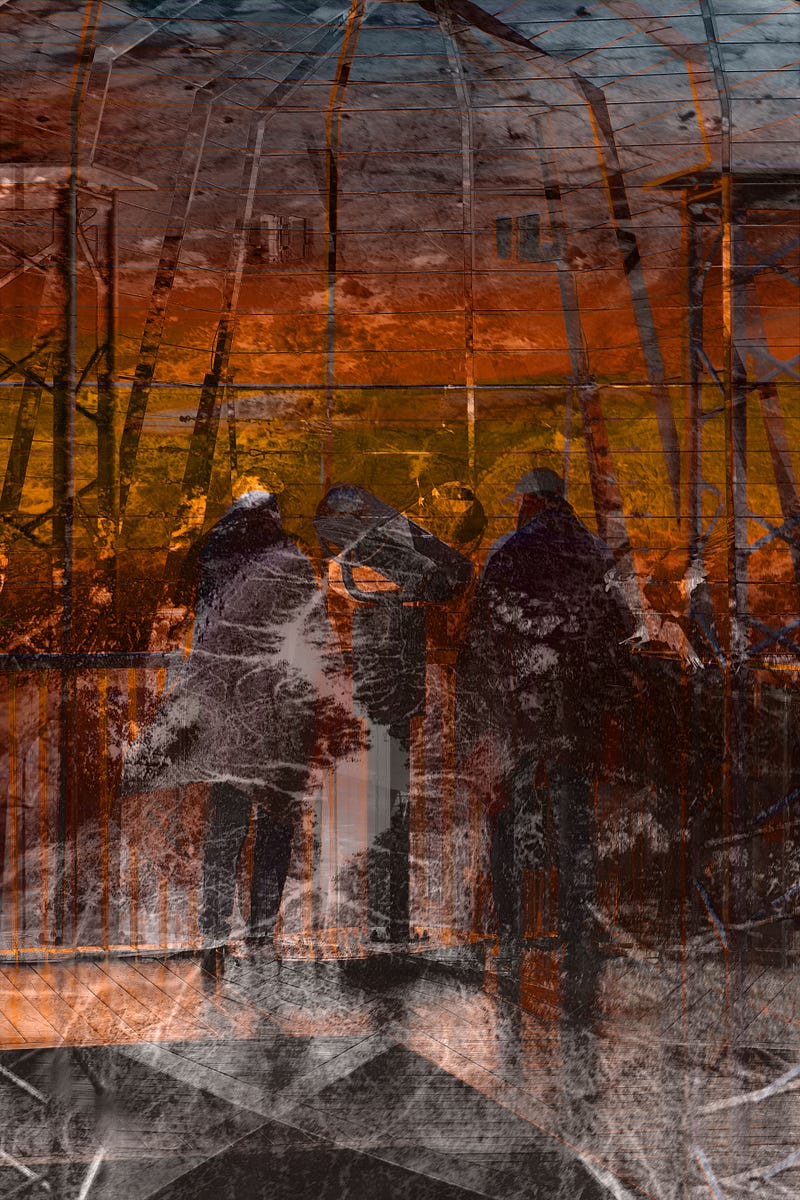
If Triu Efflia had been a less elegant eatery, the two theologians might have gotten into fist-to-cuffs. But guarding a sort of peace experienced by the spendy patrons there joined that other objective of not hurting their Lord’s reputation, and they each had chosen to keep things civil, but heated.
When they’d first sat down, over calamari and ginger beers, the subject had been their mothers. Nicholas was loathe to speak of his, but wasn’t forethinking enough to recall that if he’d inquired on Christopher’s, the subject would non-creatively boomerang.
Christopher’s mother had gone to the ocean, promising to bring back smooth stones and glass flutes for his kids. When the topic had come back to Nicholas, he knew “doing fine” would not suffice his rival’s piercing mind. And so he’d been forced to go into her physical and psychological ailments.
Christopher was always “caring”, but in a way that struck Nicholas as phony. Nicholas, with little natural charity, assumed most were playing at compassion when they seemed to be true-listening. Either way, Nicholas didn’t want anyone to be interested in his mother, for she’d once pulled a gun on him when he was just a boy.
Over Pork steaks (for they agreed on food) the pair had delved briefly into politics. Nicholas, the taller of the two, had recently been inducted, just as Christopher was trying to exit the sport. But such was their way. One continually counterweighting the other’s idiosyncrasies.
“Don’t you think policies on de-regulating pain-inhibitors is just an invitation to numb ourselves into slothdom?”, asked Nicholas, pointing skewered pig at his table-mate.
Christopher washed down his food. “Of course, there are always people in unbearable pain,” he parried. “The worry is what sort of addicto-poisons the companies will distribute without watchdogs.”
This was the cadence of their repasts. Dissecting and battle-shipping subjects, gentlemanly as possible. Parliamentary talk was brief, concluding right as vegetables and Hawaiian rolls landed at the table.
“You seem to be saying,” said Nicholas, “that people-conglomerates are more problematic than the individual soul-containers themselves.”
“Exactly,” replied Christopher, rolling up sleeves and planting naked elbows on table. “Business is the gluey greed, inspiring men to ignore the plight of their cube-mate, promising lucre for indifference.”
And so they switched to philosophy while intermittently hunting waitresses to keep their water-pitchers filled, knowing well how carbonated beverages assaulted esophaguses— for they both suffered heart burn.
Nicholas dropped his napkin for emphasis at one point. “My old dean said two unforgettable things: 1. No man is anything drunk, he wasn’t before he cracks the first beer. 2. Corporations are responsible for squat, individual men — with the independent capacity to say no and yes — bear the weight for it all.”
The owner of the establishment stepped in at that thought-break for his two regulars, politely lubricating tensions with humor at the men’s unique menu selections, and then asked how they were enjoying their Sunday. They were each generous back, and graciously received his towelettes, chocolate-mints and digestifs.
Alone again, they went back to their joust-poles, determined to get to the real meat of their encounter before the other they’d just devoured took its toll on their ideational coherence.
“Forgive me for bringing it in again” said Christopher, “but I am curious how you hold any individual accountable for anything, believing as you do, that God is the orchestrator and governor of all which occurs.” He smiled and muted his phone so as to not miss any awkward stammering he hoped might follow his “stumper”.
“I don’t see why you turn every conversation on this dime,” noted Nicholas “but I’m always happy to give every man a reply.” He reached into his satchel and pulled out a red Bible, flipping to certain passages.
“Before you go spading up verses we already agree to,” Christopher slipped in, tapping his forehead, “Why not merely answer the question from your own noggin?”
“I’ve told you a million times,” the other said, slapping a Mastercard on the table, “Calvinists believe in free will; we just precisely define freedom.”
“Elucidate again,” smiled Christopher, arms behind his head, leaning back in his chair, tooth pick now in his mouth. “It’s hard for me to remember.”
“You recall plenty else.” retorted the T.U.L.I.P. defender. “But I’ll play. Freedom is capacity to pursue what one already loves. If somebody loves blowing up cities, or stealing money from elderly care patients, they have the freedom to pursue it. If another loves the standards and precepts of the Lord, then this.”
“I couldn't agree more completely”, the less tall man replied, taking the pick out of his teeth. “So we finally see each other.”
“As per usual, you’re not letting me finish.” the taller picked up his Raybans as if leaving, but then put them over the hair-covered eyes on the top of his head, rubbing his real ones with the back of his high-knuckles. “Those whose hearts love their Creator do so because he has touched them with his elucidating fingers of love.”
Christopher didn’t appreciate Nicholas’s professorial tone, and a tempting rebuttal teased his sensibilities, one he failed to put in check. Once perturbed to certain points, a governor on his tongue switched off.
There was a pause, before he finally gave way.
“So . . . you're telling me . . . that when your own mother kicked you out of a car . . . and —
Heavy Silverware dropped onto the Walnut table, and then the screeching of chair legs as Nicholas pushed off.
“If you ever try bringing my childhood embarrassment into one of your arguments again . . .”
Church bells down the hill rang up to where the two ruminated. A hush fell on the nearby tables. They both rose, Christopher rummaging his pockets for a half-way decent tip. And each saint conscientiously exited that patio, now filled with anxious and curious heathens.
A difficult but fun to write submission to Zane Dickens’ and Paul Mansfield’s Microcosm challenge on Conflict, this being my Character Vs Character Piece.
Weekly Prompt: Character vs Character Update | by Paul Mansfield | Microcosm | Aug, 2021 | Medium


