
Did You Take Your Meds?
As soon as you’re diagnosed with anxiety and depression, you aren’t allowed to have emotions.
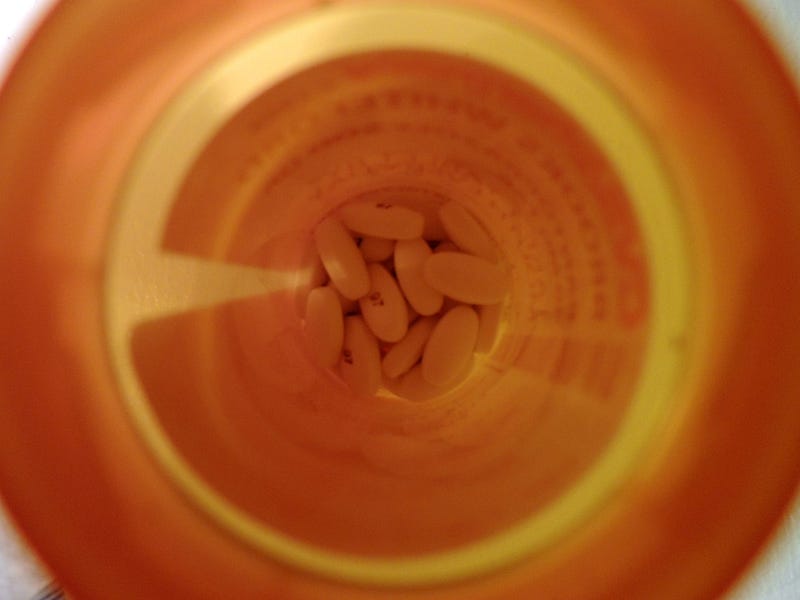
Sobbing is a mechanism, and I have learned that stifling it is akin to sending a freight train into the ocean: The form is still there, but the function suffocates.
I was diagnosed with chronic depression and acute anxiety disorder in 2013. It was a new beginning of acknowledgement and becoming.
It was also an exhilarating end to decades of pain. I had always been prone to sadness and hysterics and quick to anger. Once I started taking a regimen of medications to quell the beast, I began to feel a calm reside within, but I am, if nothing else, disposed to being human.
I was hospitalized in February with pericarditis and pleural effusion. This means that the lining around my heart was infected with a virus, and the pleural sac around my left lung became inflamed.
I have had malaria and dysentery. I have given birth to three kids. I have never experienced the pain and trauma that pericarditis wrought. In the midst of it, a psychiatrist was assigned to my case, and he added PTSD to the short but acute list of my afflictions.
He was appalled that I had been taking lithium as an anti-anxiety drug for seven years, and he immediately began to step me off of it to introduce new, less harsh medications.
It was a ten-week recovery fraught with physical limitations and a boiling over of my mental capacities. My brain fought valiantly to find equilibrium, but for the first time ever, it waved a white flag, and I didn’t want to live.
All emotion is genuine. It doesn’t matter if Wednesday morning’s anti-anxiety pill is sitting impatiently in the medication box.
I found my way out of this dense thicket. Right as I saw a dim light at the end of the tunnel, coronavirus hit the planet, and Lebanon, where I live, began to economically unravel.
Since recovery, I have exhibited crying spells (the racking, hyperventilating kind) and nightmares on one end of the spectrum; impatience and anger on the other.
On too many of these occasions, members of family have dropped the boom I don’t want to hear: “Have you been taking your meds?”
These words send me into a spiral of indignation. I see the world falling apart around me, yet any outburst is seen as erratic. Any woman can understand this, as genuine emotion is often met with “Aw, are you PMS-ing?”
And yet, all emotion is genuine. It doesn’t matter if Wednesday morning’s anti-anxiety pill is sitting impatiently in the medication box. When those closest to me invalidate my frustration, anger or sadness, it leaves me boxing with my own brain: Do I really feel this way, or is it misfiring synapses? Should I be consistently stoic in front of my fifteen-year-old son, whose mouth has joined in the chorus of questioning my deepest concerns and fears?
Sobbing is a mechanism, and I have learned that stifling it is akin to sending a freight train into the ocean: The form is still there, but the function suffocates.
My family loves me. I know this despite their occasional, obtuse questioning. I can only change how I react to stimuli. With this spirit, when they dump a loaded question onto the floor in front of me, I must learn to quietly step over it, and just say, “Yes, I am taking my meds.”
Or, “No, I forgot.”
And leave it at that.


