
Did You Know The Hidden Treasure Of Daily Nature Walks?
When a walk just isn’t a walk…
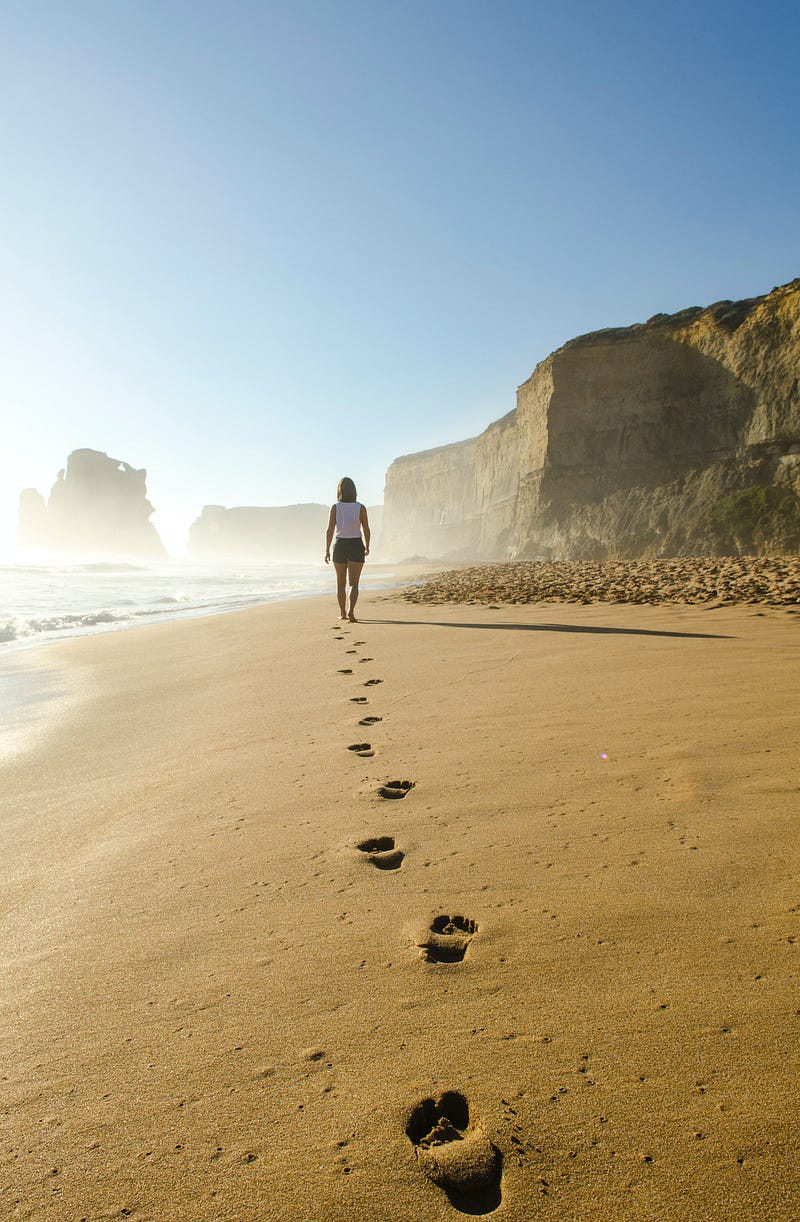
“The best way to improve mental performance is physical performance.”
-Tim Ferriss-
What is your daily activity level?
Moving around is important. That’s why you might want to pay attention to it!
Why is that exactly?
It has several reasons; follow me through this post so I can explain them to you.
First of all, a slight blood flow increase is important to transport all nutrients through your body. Walking makes you contract your calves which increases cerebrospinal fluid in your brain.
On a quantum level, there is so much going on when walking in nature that it’s difficult to comprehend how much data you exactly absorb, but it’s a lot!
One thing is for sure; everyone can sense the “feel good” factor sky rising by walking in nature.
All great writers walk a lot. Or did you think that writers sit the whole day? Many great writers claim that they need the walk.
- Tim Ferriss
- Joyce Carol
- Walter Isaacson
- Tim Denning
- Derek Sivers
All of them walk or run a lot! And if they don’t walk, they often exercise or do something different activities to render what they are about to write.
“Running! If there is any activity more exhilarating, more nourishing, to the imagination, I can’t think of what it may be.”
-Joyce Carol Oats-
The calming effect of walking is underestimated. Add this to the fact that walking is actually easy to do, and going outside to have a walk doesn’t cost money!
Outside walks are one of the best ways to create a calming effect on our system; the outside air and the close contact with nature are tremendous in rearranging our system.
The smells, the sounds, the wind, and the natural movement of walking get us back to the old-skool homeostasis level, something we often lack these days. We need great frequencies to stay well. Rubber-soled shoes, for instance, keep you insulated from absorbing the Shuman resonance.
Homeostasis is best explained as our endocrine system’s physiological rest state (balance). Any automated process by which an organism tends to maintain stability while adjusting to conditions that are best for its survival could be categorized as the understanding of homeostasis.
Homeostasis is a dynamic process, not a fixed balance point!
When walking regularly, you will likely get more toned or lose weight a little. Lowering BMI levels has proven to be one of the best things to do for your health; it will cause you to regulate food intake better, sleep better, and achieve an overall feeling of well-being which will serve you in other aspects of your life as well.
“Start walking to shift your mental state from negative to positive.”
To get you motivated, often misunderstood is that we need to run and almost drop to death to lose weight or fat.
Walking is an aerobic exercise, 100m sprint is more anaerobic.
That means that when walking and consuming and being able to keep talking or breathing normally throughout your nose, you are mainly performing an aerobic exercise that will use most of your fat stores as energy.
When you are experiencing more difficulties for breathing, and your walking starts to transfer into running, you are likely to hit your anaerobe threshold, which will cause you to breathe through your mouth more often.
Passing this threshold, we are gradually shifting the source of energy our body consumes from fat stores toward the locations where carbohydrates are stored.
You are breaking down more muscle than you would by walking, which requires less oxygen and uses energy created in the Krebs cycle or citric acid cycle in the matrix of the mitochondria (the energy deliverer) inside the cell.
“The Energic system contribution for the 100m.”
To name a few different walking styles:
- Strolling (highest fat consumption rate, high oxygen availability)
- Fitness (Fifty-fifty energy consumption rates)
- Race (highest carbohydrate consumption rate, low oxygen availability)
A Breathing technique you could practice when reaching your anaerobic threshold could be:
Double your inhales short.
Follow a longer exhale.
Repeat this on the go, it will help you lower your heart rate.
When you look at people who do marathons, they will take a vo2max guideline more often as a self-check of their conditional state.
This involves knowing their heart rate and looking at age; these parameters have to be lined out on a monogram which in the middle will indicate the state of your maximal oxygen absorption.
But for the moment, we are just walking here,
“Taking a long walk is my preferred way of having a serious conversation.”
-Walter Isaacson-
When you achieve that great feel-good factor, you’ve absorbed it from negative ions near the water and trees.
Did you know that negative ions have many scientifically proven benefits?
Your house, for instance, is full of positive ions that make you feel tired, drained, tired, irritable, and unable to focus.
How can you blend in negative ions in your house?
Run an indoor water fountain. The force or energy of falling water causes the neutral particles in the air to split, which frees electrons to attach to other air molecules resulting in negative ions. Have tourmaline crystals nearby or wear them. Tourmaline is believed to convert moisture from the air to negative ions.
But first,
let’s take a forrest walk
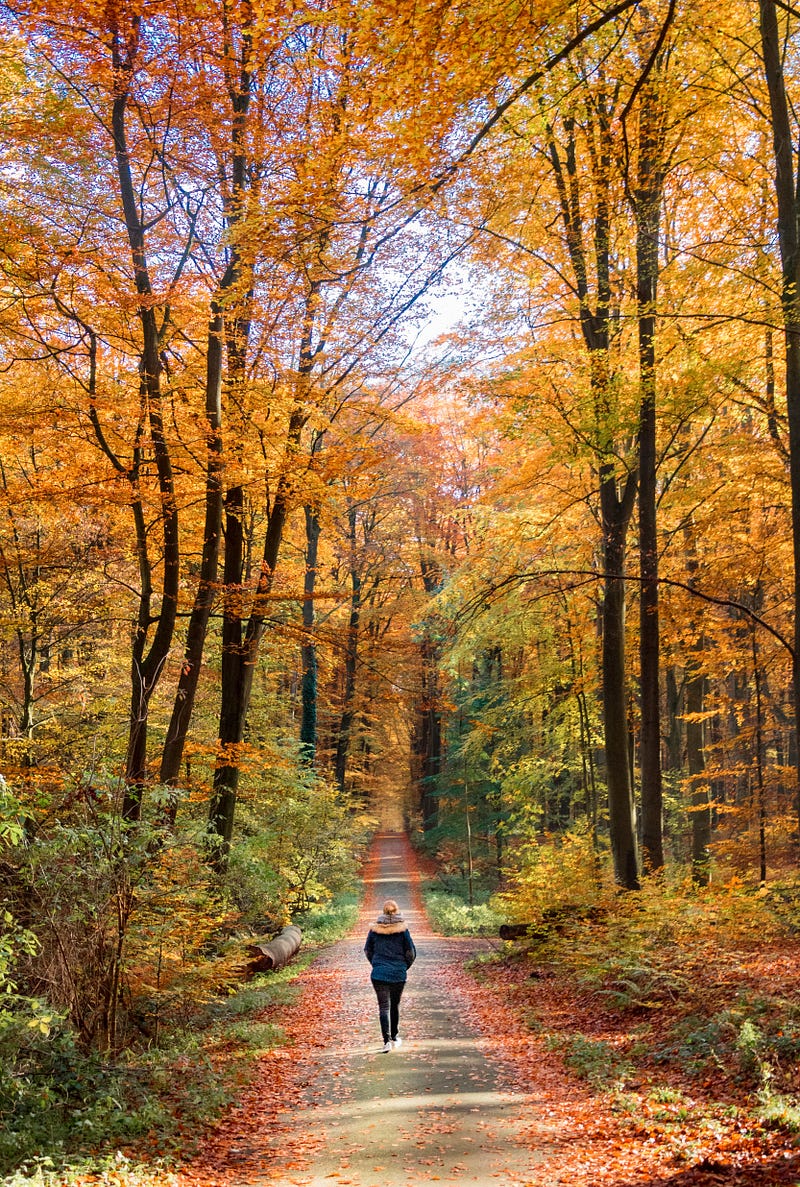
Forrest walking?
Rise your feel-good factor tremendously.
I miss forrest walks when I am at sea.
Make your walking interesting; I got this one from a Tim Ferris podcast when walking in nature, like if we were walking In a forest, my favorite walk, by the way!
It’s nice to have the ability to increase your resolution a bit.
Say what?
Yup.
The resolution knob?
Well, this is also my first thought, but it makes a lot of sense.
Walking in a forest can be another place that calms you down. Often we see things we are unfamiliar with; they are just there, you see them, but you are not always spotting them if that makes sense to you.
Seeing certain things, like in the forest we see a lot of trees for instance but spotting them means:
“You can put a template on a tree.”
You can distinguish them from one another, and you are turning your resolution up a bit.
The more detail about a certain element you understand, the more your resolution can be increased. This makes you feel the experience of walking in a particular environment more than just being there looking and walking, it will create an enhanced feeling with nature, and you’ll be more in contact with your senses.
Achieving this can be done by raising questions and remembering them after the walk and doing some research or, better yet, talking to them after the walk and doing some research or, better yet , talking to experienced people to get a better understanding.
The next walk you will do, you’ll likely to have a deeper connection going on with a higher resolution of your environment.
I started this practice myself, getting a deeper understanding of our environment. You are more intense within the moment.
Nevertheless, it is a tool that we all can use and apply in numerous other fields, for instance, a brick wall can create a calming effect for someone who understands how the structures differ or which kind of bricks were used
The more knowledge you have about this subject, the easier it is to sink into detail, leaving you wandering and distracted from what mental issues you were having.
Gaining more knowledge about your environment and making these connections will make your walk more valuable. Nature is fully charged with negative ions, especially around waterfalls, on the ocean surf, on the beach, and widespread in mountains and forests.
Negative ions have superior effects on your physiology:
- They purify the blood
- They neutralize free radicals
- They revitalize cell metabolism
- They enhance immune function
More knowledge often relates to more questioning, and wandering has great benefits; you’ll likely start learning to know yourself more. Nature still holds a lot of hidden elements. Therefore this might not be a bad place to trigger them.
- Darwin’s analysis of the plants and animals he gathered led him to question how species form and change over time? This work convinced him of the insight that he is most famous for — natural selection.
- Isaac Newton was wandering about gravity and why the apple fell? While sitting in nature.
- Leonardo Da Vinci concluded that the tongue of a woodpecker was protecting its brain from the rapid hammering of trees…
Growing up in Hilo on Hawaii’s Big Island, Jennifer Doudna loved roaming the rainforest around her family’s housing tract.
Jennifer Doudna puzzled over one plant with leaves that folded shut when she touched them.
How does that work? Some chemical change responds to touch, allowing these leaves to close. But what is it?
In 2011 she was investigating how bacteria fight off viruses; she and her team discovered CRISPR…
I mean,
wandering is something that can distract us from stress.
Walking in nature could help you discover something new as well.
Walking is an underestimated mind therapy; take advantage of it.
Walk your way out,
Absorb, Read, Write, Sleep, Exercise, Thrive!
Thanks for reading this, and I hope this can get you out walking more and upgrade your walking experience.


