
Neuroscience
Did You Know That Yawning Cools Your Brain?
So next time you catch a yawn, don’t stifle it
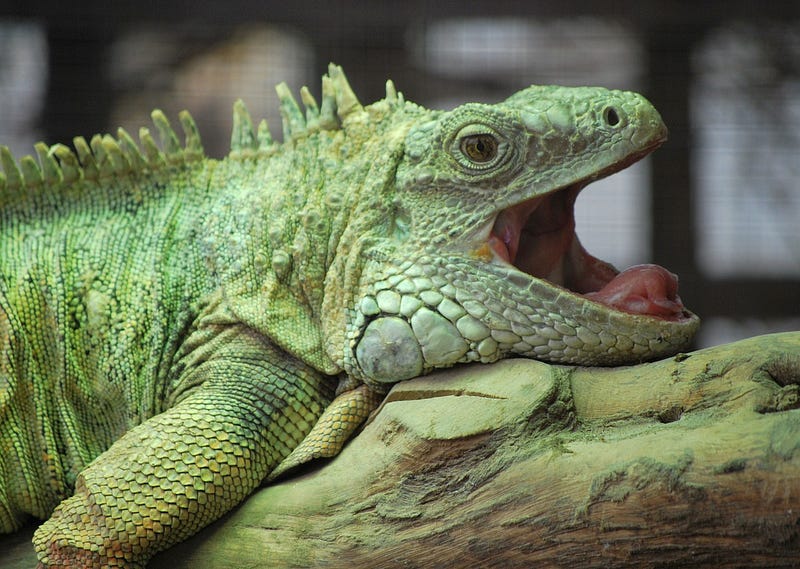
We yawn for a variety of reasons.
We’re bored or tired. We yawn before sleep and on waking. We yawn when under stress or under stimulated.
Yawning is an age-old process that occurs not only in humans but reptiles, birds and mammals.
Contagious yawning is common in humans and other animals such as dogs and chimpanzees. Though we don’t yet fully understand this phenomenon, scientists believe the motor cortex plays a role.
But I’m here to tell you what research reveals on what happens when we yawn — not why we catch a yawn.
(If I’m boring you, go ahead, yawn.)
Why do I yawn less in winter?
We’re in the middle of winter in the southern hemisphere. It’s frigging freezing and the electric blanket is on and ready for me at bedtime.
But I notice that even when tired, I don’t yawn until I’m snuggled up in the warm bed.
That got me wondering.
Once my curiosity is aroused, there’s no stopping me.
Here’s what I found.
Yawning is a brain cooling mechanism
So, if you’re feeling hot and bothered — yawn!
Brain HQ says,
“This behavior is controlled by chemicals in the brain called neurotransmitters. Neurotransmitters, such as nitric oxide and dopamine, act in the hypothalamus to induce and control yawning.”
(The hypothalamus is our personal thermostat in our brain.)
When we yawn, hyperthermic (hot) blood is flushed away from the skull and replaced with a flow of cooler arterial blood.
This hypothesis has garnered recent support as the following study published in April this year in Physiology & Behavior shows.
“Manipulating neck temperature alters contagious yawning in humans”
This study involved 92 undergraduate biology students who changed the temperature of their brains in a lab by placing, for five minutes, either a cold (4C/39.2F), warm (46C/114.8F) or room temperature (22C/71.6F) pack on their carotid arteries. (Those are the major blood vessels in the neck that pump blood towards the brain.)
Participants then watched a 63-second video of nine different people yawning. They then filled out questionnaires answering whether they had the urge to yawn before, during or since.
Those who had cooled their brains had less of an urge to yawn than those of the warm and room temperature groups. Only 48.5 percent of the cool group felt like yawning, while the warm group scored 84.8 percent and the room temperature group 69.2 percent.
“These findings are consistent with earlier research showing that yawns function as a compensatory brain cooling mechanism,” the authors wrote.
We yawn less in winter
The ambient temperature is cooler so, unless I’m wearing a thermal beanie, the likelihood of my yawning is low.
And that explains why, even if I’m tired, I only yawn once I’m cozy and comfy in bed.
As most of you are enjoying summertime — the yawning is easy!
Thanks for reading!