
Did Shizo Kanakuri’s Marathon Last Over 50 Years, Making Him the Slowest Runner?
The example of Shizo Kanakuri shows that it’s never too late to finish something we started, even if it’s half a century ago. Here is the story of a lost marathon runner that probably wouldn’t happen today.
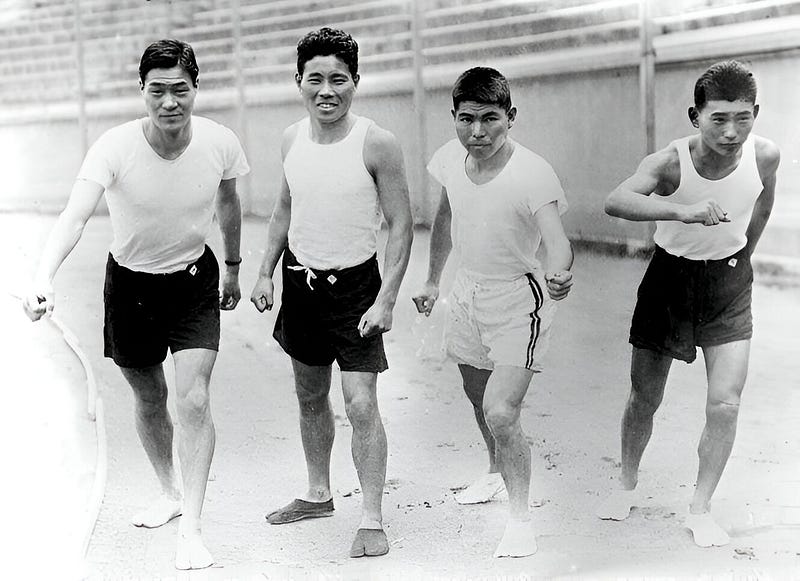

Engaging in sports at an elite level requires people to have not only physical strength but also, perhaps most importantly, mental resilience. Olympians and record holders in various disciplines often emphasize that the key to success is setting goals and consistency in action. Sporting stories have many heroes who have risen above human capabilities. Shizo Kanakuri’s example is exceptional. The Japanese became famous for completing the marathon not the fastest, but the slowest. It took him precisely 54 years, 8 months, 5 hours, 32 minutes, and 20.379 seconds.
Shizo Kanakuri finished the marathon half a century later
Let’s go back over 100 years, to 1912. It was then that the Summer Olympic Games were held in Stockholm. Among the athletes dreaming of gold medals was Shizo Kanakuri from Japan. The man participated in the marathon. However, he failed to finish it due to high temperatures. A runner’s body is prone to overheating, and in heat, this risk increases. Around the 30th kilometer, Kanakuri began to experience the effects of exhaustion, such as dizziness or muscle weakness. Fearing more serious health consequences, he left the course to cool down. Ultimately, he decided to withdraw from the marathon. The problem was that he didn’t report this to the organizers.
Such a story would not have a place in the social media-dominated 21st century. However, in 1912, even telephones were not yet a common convenience. So, no one knew what had happened to the Japanese marathon runner. There was officially no evidence of his withdrawal from the race. No one also knew where he was. Therefore, the Swedish authorities considered him “missing.” Scandinavia lived with the case of the missing marathon runner for a long time.


What happened to the athlete?
For over 50 years, no one knew what had happened to Shizo. And it was a very tumultuous half-century in history, not least because of two world wars. As it turned out, the Japanese not only survived them but also continued his adventure with sports. Not as a competitor anymore, but as a coach. In the 1960s, few remembered the missing marathon runner. Europe then had other concerns, including the reconstruction of states.
It wasn’t until 1966 that the Swedes learned about the further fate of the Japanese marathon runner. Immediately, he was invited to Europe to finish the marathon he had started years ago. He succeeded at the age of 76. Thus, he broke the world record and was named the slowest marathon runner in history. The time from his start in 1912 to crossing the finish line 54 years later was counted.
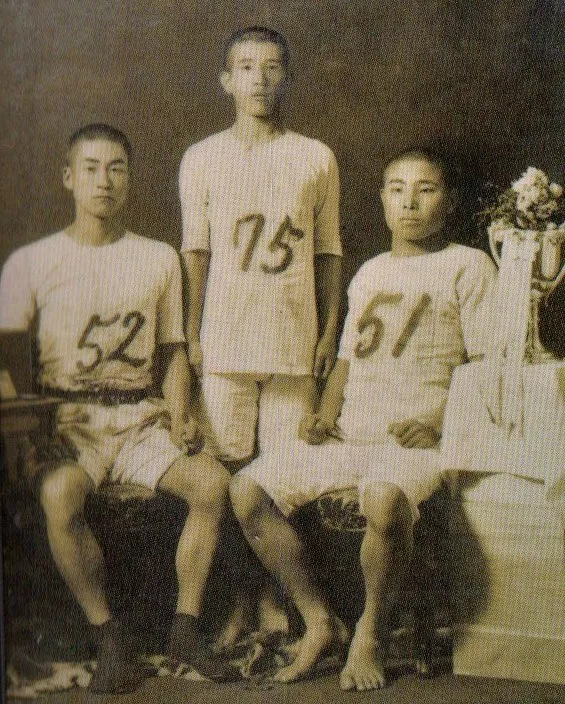

Olympic Records
In 2023, the Summer Olympic Games will be held in Paris. This is another occasion for the capital of France to host the Olympians. The event took place for the first time by the Loire River in 1900 (when women also participated for the first time). The second Games were held in Paris in 1924.
Shizo’s record is treated with a wink, but the fact is that athletes push the boundaries of human capabilities practically every four years. The oldest Olympic record belongs to American Bob Beamon, who won the gold medal in the long jump in 1968. The result he achieved in Mexico was also the world record until 1991.
The all-time record holder is Michael Phelps. The American swimmer stood on the podium 28 times. He repeatedly set new world records in both individual and team events.
Attention all readers!
As content creators on Medium.com, we face minimal compensation for our hard work. If you find value in my articles, please consider supporting me on my “Buy Me a Coffee” page. Your small contributions can make a big difference in fueling my passion for creating quality content. Thank you for your support!

