
Did Rich Mullins have AIDS?
New evidence in the life of the Evangelical legend
On September 19, 1997, the Evangelical singer-songwriter Rich Mullins died in a car wreck, age 41. For fans, it was a tragic end to a divine life.
But details have puzzled. Why had Mullins retired from music? Why had he looked so ill prior to his death? He’d seemed all right as of 1994.
Then, he wasn’t all right.
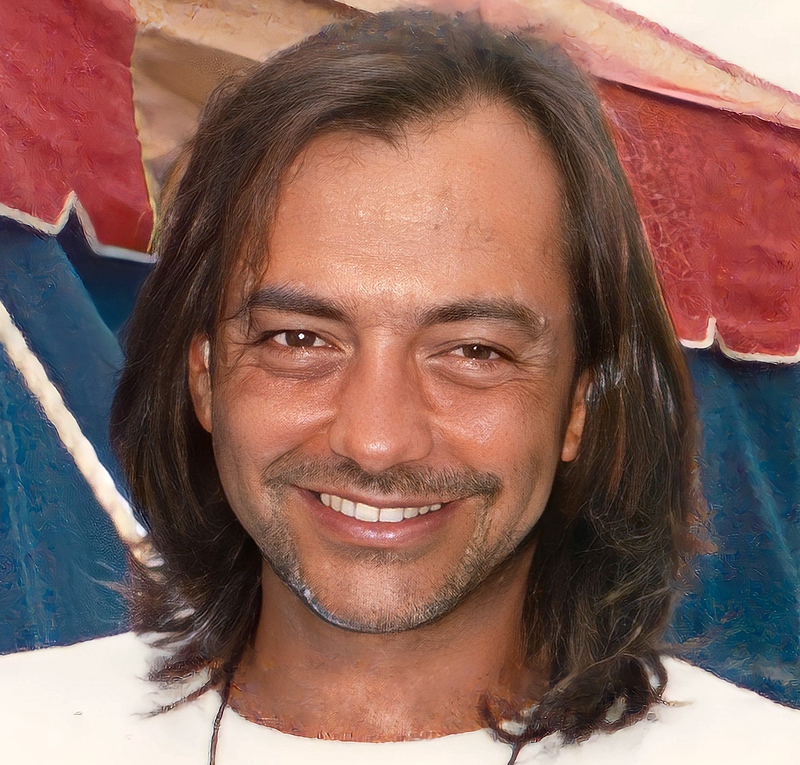
In a post in 2020 I suggested he’d kept a secret.
Mullins discussed himself as a “sissy,” never married or had apparent girlfriends. Had he been gay?—if in a tortured, closeted, Evangelical mode.
My profile had suggestive scenes. In 1985, Mullins was in crisis over what he called his “secret sin.” He was doing some activity that made him “sick” and made God “sicker,” he said, as he’d pursued some kind of “cure.”
The identification of Mullins as gay may lurk for many in the realm of surmise, though there was a development. Shane Claiborne had written in The Irresistible Revolution (2006) of knowing Mullins. In a 2021 reminiscence of Mullins on Facebook, he was using a word he hadn’t before.
“He struggled with his own darkness, loneliness, sexuality.”
Did Mullins’ retirement suggest he had AIDS?
I thought so, but even readers sympathetic to the profile felt such a speculative diagnosis was irresponsible. A reply on Twitter read:
“There’s no way to know that and the symptomology did not seem to line up with that. And even if he did, none of our f’ing business”
But I view a diagnosis of AIDS by a popular Evangelical performer as a historical matter. And so I’d like to return to the subject of Mullins and AIDS. There’s some new facts.
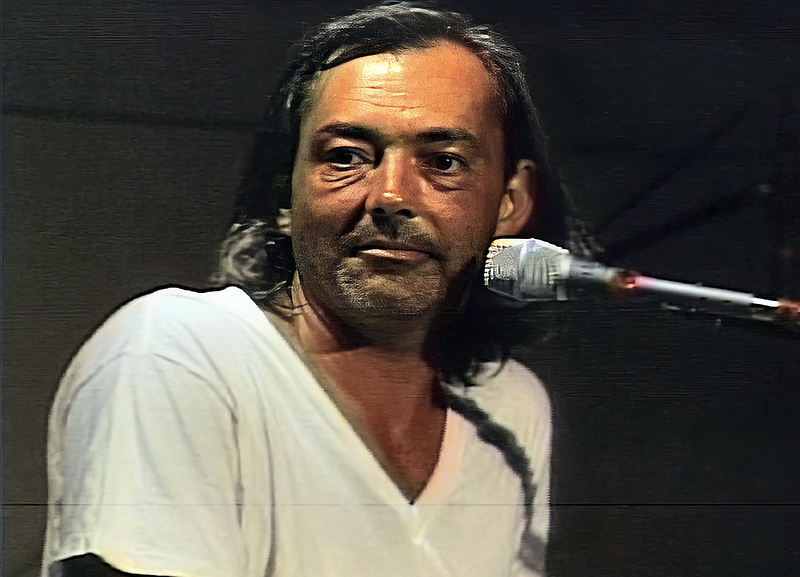
He spoke of a plan to leave music by 1995.
His career was on the upswing, with religious superstardom in view, so leaving seemed mystifying. But he kept saying it, as in 1990:
“…you know, in another five years I’m gonna start repeating myself even worse than I already do. So what’s the point of that, you know? And… time to move on.”
In 1992, he appeared on The 700 Club, and said—at age 37—that he planned to quit at age 40. He said that he’d be “too ugly” to continue.
The same year, he told CCM:
“As I get closer to 40, I realize that there are a lot of other things I still want to be able to do in my life. I want to finish college and be able to teach music therapy to native American kids on reservations. That’s such a high-risk situation.”
Always vague on the details, he explained in a 1993 radio interview:
“I’m hopin’ to teach on an Indian reservation, K thru 12. Or, if that doesn’t work out, maybe go to Central America or something.”
In photos and video from the early 1990s, Mullins does not look well.
In a 2014 blog post, Melody K. Anderson, the daughter of a well-known Christian author, recalls in 1995 meeting the man who “seemed uncomfortable, nervous, distracted, and out of place.”
His body balloned in size, then seemed thin and frail. In 1997, a friend recalls:
“Rich looked tired, almost haggard. A couple of days’ worth of stubble didn’t help. There were circles under his eyes. And those eyes didn’t have quite the impish sparkle I remembered…”
Friends recall him saying he was very ill.
The most complete documentary to date of Mullins’ life, the 2014 movie Rich Mullins: A Ragamuffin’s Legacy, has lots of vague talk about health problems. One friend recalls:
“He called me out on the porch and he said, ‘You know all these things we’ve been dreaming about doing—I’m not going to be able to do these things.’ He said, ‘My health has been bad.’ He said, ‘I don’t what’s going on or why, but I just know I’m not going to be able to do this.’”
One of his young bandmates recalls: “He was real, real tired. Real tired.”
Mullins’ Christianity was rapidly changing.
He took to making the most pro-gay statement as could be imagined in Evangelical outlets. In June 1997, CCM did a feature on AIDS, and quoted him:
“It seems like the church has picked homosexuality out to be the ultimate evil thing, and I’m just not always sure that it is.”
He was delivering deep critiques of Evangelicalism. He says in a startling 1996 interview:
“I think you are who you are, and you just live your life, and eventually we’ll all be dead, and it will probably matter very little that any of us actually lived, except to God who made us. And the only way we can possibly be meaningful to God is to be who He made us to be…”
At a concert in Texas in July, he speaks of himself as not long for the world, and anticipates resurrection. He was 40 years old.
In early September 1997, Mullins and crew stayed a few weeks with a family in Illinois.
A teenager in the household, Caleb Cruse, was a big fan but didn’t at first recognize Mullins—whose body seems to have been rapidly changing.
Mullins explained his appearance: “We’re doing a couple things right now, which is why we look really tired.”
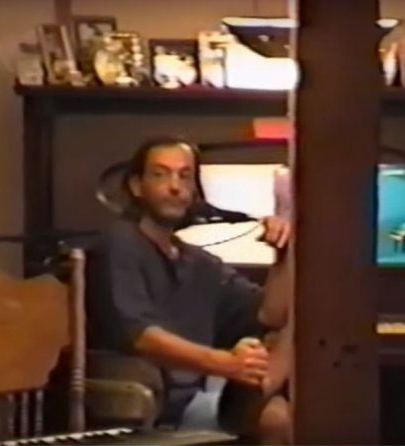
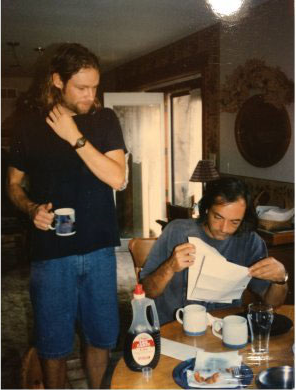
A new documentary has more about his last days.
The weeks Mullins spent with the Cruse family are featured in a 2020 documentary, The Work You Began: The Last Days of Rich Mullins, that was crowdfunded and available free on YouTube.
In interviews in both documentaries, he seemed to strike people as ill, depressed, alone, and somehow doomed.
A music associate named Chuck Harper recalls that Mullins made a demo tape of a new album, The Jesus Record, but said he would not be able to record it. No explanation.
In a 2018 interview Harper had recalled that Mullins “was getting really exhausted. He was having stomach problems. He was weaker."
In the new documentary, Harper adds that Mullins had called him outside for a private talk. As Harper recalls, Mullins says: “I’m not going to be able to finish all the stuff we were wanting to do.”
Harper protested that Mullins would surely be able to record, no matter where in the world he went. Mullins said:
“No I don’t know what it is. I’m not going to be able to carry out all these things that we’ve talked about. But I will be able to fund it.”
Harper quotes him again:
“I don’t know if I’ll be in the States. I don’t know what’s going on. I don’t even know if I’m going to keep recording music. Just some things have changed.”
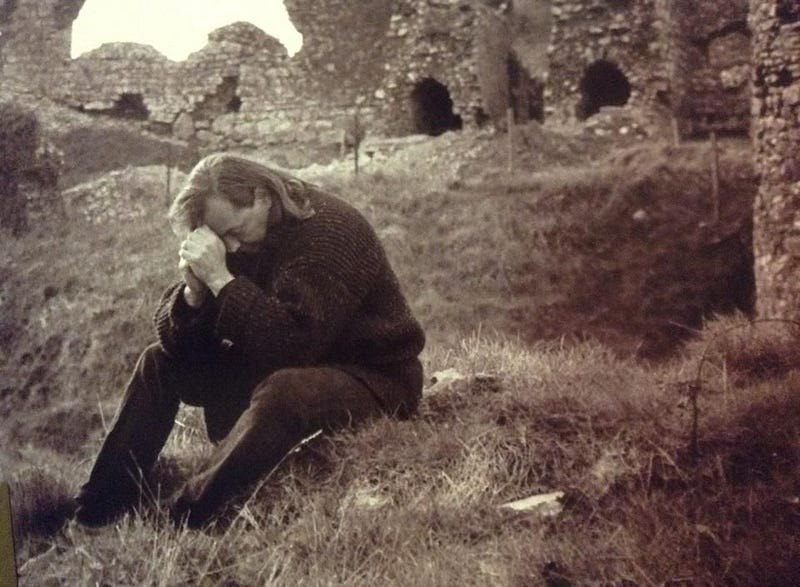
There was a last concert to play, in Bloomington.
Mullins set out with his friend Mitch. At a stop at a gas station, Mullins had a run-in with a spurting coffee machine and just walked away. After that, Mitch’s memory blacked out. All that was known, later, was the Jeep had crashed, and Mullins was killed.
If Mullins’ illness was AIDS, then a different narration of his life presents itself. He may have known he was positive since around 1985, with the “secret sin” scene, with its longing for ‘healing’, marking a point at which he learned he’d contracted the virus.
HIV was thought to have a course of around ten years from infection to death. Mullins would have anticipated becoming seriously ill and then dying around 1995—the year he’d spoken of leaving music.
From 1985 to 1992, he’d hurled himself into his career, as the intensity would have been fueled by his knowledge of his approaching illness and death.
If he had AIDS, he might’ve wished to quietly disappear.
An ‘accident’ would mean that he would not be outed, would not be seen in public looking ill, and his music would remain commercially viable to Christian people.
It was common for AIDS sufferers to arrange deaths that concealed the virus they carried. Mullins may have imagined a car crash—having spoken earlier of this means of suicide to stop his “secret sin.”
It seems unlikely he’d planned the accident to happen the way it did. Perhaps he was driving, in emotional upheaval, and lost control.
If God knew the truth, Evangelicals wouldn’t be any wiser. 🔶


