
Billy Graham went senile and Evangelicals hid it
A look at the health of a legendary leader
For decades he was the figurehead of Evangelicalism and a global ‘religious leader’. In his late years, Billy Graham led by books and written statements.
In 2016, he even voted for Donald Trump — all according to his son Franklin. He died in 2018, said to be alert to the end. But other relatives said Billy Graham had been senile for years.
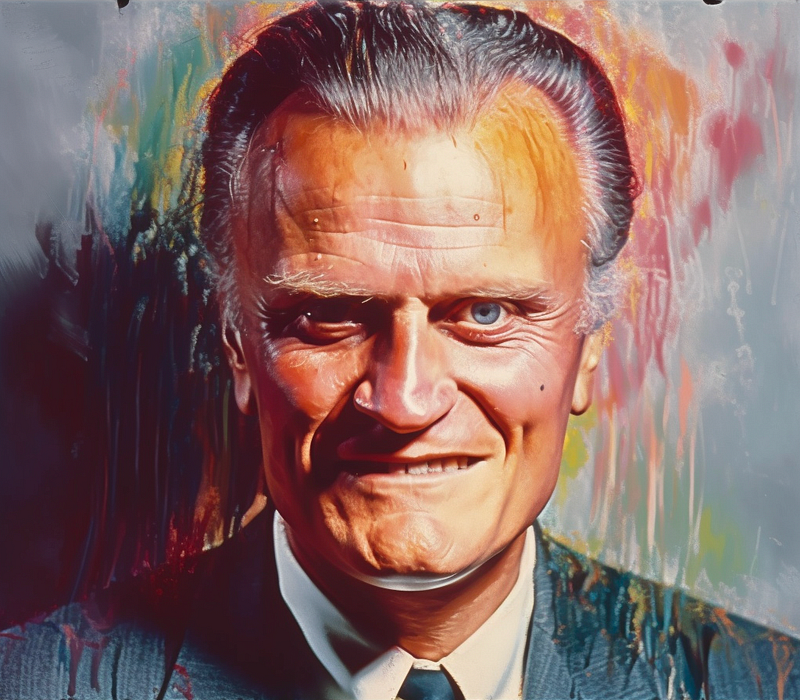
Graham’s health was always a weird subject.
He seemed the strong, tall leader on stage. But by later reports he often experienced an array of health problems. In 1991, William Martin wrote in his biography A Prophet With Honor:
“Graham suffered from an astonishing assortment of ailments, including hernias, ulcers, tumors, cysts, polyps, infections, pneumonia, chronic high blood pressure, throbbing headaches, spider bites, and a series of falls that broke eighteen of his ribs.”
In a profile in 1995, Martin was a bit more pointed:
“Billy has always fought a secret life of pain and illness to get into the pulpit. He’s courageous and mentally strong, but physically, he’s been more fragile over the years than he has appeared.”
A 1997 biography of his wife found him, around 1995, with “fractured ribs, and a broken back”—always going to great lengths to make every public appearance.
In 1989, he was diagnosed with Parkinson’s.
It was kept quiet until 1992, when Franklin assured the media it was a minor matter: “He has a little trouble walking or climbing stairs.”
There seems to have been far more problems than admitted. Around 1991, Graham’s handwriting became illegible. His wife, Ruth Bell Graham, was quoted: “Overnight he has become an old man.”
But later, Graham was said to have been misdiagnosed. He didn’t have Parkinson’s, but hydrocephalus, a build-up of fluid in the brain. I can’t find any discussion of when the problem would’ve begun. He had surgery in 2000 to address it by drainage, but the effects continued.
There were also his imagined ailments.
In a 1959 article in Christianity Today, Graham says: “Hypochondria, a mental disorder which is accompanied by melancholy and depression, is often caused by self-pity and self-centeredness.”
Was it autobiography? A eulogy in 2018 noted that he was “a bit of a hypochondriac, his friends affectionately allowed…” The phrase is often used of Billy Graham: “a bit of a hypochondriac.”
He seems to have been an anxious person in general. Many times, Graham told his friend Francis Schaffer that he was “terrified of dying,” as Francis’ son Frank Schaeffer reports in his 2007 memoir, Crazy For God.
Graham did ‘crusades’ into the mid-2000s.
Then in his 70s, he had to be helped to the pulpit, and had to sit down mid-speech. But his mind was present? It seemed. In a 2006 interview with Newsweek, he tried to recite Psalm 23:
“He begins: ‘The Lord is my shepherd, I shall not want …’ Then, for a moment, he loses the thread.”
In 2011, Graham’s biographer Grant Wacker visited him, finding Graham struggling to get up from his chair. “I have always been prepared to die,” Graham said, “but I haven’t been prepared to grow old.”
Wacker adds: “Shortly afterward the family decided that he would receive visitors no more.”
Graham didn’t seem to be anything like a working writer, but was publishing book after book.
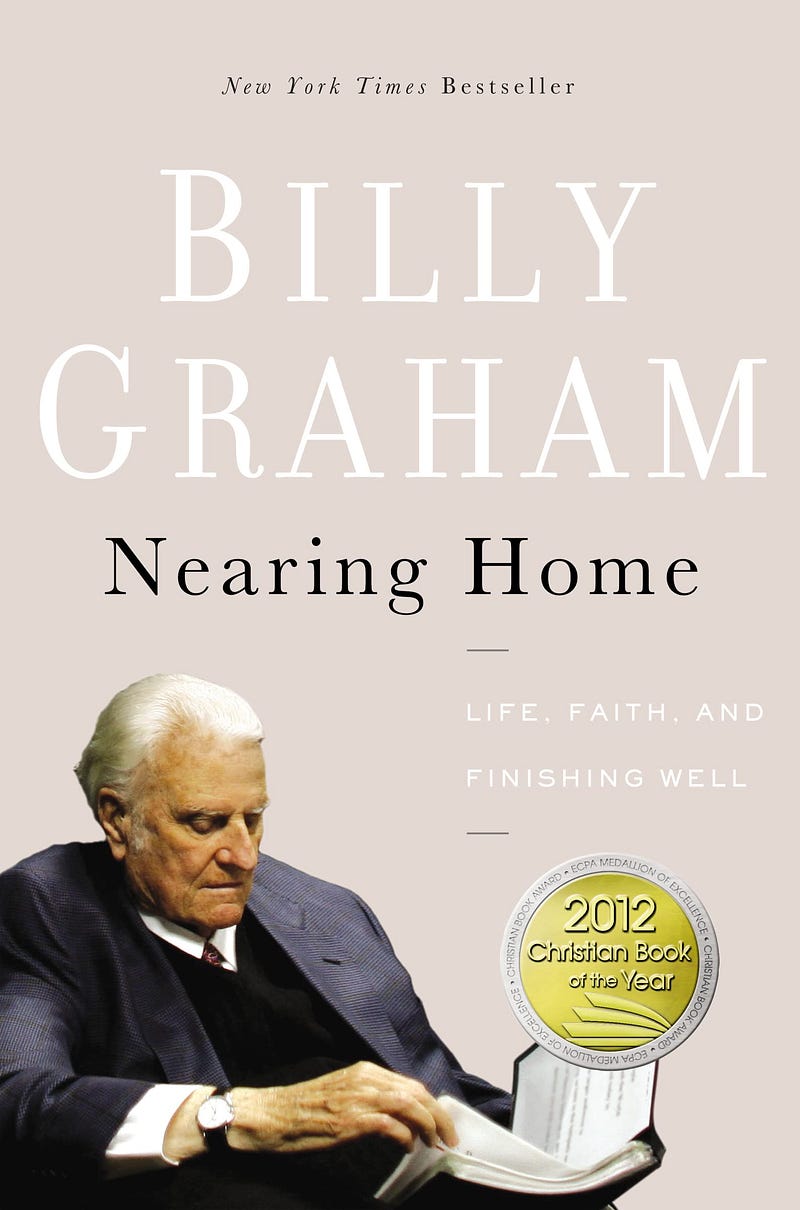
In 2011 there was Nearing Home, a bestseller. In 2012, The Heaven Answer Book. In 2013, The Reason For My Hope.
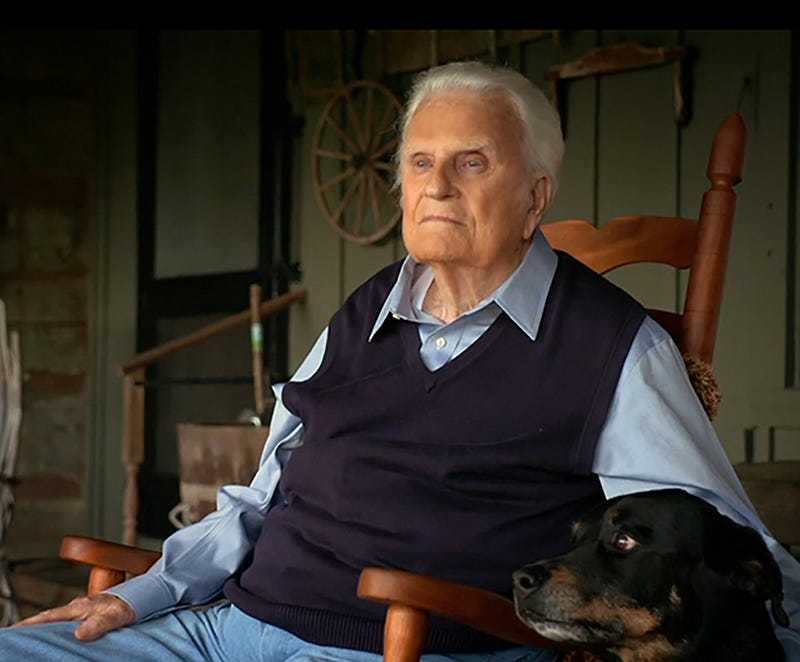
Public appearances continued—increasingly staged.
In 2013, a party was thrown to view what is called Graham’s final sermon, some speech on video highly produced to look like a prophet’s visionary glimpse into the beyond.
It feels very scripted. Were the words being fed to a man whose mind was barely there?
His mind was ‘good’, his son kept assuring.
In 2014, Franklin updated: “Dad’s in relatively good health — he’s hard of hearing and can’t see very well but his mind is still clear.”
In 2015, it seemed that Graham was alert and monitoring the world around him. He issued a statement to followers to “prepare for persecution.” This probably suggests an idea that Republicans were expected to lose the 2016 presidential race—and by extension to motivate them to engage in politics more energetically.
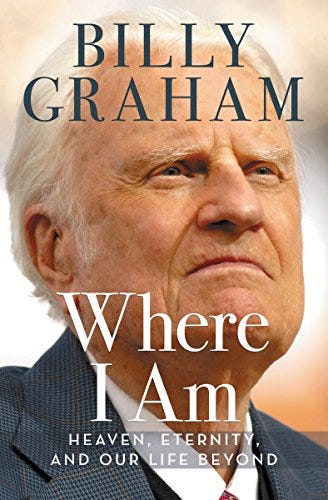
The same year, Graham published his final book, Where I Am: Heaven, Eternity, and Our Life Beyond.
There was speculation at the time that he’d not written it. The tone and theology were different from his earlier messaging.
All of Billy Graham’s books were probably ghostwritten, as the machine seems to have kept running long after its maker had left.
In 2016, Graham voted for Trump for president.
Or Franklin said so in 2019—to stem the damage from an anti-Trump editorial in Christianity Today.
At the time, several grandchildren were skeptical he’d actually made some considered decision to vote for anyone. Aram Tchividjian, a grandson, tweeted that Graham had Parkinson’s and hydrocephalus.
Jerushah Duford wrote in a blog post that her experience for years had been visiting a grandfather “bedridden and suffering from hydrocephalus. Our visits consisted of quietly sitting with him holding his hand while he lay in bed.”
Then in a 2020 interview promoting her memoir, Billy Graham’s daughter Ruth recalled of his final years:
“We lost the patriarch but he’d been gone for quite awhile. You know, he was not with us for quite awhile. We’ve adapted. But it’s not easy. I miss him. I miss knowing he’s here, you know, just in the world.”
Franklin kept up the idea that his father was mentally alert.
In a 2017 news story: Franklin says: “His mind is good but he’s quieter these days. He can’t see or hear well, but his health is stable.”
In 2018, after his father’s death, Franklin recalled: “In the last year, he just basically quit talking. But his mind was still good.”
But the evidence seems to be that Billy Graham was mentally remote from around 2011 on, as Franklin—and the whole family—faked books and public statements. From 2015 on, Graham was conscious, but “gone.” 🔶


