
Dichotomies as a Prerequisite for Existence
We can’t know one without knowing the other
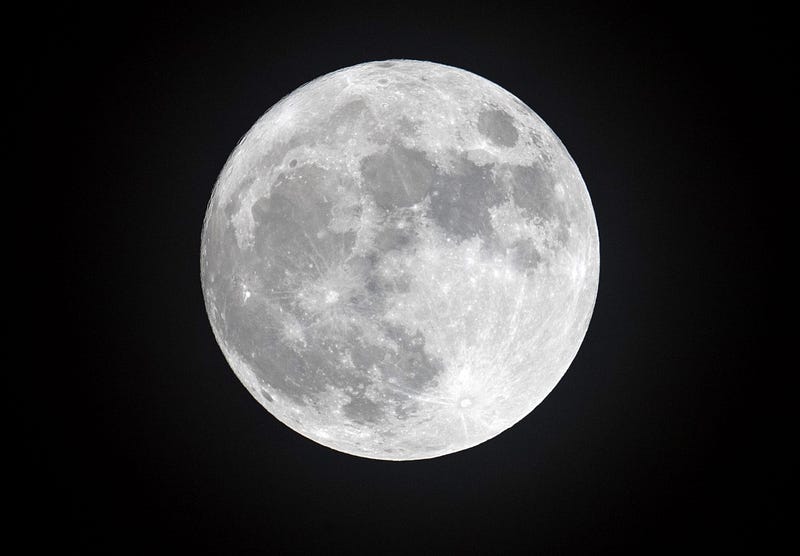
Throughout history, mankind has explored what necessitates our existence. What makes us human? Philosophical, scientific, theological, and metaphysical speculation has presented us with theories, and whichever you identify with stems from your cultural and ideological beliefs. No matter the theory you believe in, if you believe in any of them at all, there’s no denying that dichotomies are elemental in existence. Humans are both good and bad. Each solar day is split into night and day. Our universe is composed of both light and darkness. Could dichotomies be a prerequisite for existence and not just a constituent?
First, let's look at the arenas of life in which dichotomies are seen.
Dichotomies are omnipresent in literature. In the Strange Case of Dr Jekyll and Mr Hyde, Robert Louis Stevenson explores the dual nature of humans: usually virtuous, but sometimes, shockingly vile. In J.K Rowling’s Harry Potter, good versus evil is the central plot that arcs across the entirety of the series. One of literature’s most prominent idioms, “to be or not to be” from William Shakespeare’s Hamlet, is a dichotomy.
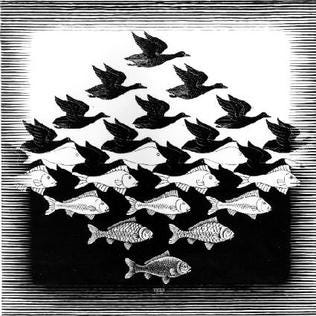
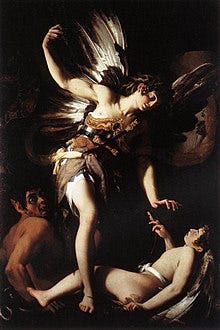
Dichotomies are discernible in art. We can see chiaroscuro, the use of strong contrasts between light and dark, in the visual arts. M. C. Escher uses dichotomous colours, black and white, in his woodcut print Sky and Water I. In his painting Girl with a Pearl Earring, Johannes Vermeer focalizes a girl through his use of flaxen colours against solid black. The two individuals in Sacred and Profane Love are modelled through Giovanni Baglione’s use of dramatic chiaroscuro.

The didactic function of proverbs is enhanced by their use of dichotomies. In Ancient Chinese philosophy, Yin and Yang. In the Japanese proverb, “ Fall seven times, stand up eight”. In the English proverb, “Two wrongs don’t make a right”. In the Swedish proverb, “Shared joy is a double joy; shared sorrow is half a sorrow”. On and on and on they go.
Dichotomies are present in science. In psychiatric medicine, with Freud’s model of the ego and the alter ego. In the physical sciences, with the positive and negative poles of magnets, batteries, and electrical circuits. In the planetary sciences, with the north and south pole of our earth and the dark and light side of our moon.
Dichotomies extend their reach to religion. In Christianity, Jesus’s crucifixion is followed by resurrection and ascension, and heaven and hell play an extensive role in Christian thought. People who have undergone near-death experiences often claim to have felt overwhelming sorrow in watching their life flash before their eyes, which they then claim is followed by extreme joy from the forgiveness of their maker.
Dichotomies are ubiquitous and a prerequisite for our existence. Why?
We can’t know one without knowing the other.
We can’t appreciate joy without sorrow. We can’t decipher the truth without lies. We can’t understand love without hate.
Light wouldn’t exist without darkness. Hot wouldn’t exist without cold. Heaven couldn’t exist without a hell.
Dichotomies are essential for our perception of the world, and essential for existence. We, and all of existence, have to have dichotomous qualities in order to actualize the full realization of ourselves and purpose. Without them, we are one-dimensional and therefore, non-existent.
Having awareness of the “dichotomous nature of existence ” is in itself, a dichotomy: both terrifying, and beautiful. There is beauty in balance — how lucky are we to know dichotomy and not just harmony?