
Diamonds Are Forever: The Greatest Marketing Campaign Ever
Marketing is a crucial component of any successful business. The phrase “the product will sell itself” isn’t smart, it’s foolish. People need to know about your product first before they even consider buying it. After that, you need to convince them that they need to have it. Marketing is how you accomplish both of those things.
Great marketing is an art where you have to be very strategic. Convincing your customers that they have a need for your product has to happen on a deep psychological level to be fully effective. The greatest marketing campaign to ever accomplish this was called Diamonds are forever, executed by the De Beers company.
De Beers Diamond Rings
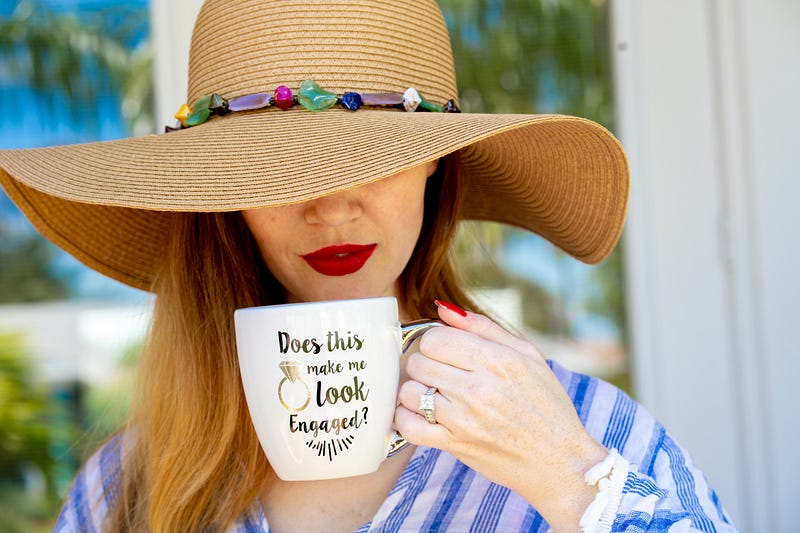
When you think of a diamond engagement ring, what’s the first thought that comes to your mind? Do you see it as an investment like gold or silver, or do you see it as a symbol of love and commitment? If you’re thinking of the second one, then the marketing of De Beers is working!
Diamonds used to be a luxury that only the ultra-rich would buy. Back in the early 1900s, the middle-class didn’t care much for them at all, it was just an expensive rock. There were far more useful items to spend money on like cars or expansions for the house. Even when De Beers tried reducing prices, most people in the middle-class still weren’t interested.
De Beers needed a way to break into this huge middle-class market. If they could capture those customers, profits would sky-rocket. Trying to convince the middle-class people with lower prices or better-looking diamond rings wasn’t going to work because, deep down, they didn’t really care for diamonds. They needed a marketing campaign that would make people care about diamonds.
“Diamonds are intrinsically worthless, except for the deep psychological need they fill.”
— Nicky Oppenheimer
Diamonds are forever
De Beers hired NW Ayer, a New York ad agency, in 1938 to find a way to sell their diamonds, even in the middle of the great depression. During such tough times, diamonds were not especially used in engagement rings. Women didn’t want their future husbands to be “wasting” money on an over-priced rock. Mary Gerety, the original copywriter behind the “A Diamond is Forever” slogan said that women wanted their men to spend money on
“a washing machine, or a new car, anything but an engagement ring. It was considered just absolutely money down the drain.”
Ayer was going to convince the public that diamonds were just as necessary, if not even more necessary, than practical things like a new car or washing machine. They formed a two-part strategy:
- Convince men that diamonds, and only diamonds, were the symbol of love and commitment. Even more so, that the size and quality of the diamond was directly proportional to their love for their woman
- Convince women that a man who loves them would buy them a diamond. If he truly loved her, it would be a big, shiny, expensive diamond. They should never ever accept anything less
De Beers was no longer being marketed as a jewelry company but as a seller of love and commitment. They were the ones that supplied the final knot that would tie a marriage together. It was done subtly yet effectively, by putting their diamonds in places they knew people would be watching.
Ayer paid for the diamonds to be shown in movies, where a woman would be given one by her lover. Big movie stars were given large diamond rings for free to show them off on-screen to millions of viewers. Of course, there was always a line about how big, shiny, and expensive the diamond ring was.
In 1947, Ayer paid people to give presentations to high-school students about the “trend towards diamonds”. The kids would end up doing entire projects about them! Ayer was getting to these young women incredibly early which really planted the seed deep.
“All of these lectures revolve around the diamond engagement ring, and are reaching thousands of girls in their assemblies, classes and informal meetings in our leading educational institutions”
They even paid news columnists to write big stories about celebrities who were given large, expensive diamond rings. Engagements showcasing the diamond became widely publicized events. This further gave De Beers the ability to market their diamonds as a “symbol of love.” Ring buying became a thing of competition where women everywhere compared their rings to size up their men. Whoever had the biggest ring was said to be the most loved.
“spread the word of diamonds worn by stars of screen and stage, by wives and daughters of political leaders, by any woman who can make the grocer’s wife and the mechanic’s sweetheart say ‘I wish I had what she has.’”
By the 1950s, a generation of women who wanted diamonds had been fully formed. From 1939 to 1979, De Beers wholesale diamond sales in the United States had increased from $23 Million to $2.1 Billion. Today, about 75% of American brides wear a diamond engagement ring. Not bad for a fancy rock.
Ayer finally reports:
“Since 1939 an entirely new generation of young people has grown to marriageable age. To this new generation, a diamond ring is considered a necessity to engagements by virtually everyone.”
The reason diamonds are used in nearly all engagement rings today is because of De Beers’s genius Diamonds are forever marketing campaign.
If you like to learn new things and become smarter, I encourage you to subscribe to the Mighty Knowledge newsletter for exclusive content.