
Dialing the Phone Was a Crapshoot at Election Time
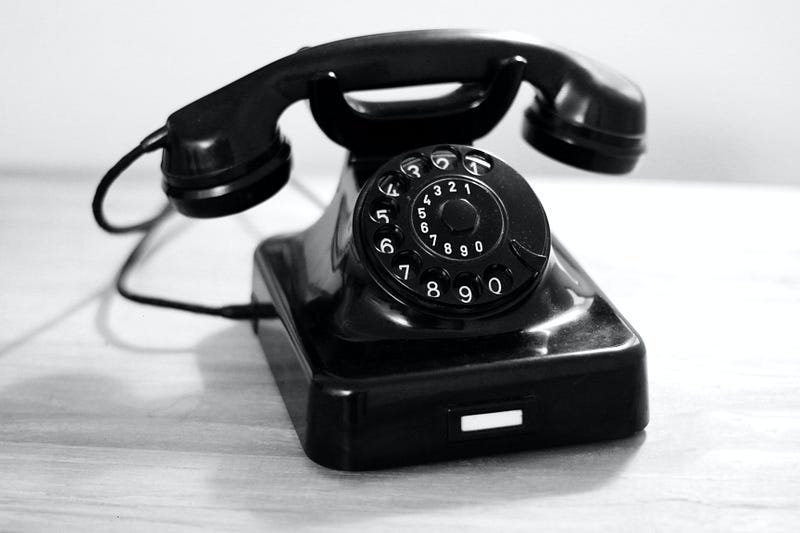
I signed up to make phone calls for the Maine Democratic party where I live, in the part of the state that went for President Trump in 2016. The Dems believed they had a chance to elect Joe Biden and to flip the Senate seat from red to blue.
Once a week for two months, I made about 50 phone calls to Democrats, Republicans, Green Party members, and unaffiliated voters, asking each person who I managed to get on the phone if they would support the Democratic candidates. Their responses gave me some insight in Trump supporters here in the state.
A female voter in her late 60s, a Republican, was the first live person I got on the phone. As the television blared in the background I explained why I thought the Democratic ticket was good for the state.
“Wait a minute,” she said and I could hear rustling, then the TV went silent. Thank goodness, I thought, perhaps we can have a real conversation. After all, the woman was courteous enough and she didn’t hang up on me so I wrongly concluded that she may be open to the possibility of change.
“Would you support Sara Gideon, the speaker of the state house for the U.S. Senate this year?” I asked, preparing to go down the list for Democratic candidates in all the races. Her answer cut my hopes short.
“You’d have to put a gun to my head before I’d vote for a Democrat,” she announced abruptly, dispelling any notion that she would change her vote. I said thank you and moved on to the next voter on the list.
Most people didn’t answer their phones, even in early September before the political calls got out of hand. We were instructed not to leave a message but to send an unanswered phone number back into the kitty for another volunteer to try. The personal contact is what mattered in the hunt for votes.
A few Democrats answered the phone, too, and that lifted my spirits as we found common ground agreeing that the current administration was terrible and we needed to elect a Dem. A couple even agreed to volunteer to make phone calls to help the cause.
The Green Party supporters were less enthusiastic about the Democratic Senate candidate. They had a good candidate from their own party to support.
I was calling in a red district in the state though and Republican voters dominated my list.
I called a 53-year-old man listed as unaffiliated, a classification that presented the chance of support.
“Would you support Sara Gideon in the election?” I asked.
“I haven’t made up my mind yet,” he said. We discussed each of the candidates and I tried to persuade him to support the Democrats. When I asked if he could support Joe Biden for President, he hesitated.
“My momma’s after me to support Trump,” he confessed. “She a big supporter and every time I see her, she’s after me to vote for him.”
Oh, no. This was trouble. I doubted I could change the mind of a middle-aged man who couldn’t break free of momma’s control. I tried anyway though I was an anonymous voice at the end of the phone line and momma’s voice clearly rang through loud and clear. I moved on.
Two Republican women I got on the phone spooked me. Their voices were soft and whispery and when I asked if they could support a Democrat they both apologized. “I’m sorry, but I’m a Republican,” they both said, as if that meant they had given up weighing the pros and cons of any vote.
I asked one of the women why she planned to vote Republican. “I’m sorry,” she said again, “but I’m opposed to abortion.” She sounded worried and sighed. “I don’t have a choice.”
I found one woman, a 45-year-old registered Republican who announced she was voting straight Democratic and that lifted my spirits. A couple of other women said they would support Sara Gideon even though they had voted for Republican Senator Susan Collins in the past.
As we got closer to Election Day it got harder to find people at home. When I got a Democrat on the phone, they were optimistic while the unaffiliated and the Republicans got more gruff.
“I told you to stop calling me,” said a 35-year-old woman, “now take my name off your fucking list.” Her words, laced with intense vitriol, unnerved me. I wasn’t used to people yelling at me.
Before I had a chance to tell her I had no power over the computerized list, she disconnected the line.
On my last day of calling just before Election Day, I came full circle. A Republican male in his late 60s answered the call. I was just warming up, explaining why I support the Democrats, when he cut me off.
“Forget it,” he roared. “You’d have to put a gun to my head before I vote for a Democrat.”
“OK, then,” I told him, not wanting to waste my breath. “Have a nice day.”
In the final days before election, the polls put the Democratic candidate for Senate, Sara Gideon, slightly ahead of the incumbent Republican Susan Collins, so I thought my job was done. I’d made my small contribution and now it was time to let the chips fall as they may.
On Election Day, the chips fell and they surprised a lot of pollsters. Susan Collins had won enough votes for another six-year-term. And in this district of the state, Donald Trump won easily with as much as 25 percent of the vote.
My days as a political phone caller were over, at least for a while. I gained a few insights, including awareness that the divisions in this country remain alarming, regardless of the vote.


