avatarBill Myers

Free AI web copilot to create summaries, insights and extended knowledge, download it at here

4745

Abstract

ower after treatment.</p><p id="72b6"><i>Lows still occur at about the same frequency, but the Libra alerts us while the number is high enough to be easily treatable.</i></p><p id="ab2f">It’s even helped with the short-term insulin, just not as often.</p><h1 id="d5d6">How warnings work</h1><p id="cbf7">You can download an app onto your cell phone or use a special reader. We don’t have any apps on our phones, so we chose the reader and have since named it “The Monster.”</p><p id="debf">Our problems are mainly with low numbers, but we did get warnings with high numbers, too, like a couple of times when it shot up over 400 (22.0).</p><p id="8d75">One downside, it throws tantrums when it doesn’t know where the sensor is, like in another room. Its range is not very far. If you have the phone app and carry your phone constantly, you shouldn’t have that problem.</p><h1 id="01e2">Operating Problems</h1><blockquote id="a071"><p>Joe Short When the alarm sounds, a message comes up to scan to reset the alarm system. The <b>alarm only sounds as the preset boundary is crossed,</b> so it depends upon what you have set for your low boundary.</p></blockquote><p id="b747"><b>This is definitely a design flaw.</b> If the hardware doesn’t prevent it, the software needs to be changed. When the alarm system is reset, then it also should start a timer. If the number is still below the limit after a preset time, the alarm should go off again.</p><p id="2e50">What if the number never goes above the limit so it can cross it again.</p><h1 id="6df8">Accuracy</h1><p id="bbb1" type="7">Don’t depend on it to make insulin or recovery decisions</p><figure id="e1e3"><img src="https://cdn-images-1.readmedium.com/v2/resize:fit:800/1*GZe1gq3DIMajpsE9Zk3Kvw.png"><figcaption></figcaption></figure><p id="c0d4">The instructions say not to use it to make insulin dosage decisions - and they are certainly correct.</p><p id="cc7c">Our experience shows that it will cause an overdose or under-dose about 30% or more often. It varies with each sensor. One sensor was off more than 60% of the time when compared to a blood test.</p><p id="d056">Finally, you have to wait 12 hours for a new sensor to establish itself once it is inserted. During that window, it is not available.</p><h1 id="e91a">Program flaws</h1><p id="f3ba">All programs have bugs, some code and some design. Hopefully, they will fix these in future releases.</p><h2 id="e9d6">1. No reset</h2><p id="fa4d"><b>Problem</b>: Numbers must cross the limit boundary to be set off. If the hardware doesn’t prevent it, the software needs to be changed.</p><p id="49a6"><b><i>Spec: </i></b>When the alarm system is reset, start a timer. Also, reset the timer at each check or when the number goes above the threshold. The same timer could be used for both the high and low limits. Set off the alarm if:</p><ul><li>The number is still below the limit after a preset time</li><li>The number crosses the threshold, going down</li></ul><p id="c9a7">The logic should be reversed for the high limit.</p><h2 id="aab5">2. Not low enough limit</h2><p id="2f1e"><b>Problem</b>: The current lowest alarm limit is 60 (3.3), but we don’t treat that number. The reader will detect numbers a little lower, but we can’t set the alarm lower. The lower and upper boundaries vary by individual.</p><p id="d77d">Frequently, it will wake us at night showing 59 (3.2) but the blood test shows higher, and over the next hour never drops any lower. However, if the blood test shows 58, and it continues down, the sensor will not catch it.</p><p id="6a79"><b><i>Spec: </i></b>Provide the ability to set the alarm at 50 or 55 (2.8), if the sensor technology can dependably read that number. Note: the lowest number registered by the sensor was 52 (2.9) when the blood test showed 30 (1.7) on the meter.</p><h2 id="d3bc">3. No overlap at 14 days</h2><p id="d886"><b>Problem</b>: Theoretically, the sensor lasts 14 days. As it nears the end, it starts issuing warnings to replace it. It has to be replaced and there is no overlapping coverage.</p><p id="d7c2">Currently, the replacement has to be planned because it takes about 12 hours to calibrate itself to start working properly, and requires checkpoint readings during that time. In addition, the user needs to be awake.</p><p id="7acf">The old one can’t be left on over those 12 hours.</p><p id="3657"><b><i>Spec: </i></b>The old one should work during those 12 hours until the new one takes over. The user should be able to switch back and forth as part of the calibration process.</p><h1 id="4802">Join the Facebook Users Group</h1><p id="9b0f">It’s nice to have experienced contact people when issues come up. For example, you might knock the sensor off, want to know t

Options

he best places to put it, how to prepare the site, plus other hints not in the manual.</p><p id="e54f">We have found the Facebook users group to be helpful.</p><div id="5153" class="link-block"> <a href="https://www.facebook.com/groups/123657518321698/?multi_permalinks=776923669661743"> <div> <div> <h2>FreeStyle Libre Users - USA</h2> <div><h3>This is an independent group and not related to Abbott or any other company. FreeStyle Libre is a trademark of Abbott…</h3></div> <div><p>www.facebook.com</p></div> </div> <div> <div style="background-image: url(https://miro.readmedium.com/v2/resize:fit:320/)"></div> </div> </div> </a> </div><h1 id="04f1">Conclusion</h1><p id="b3c5">Although it is still in its technological infancy and not perfect, it is better than nothing and we will keep using it.</p><p id="cf7e">Like everything else, the technology is sure to get better fairly quickly.</p><p id="8046"><b>Disclaimer</b>: <i>This article is the author’s opinion based on one subject and does not constitute medical advice. Each diabetic is different and Type 2 differs significantly from Type 1. The diabetic should consult their diabetes doctor about their own case.</i></p><h1 id="59a7">References</h1><p id="b7c2" type="7">More information from Abbott Laboratories:</p><div id="9117" class="link-block"> <a href="https://www.freestyle.abbott/us-en/products/freestyle-libre-2.html"> <div> <div> <h2>Continuous Glucose Monitoring System</h2> <div><h3>Indications and Important Safety Information FreeStyle Libre 14 day system: The FreeStyle Libre 14 day Flash Glucose…</h3></div> <div><p>www.freestyle.abbott</p></div> </div> <div> <div style="background-image: url(https://miro.readmedium.com/v2/resize:fit:320/)"></div> </div> </div> </a> </div><p id="3c32" type="7">My most important article on Medium:</p><div id="8c74" class="link-block"> <a href="https://readmedium.com/your-partner-has-diabetes-your-life-just-changed-48f16a6fc748"> <div> <div> <h2>What YOU need to know when Employing, Living with, or Working with a Diabetic</h2> <div><h3>Daily activities, from meal times & content to lifesaving intervention. You’re not diabetic but know someone who is —…</h3></div> <div><p>medium.com</p></div> </div> <div> <div style="background-image: url(https://miro.readmedium.com/v2/resize:fit:320/1*izOoatLgM-TYG_8HFdTpWQ.png)"></div> </div> </div> </a> </div><ul><li><b><i>Important for EVERYONE to know</i></b>, almost as much as CPR. <i>It’s changed the life for two early reviewers.</i></li><li><i>Sometime in your life, you will need to know about diabetes. My wife and I, coworkers, neighbors and strangers have had to contend with everything here.</i></li><li><i>Most articles offer advice to the diabetic. <b>This one is for everyone else</b></i></li></ul><div id="28ba" class="link-block"> <a href="https://readmedium.com/exploring-the-field-of-biomedical-device-engineering-everyday-explorer-cd18aa7a46e9"> <div> <div> <h2>Exploring the Field of Biomedical Device Engineering — Everyday explorer</h2> <div><h3>Biomedical device engineering is an innovative and rapidly evolving field that merges engineering principles with…</h3></div> <div><p>medium.com</p></div> </div> <div> <div style="background-image: url(https://miro.readmedium.com/v2/resize:fit:320/0*n308uhd67tzHemEE.jpg)"></div> </div> </div> </a> </div><ul><li><i>The Libre 2 is a great example</i></li></ul><h1 id="96d6">Other Articles in the Same Category</h1><div id="1c3d" class="link-block"> <a href="https://readmedium.com/diabetes-medical-health-table-of-contents-toc-279eeacef7f1"> <div> <div> <h2>Diabetes & Medical/Health — Table of Contents (TOC)</h2> <div><h3>undefined</h3></div> <div><p>undefined</p></div> </div> <div> <div style="background-image: url(https://miro.readmedium.com/v2/resize:fit:320/1*YCObcU9OPNlPY-maVssamg.jpeg)"></div> </div> </div> </a> </div></article></body>

Diabetes

Diabetics: One Life-Saving Reason to Use the Libra 2 Sensor

The Libra 2 continuous glucose monitoring sensor works, but its main benefit differs significantly from the two TV ads
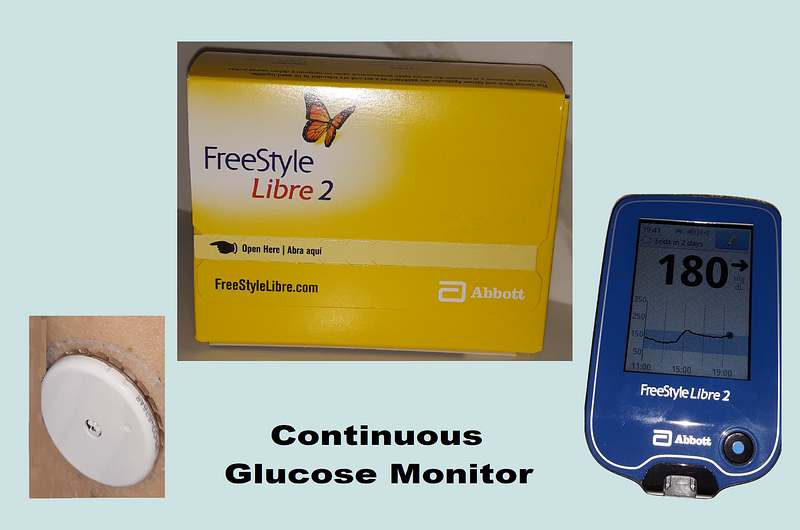
Photo courtesy of the author, William Myers, July, 2021

Synopsis

My wife of 20 years is a Type 1 diabetic and more disciplined with blood tests at meals and bedtime than a Marine Drill Sargent. Her doctor badgered her into trying the Libra 2 continuous sensor to detect frequent low blood sugars and sound the alert.

The system, still in its technical infancy, has many problems, but there is one compelling reason to keep it.

It sounds the alert around 2:00 am Before the number becomes critically low!

That is our reason for putting up with all of its shortcomings. Here is our experience.

Note: blood sugar units are shown in mg/dl (mmol/L), such as 71 (3.9).

Diabetes — quickly summarized

The body uses sugar to power the brain and muscles, plus other things. Insulin is the catalyst that makes it work. A Type 1 diabetic does not produce insulin and must take insulin shots. A Type 2 produces insulin but does not process it properly.

The diabetic gets sugar from the carbs in their food. The “blood sugar” number from a blood test measures the amount.

  • Extreme high level — fried brain, convulsions.
  • Extreme low level — starved brain, convulsions, unconscious.

A Type 1 diabetic decides how much insulin to take with each meal based on the blood sugar number.

The doctor worries about long-term high blood sugars, which can cause blindness, kidney failure, stroke, nerve damage, and amputations. The diabetic needs to keep track and treat both highs and lows as they happen.

The TV advertising pitch

No more finger sticks (for a blood test). No need to do a blood test when out in public. The man checks his number while sitting at the restaurant table, then makes a decision about dinner.

Both great in a fantasy world, but they rarely fit reality in our case.

In addition, the sensor embeds a short needle in the skin for its 14 days of operation, thus replacing many finger sticks per day with one similar permanent stick once every two weeks. You don’t feel it after the initial stick, but it is there.

Finally, the FDA has not approved it for making medical decisions, like deciding how much insulin to take. A blood test is better. However, if circumstances prevent a blood test, the Libre is better than guessing.

Reason to keep it

Our main problem was overnight lows, a couple requiring calls for the EMTs.

The long-term, 24-hour stabilizing insulin, Lantus, pushes the blood sugar down until it peaks about 4:30 am, or 5 1/2 hours after the 11:00 pm injection.

When blood sugar drops too low, the body pulls sugar from the brain to keep the heart going. It also impacts other parts of the body.

Extreme lows cause night sweats, muscle spasms, and near unconsciousness

These do not usually wake my wife, but they do me. I can wake her and treat the low with candy kisses if she is conscious enough to chew them. If I can’t wake her, I call the EMTs.

The same thing can happen with short-term, 4-hour mealtime insulin, Humalog, but we are awake at its peak 2 1/2 hours later. I can watch for the symptoms and normally treat the problem before calling the EMT.

The Libre changed things at night. It issues an alarm when the blood sugar starts to drop, usually about 2 hours earlier and at a higher number.

Treatment at that time prevents those other symptoms later

Over 3 months, we usually experience 22 major lows, both before and after Libre. However, the numbers were quite different since we were catching them 2 hours earlier.

Before Libre: we had 11 lows in the 20s (1.1) and 11 in the 30s (1.6)

With Libre: we had zero lows in the 20s (1.1) and 4 in the 30s (1.6), so the other 18 were caught and treated around 50 (2.7) or higher. They never went any lower after treatment.

Lows still occur at about the same frequency, but the Libra alerts us while the number is high enough to be easily treatable.

It’s even helped with the short-term insulin, just not as often.

How warnings work

You can download an app onto your cell phone or use a special reader. We don’t have any apps on our phones, so we chose the reader and have since named it “The Monster.”

Our problems are mainly with low numbers, but we did get warnings with high numbers, too, like a couple of times when it shot up over 400 (22.0).

One downside, it throws tantrums when it doesn’t know where the sensor is, like in another room. Its range is not very far. If you have the phone app and carry your phone constantly, you shouldn’t have that problem.

Operating Problems

Joe Short When the alarm sounds, a message comes up to scan to reset the alarm system. The alarm only sounds as the preset boundary is crossed, so it depends upon what you have set for your low boundary.

This is definitely a design flaw. If the hardware doesn’t prevent it, the software needs to be changed. When the alarm system is reset, then it also should start a timer. If the number is still below the limit after a preset time, the alarm should go off again.

What if the number never goes above the limit so it can cross it again.

Accuracy

Don’t depend on it to make insulin or recovery decisions
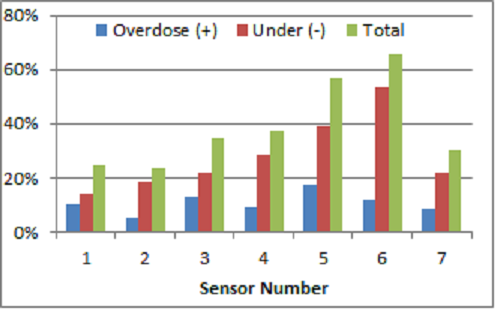
The instructions say not to use it to make insulin dosage decisions - and they are certainly correct.

Our experience shows that it will cause an overdose or under-dose about 30% or more often. It varies with each sensor. One sensor was off more than 60% of the time when compared to a blood test.

Finally, you have to wait 12 hours for a new sensor to establish itself once it is inserted. During that window, it is not available.

Program flaws

All programs have bugs, some code and some design. Hopefully, they will fix these in future releases.

1. No reset

Problem: Numbers must cross the limit boundary to be set off. If the hardware doesn’t prevent it, the software needs to be changed.

Spec: When the alarm system is reset, start a timer. Also, reset the timer at each check or when the number goes above the threshold. The same timer could be used for both the high and low limits. Set off the alarm if:

  • The number is still below the limit after a preset time
  • The number crosses the threshold, going down

The logic should be reversed for the high limit.

2. Not low enough limit

Problem: The current lowest alarm limit is 60 (3.3), but we don’t treat that number. The reader will detect numbers a little lower, but we can’t set the alarm lower. The lower and upper boundaries vary by individual.

Frequently, it will wake us at night showing 59 (3.2) but the blood test shows higher, and over the next hour never drops any lower. However, if the blood test shows 58, and it continues down, the sensor will not catch it.

Spec: Provide the ability to set the alarm at 50 or 55 (2.8), if the sensor technology can dependably read that number. Note: the lowest number registered by the sensor was 52 (2.9) when the blood test showed 30 (1.7) on the meter.

3. No overlap at 14 days

Problem: Theoretically, the sensor lasts 14 days. As it nears the end, it starts issuing warnings to replace it. It has to be replaced and there is no overlapping coverage.

Currently, the replacement has to be planned because it takes about 12 hours to calibrate itself to start working properly, and requires checkpoint readings during that time. In addition, the user needs to be awake.

The old one can’t be left on over those 12 hours.

Spec: The old one should work during those 12 hours until the new one takes over. The user should be able to switch back and forth as part of the calibration process.

Join the Facebook Users Group

It’s nice to have experienced contact people when issues come up. For example, you might knock the sensor off, want to know the best places to put it, how to prepare the site, plus other hints not in the manual.

We have found the Facebook users group to be helpful.

Conclusion

Although it is still in its technological infancy and not perfect, it is better than nothing and we will keep using it.

Like everything else, the technology is sure to get better fairly quickly.

Disclaimer: This article is the author’s opinion based on one subject and does not constitute medical advice. Each diabetic is different and Type 2 differs significantly from Type 1. The diabetic should consult their diabetes doctor about their own case.

References

More information from Abbott Laboratories:

My most important article on Medium:

  • Important for EVERYONE to know, almost as much as CPR. It’s changed the life for two early reviewers.
  • Sometime in your life, you will need to know about diabetes. My wife and I, coworkers, neighbors and strangers have had to contend with everything here.
  • Most articles offer advice to the diabetic. This one is for everyone else
  • The Libre 2 is a great example

Other Articles in the Same Category

Diabetes
Health
Sensors
Technology
Blood Sugar
Recommended from ReadMedium