
Diabetes; Health
Diabetes & Surgery — YOU Must Always Be Alert! Even the Doctor Got It Wrong.
Cataract surgery. The anesthesiologist sabotaged our insulin and meal plan, thus creating problems.
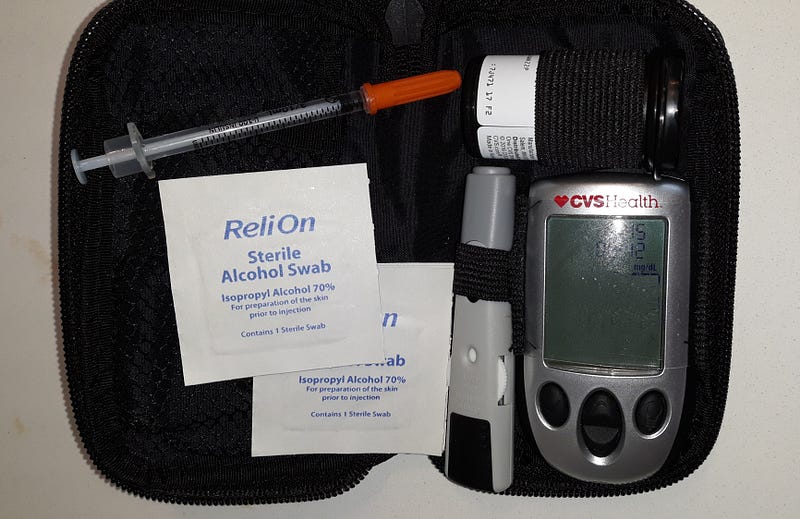
You always want to go into surgery with an empty stomach, if possible. My wife, a Type 1 diabetic, had cataract surgery last week at an outpatient center in Florida.
Diabetics constantly worry about blood-sugar levels. My wife’s blood-sugar levels randomly fluctuate, being inside a normal person’s range 16% of the time. High numbers can be handled with extra insulin at mealtime. Low numbers must be treated immediately with sugar, usually in the form of candy. The amount depends on a blood test.
Lows during the day can occur at any time but are usually about 2 hours after a meal when the meal-time insulin peaks. Overnight lows usually happen when the night insulin peaks, around 4:30 AM plus-or-minus two hours. Symptoms go from night sweats to near unconsciousness. The average treatment at night over the last 6 months was 12 grams of sugar, or 4 candy kisses with a recovery time of 30 to 60 minutes.
An overnight low had to be avoided
Surgery was scheduled for 7:00 AM. She certainly didn’t want to eat a bunch of candy before surgery. In addition, if her blood sugar went down later than the normal 4:30 AM, she might not be able to walk out the door by 6:30, when we had to leave home. There was an 8% chance of a low happening.
So, she reduced the night insulin dose to keep her blood sugar higher than normal and eliminate the risk of a low. High numbers, like 300+ for her, pose a threat, but only over a long time period, like days. Usually, they come back down with the next mealtime insulin shot.
Everything went as planned and we arrived on time. Cataract surgery is quick, as far as operations go, and we expected to be back home in time for a late breakfast. The mealtime insulin shot would take care of the overnight high.
Then the anesthesiologist stepped in
He had her blood sugar checked. It was 266, high for a normal person, but not for her. The anesthesiologist, without any knowledge of her diabetes case history and, in my opinion, not much knowledge of diabetes, decided to give her a dose of insulin or he would stop the surgery!
He was the doctor, so she could not talk him out of it, even with her own diabetes background. Her eye doctor did not offer an opinion.
It was an awful decision, valueless & additionally burdensome
They had only one insulin available, Regular, not the one she used. We didn’t have years of measurements to even know how that insulin would work, just our reference book. Well, she received the insulin, had the surgery, and went home 45 minutes later.
Repercussions of the poor decision
Her mealtime insulin, approved in 1996, usually starts to act in 15 minutes based on her history, peaks at 2 hours, and is gone after 4 hours. Meals should be at least 4 hours apart to avoid an overlap.
Regular insulin, discovered in 1922, when administered by a regular shot and not an IV takes up to 60 minutes to start acting, peaks at 4 hours, and is gone in about 6 to 7 hours. Here are the problems with it:
- That insulin shot did not start to lower the 266 blood sugar number until long after the patient was discharged, certainly not during the surgery. The number was still 252 after we got home.
- She could not have breakfast when we got home — no experience with Regular insulin and if that dose was too much or too little.
- Since it works for 7 hours after the shot, she had to perform extra blood tests hourly from 10:00 AM to noon.
- We guessed and had lunch at 1:00 PM. She got her normal insulin shot based on the blood test results.
- Since there was an overlap of the Regular insulin shot at 8:00 AM and the lunch shot, there was a possibility of an overdose and a low blood sugar episode.
- I had to watch her for low blood-sugar symptoms until dinner. A diabetic may not be aware that she is going low.
That insulin shot before the surgery was worthless, had no impact during surgery, and caused problems for the patient for 3 days after discharge.
My wife’s insulin would not have had any impact during the surgery, but we would have known what to expect and how to handle it. However, they would not have allowed her to use “outside medicines” in the surgical center.
Conclusion
Fortunately, there were no significant medical implications, but there could have been. The important point is
- Before the day of surgery, make sure there is a plan
- On the day of surgery, confirm that it is being followed
My wife discussed the problem with her eye doctor. He has issued an order to the surgical center not to administer insulin during the upcoming surgery for the second eye. Let’s hope they read and follow it.
If you have diabetes, or any other condition for that matter, you need to be alert and speak up when you notice something unusual happening with your care.
Disclaimer: This article is the opinion of the author and does not constitute medical advice. Each diabetic is different and Type 2 differs significantly from Type 1. The diabetic should consult their diabetes doctor before any surgery.
Related information and articles
This medical journal article supports my wife’s plan and refutes the anesthesiologist’s opinion.
British Journal of Anaesthesia (BJA): Glycaemic control during cataract surgery under loco-regional anaesthesia: a growing problem and we are none the wiser. BJA: British Journal of Anaesthesia, Volume 117, Issue 6, December 2016, Pages 687–691
Another important diabetes article by the author (What YOU need to know when Employing, Living with, or Working with a Diabetic):


