
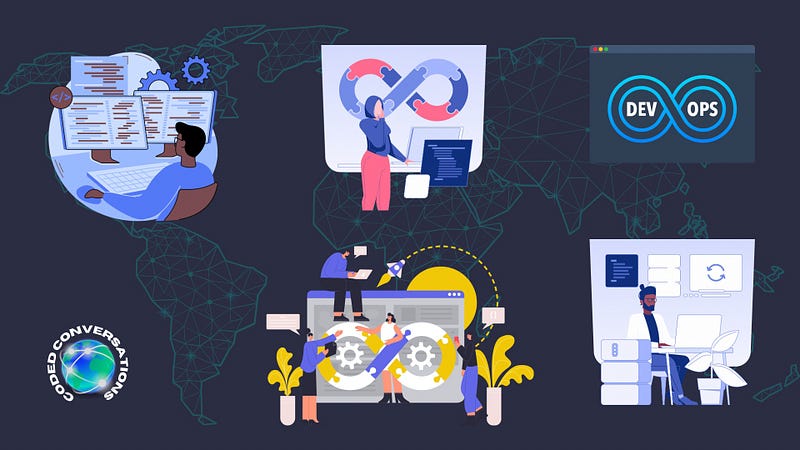
DevSecOps: Secure Software from the Ground Up🌉🏰🛡️
Securing the DevOps Journey: A Tactical Guide
In the high-stakes arena of software development, where the rapid pace of innovation often outstrips security considerations, a paradigm shift is brewing. This shift, known as DevSecOps, marries development, security, and operations into a cohesive strategy that embeds security at every phase of the software lifecycle. Let’s walkthrough this journey, revealing the patterns that make DevSecOps not just a methodology, but a culture, transforming the way organizations conceive, build, and maintain software.
The Essence of DevSecOps: A Mix of Code, Security, and Collaboration
DevSecOps represents an evolution from the traditional siloed approach to software development. It’s a world where code is not just written and deployed, but woven with the threads of security from the get-go. Imagine a scenario where developers are linked to skilled artisans, crafting their code with an eye not only for functionality but for fortification against digital threats. This is the heart of DevSecOps — a realm where security is not a gatekeeper but a guide, seamlessly integrated into the fabric of development and operations.
The Tools of the Trade: Automation, Security as Code, and Mindset Shift
In the armory of DevSecOps, automation stands as a mighty sword, cutting through the monotonous and error-prone manual security checks. Tools that automate security testing become the allies of developers, embedded into the Continuous Integration/Continuous Deployment (CI/CD) pipelines, ensuring that vulnerabilities are caught and addressed in real-time, much like sentinels guarding a fortress.
Security as code, another pillar of DevSecOps, transforms policies and configurations into code that’s versioned, tracked, and reviewed just like application code. This not only ensures consistency and speed but also democratizes security, making it accessible to all involved in the project.
Yet, perhaps the most profound tool in the DevSecOps arsenal is the shift in mindset. It requires nurturing a culture where every developer, operator, and security professional understands and embraces their role in safeguarding the digital landscape. It’s about cultivating a mindset where security is as natural and integral to development as writing the code itself.
The Collaboration: Breaking Down Silos
DevSecOps dismantles the traditional barriers between development, operations, and security teams. It fosters a symphony of collaboration, where each team member plays a vital role in the composition of secure software. This harmony is not just beneficial; it’s essential in today’s fast-paced, interconnected digital world.
Imagine a scenario where a developer, an operations specialist, and a security analyst sit at the same table, discussing, debating, and devising strategies together. This is the collaborative spirit of DevSecOps, where shared responsibility and open communication ensure that security considerations are woven into the very DNA of the software development process.
The Why and How of DevSecOps
But why this profound shift towards DevSecOps? The answer lies in the evolving digital landscape, marked by an exponential increase in cyber threats and the complexity of software systems. In this environment, the traditional “add security later” approach is not just inefficient; it’s downright dangerous.
DevSecOps addresses this by ensuring that security considerations are not an afterthought but a fundamental aspect of the development process. It’s about proactively identifying and mitigating risks, rather than reactively patching vulnerabilities after the fact.
To navigate these challenges, the DevSecOps arsenal is equipped with a suite of tools designed to fortify our defenses:
Container Security Tools: Think of these as the vigilant sentries, scanning containerized applications for vulnerabilities, ensuring the integrity of our digital containers.
Security Automation Tools: These are the tireless guardians, automating tests and monitoring for threats, embedding security into the very fabric of the DevOps lifecycle.
SIEM Solutions: The watchful eyes, centralizing data logs, and keeping a continuous vigil for unauthorized access and suspicious activities, ready to act at a moment’s notice.
Threat Modeling and Simulation Tools: The strategists, identifying potential security breaches and mediating conflicts before they escalate, ensuring the digital domain remains unbreached.
Real-World Impact: Anecdotes and Evidence
Consider the story of a financial services company that embraced DevSecOps. By integrating security testing tools into their CI/CD pipeline, they reduced their vulnerability detection time from weeks to hours, significantly lowering the risk of a security breach.
Or the tale of a healthcare provider that adopted a security-as-code approach, enabling them to rapidly deploy secure applications across multiple environments, ensuring patient data remained protected against emerging threats.
Looking Ahead: The Future of DevSecOps
As we gaze into the horizon, the future of DevSecOps is one of continual evolution. With the advent of AI and machine learning, we can anticipate even more sophisticated tools for automating security testing and threat detection. The integration of these technologies will not only enhance the efficiency of DevSecOps practices but also enable organizations to stay one step ahead of cyber threats.
In Conclusion
DevSecOps is more than a set of practices; it’s a cultural shift that embeds security into the very fabric of software development. It’s a journey that requires a change in mindset, collaboration across teams, and the adoption of innovative tools and technologies. By embracing DevSecOps, organizations can not only secure their software but also gain a competitive edge in the digital landscape.
If you enjoyed this, don’t forget to give a clap, share with your peers, and leave your thoughts in the comments.


