
Devil is in the Details. That’s why Historical Fiction is Diabolic
The historical writer wields the power of ‘Small History’ and it ability to bring to life people’s everyday experience
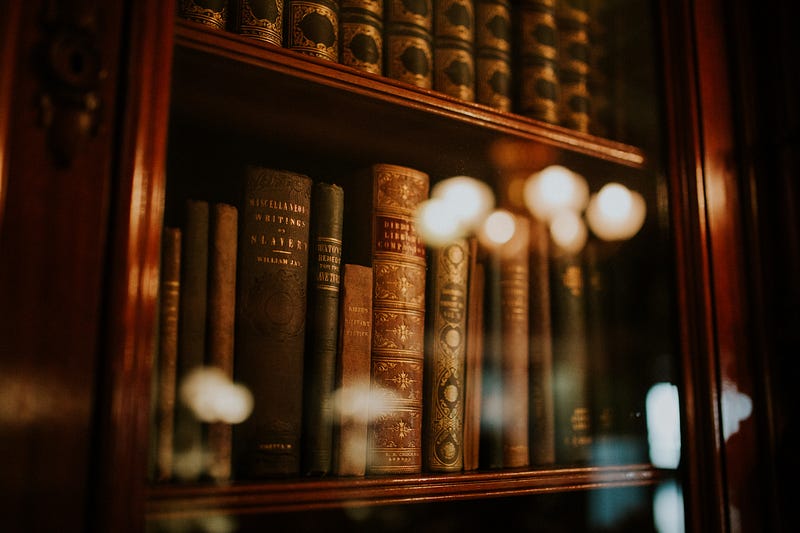
Devil is in the details. You’ll have heard it said many times.
Sometimes I think nobody knows it better than a writer. And for a historical writer, this devil is particularly nasty.
We may think that history is big events, maybe because that’s what we study in school. Events that changed the course of human existence or the lives of millions of people: wars, conquests, plagues, economic surges and disasters, groundbreaking scientific discoveries. We think that history is created by the extraordinary single people who caused or handled these events. We often know these people by name.
Don’t get me wrong, this is history. This is where my love of history started. Yes, on the school desk, I’ll admit it without shame.
But as I grew older and I started exploring history by myself, I realised there is a whole other historical world that I didn’t know when I was in school. The history of ordinary people and small everyday events. The history of the mind and feelings of people like me, who never changed the course of events, who never discovered anything groundbreaking. People who had a family and worked to make that family comfortable and safe. People who worried about their jobs and their health. People who had achievable dreams that didn’t involve changing the world — though sometimes that’s precisely what they ended up doing.
Social history. That’s how historians call it.
I like to call this kind of history “Small History” because it’s the exact opposite of the history of the big events that changed the world. But also because it lives in the details more than in the big movements.
It’s the history of society, rather than of extraordinary people. The history of everyday social movements, everyday social thinking and behaving. The history of how people moved together as a society and how they lived as individuals inside that society.
It’s the history of people like me. I supposed that’s why, at a certain point, I became fascinated with it. Sure, it’s fantastic to know the way someone extraordinary lived and thought and felt. But knowing how people like me lived and thought and felt is where history touches my life and can sometimes shed new light on it.
And for historical writers, that’s where stories are born.
Social History, the History of Small Things
I like to call this kind of history “Small History” because it’s the exact opposite of the history of the big events that changed the world. But also because it lives in the details more than in the big movements. ‘Small History’ is events, thinking and feelings that happen every day, to everyone, and don’t need an extraordinary ‘trigger’ to get off, but occur on a daily bases.
To me, this is life as it happens to people every day and what people like me make happen every day.
What does it mean to be a maid in a big house in Germany in the 1920s? What would she do on her job? What would she think of her employers? Would she dream of a better life, and what would it look like? What would she think her life would be in ten years? What would she dare to do outside of what people expect of her?
‘Small History’ is where almost all of the people live and so it’s where characters are born.
That’s why, for me as a historical writer, ‘Small History’ is so important. Sure, big events may affect the lives of our characters, but ‘Small History’ will be our character’s life, whether big events happen or not. ‘Small History’ is particularly important — and particularly powerful — when we write stories that don’t happen during big historical events.
This is the kind of history I love to write about, and also the kind of history I love to research.
But it has its challenges.
Sure, social history is becoming more popular, especially among amateur historians who, like me, are readers more than anything else. Resources are becoming more readily available and accessible. Still, I feel that researching ‘Small History’ as a historical writer is still a tricky, laborious path. Though one full of rewards.
To Research’ Small History’ We Must First Become Aware of It
Becoming aware of ‘Small History’ — therefore be able to research it — is maybe the trickiest part of it, because ‘Small History’ happens where we take things for granted.
I read once a novel set in the 1920s where a murder happened in a speakeasy at night. One of the characters saw another get into a car. The car then sped away, and the first character saw the rear red lights disappearing in the night.
I paused for a moment.
Rear red lights?
I googled it and found out that rear red lights weren’t commonly mounted on cars in the 1920s (nor were rear-view mirrors, if you want to know, though they already existed). But we are so accustomed to seeing them on cars that we might never think anything of it.
I won’t hide that it takes training to get used at spotting where ‘Small History’ may happen. But I’ll give you a hint: it usually is in the small details.
One of my beta readers suggested once that I could have my 1920s flapper’s mascara melt with her tears and smudge her face. Which is a good detail. It makes for a powerful visual, and today it’s so unusual that we tend to notice when it’s mentioned. But then I thought: are we sure mascara existed and was commonly used in the 1920s?
It turned out it did exist, though how ‘common’ it was depended on the girl’s income. And anyway I discovered that mascara was very different back then from what we are accustomed to today.
It was a double discovery. Those are the best.
My advice is: when you use a detail, do some research unless you already know the answer.
Where do we learn ‘Small History’?
This is a second tricky matter, though researching is becoming increasingly easier with the internet and the many resources becoming available through it.
There are books, of course. I started my research about the 1920s on books about social history. The problem with these is that they usually are quite cursory. Don’t get me wrong, I loved the first two I read ( The Anxious Decades by Michael E. Parrish and Daily Life in the United States 1920–1940 by David E Kyvig) because they gave me a fantastic first introduction to the subject. We need to start somewhere, and a good outline of the matter is always the best place. But I wouldn’t be able to write about the 1920s having read only those.
These are books that don’t concern themselves with details. And often googling something doesn’t necessarily give you the best answers. Researching details and ‘Small History’ often requires some creativity.
Ads are a good choice, for example (at least for periods near us). Newspaper articles (the things I haven’t discovered reading era newspaper articles!), but also films and photos (if you’re lucky enough to research a time where these supports already existed). Silent films were a huge help in acquiring the feel of the 1920s.
Novels and stories written at the time are also very useful, and they often are a gold mine of details you wouldn’t find anywhere else. Though sometimes they are tricky because they are silent about things that people took for granted at the time.
Letters, diaries. Any personal expression. There are archives online that allow accessing this form of information.
And of course, scholarly articles and essays. The more monographic they are, the better.
Sometimes it is like looking for a needle in a haystack. It took me three years to discover what was likely to be on the tabletop of a speakeasy table. It took me even longer to discover how one of my MCs would take the L in Chicago in 1926.
Keeping at it and reading as widely as possible is always the best way to go. There are details we don’t know we don’t know and the only way to learn we don’t know it is by learning as much as possible in that area.
We can train ourselves to go after these details. It becomes easier with practice. And it is so rewarding.
In the end, researching history for me is a great adventure, and I never mind going down that path.
How to write a character that impacts the story? By giving them not just history and character personality traits but also a strong narrative role. Create characters that leave a mark. Give them a strong desire, make them fight for it. That’s how to create memorable characters. Download The Protagonist Builder, a free worksheet and start creating your character right away.
If you enjoy reading stories like these, you may want to consider signing up to become a Medium member. It costs $5 a month and gives you unlimited access to stories on Medium, while without it, you can only read three stories a month. If you sign up using my link, I’ll earn a small commission, and you’ll have my gratitude for supporting my writing.
Sarah Zama wrote her first story when she was nine. Fourteen years ago, when she started her job in a bookshop, she discovered books that address the structure of a story and she became addicted to them. Today, she’s a dieselpunk author who writes fantasy stories historically set in the 1920s. Her life-long interest in Tolkien has turned quite nerdy recently.She writes about all her passions on her blog https://theoldshelter.com/