
Developing Diagnostic Tests to Detect COVID-19 and Infectious Diseases.
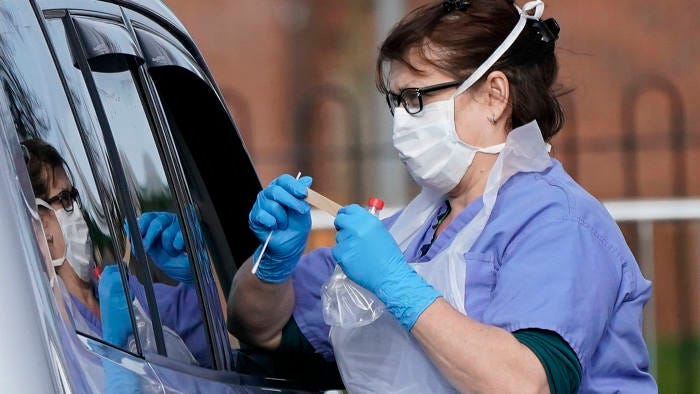
“Our key message is: test, test, test”— Director General, World Health Organization, regarding COVID-19
COVID-19 and its unfathomable rate of spread entailed the need for rapid, aggressive, and reliable testing of infectious diseases like never before, and thus, it isn’t really surprising that the global market for In-vitro Diagnostic(IVD) tests is expected to increase, even amongst forecasts of an upcoming financial crisis. Now, what are IVDs?
“In vitro diagnostic tests are used for in vitro examination of specimens derived from the human body to provide information for screening, diagnosis, or treatment monitoring purposes” — World Health Organization(WHO)
Among its various applications, the high prevalence of infectious diseases and the rising number of viral outbreaks in the world, have accentuated the market for such use. For COVID-19, just as it was for Ebola or Hepatitis, numerous companies and labs are currently developing such tests to mitigate its spread. There are broadly two kinds, Nucleic acid tests, and Antibody tests.
Molecular or nucleic acid tests, as the name suggests, detects the genetic material of the virus, the RNA, using swabs from the respiratory tract of a patient, where the coronavirus is usually prevalent. A serological or an antibody test checks the presence of antibodies, rather than the viral genome, in the blood, which the human body creates in response to the virus.
“As the development of antibodies takes a while after a patient has contracted the virus, nucleic acid tests offer an earlier diagnosis compared to antibody ones. ”
While a nucleic acid test tells us whether the virus is present in the body, antibody ones tell us if they have been exposed to it previously. Antibody tests can, however, be useful in other ways, such as in identifying individuals with neutralizing antibodies for vaccine production, and so on. Now, what are the key factors determining the success of such tests?
1. Point-of-Care(POC) applicability
Point-of-Care(POC) testing is the direct measuring of an analyte in a sample taken from a patient in a ward, clinic, or primary care setting without sending it to a laboratory.
Thus, POC tests enable the expansion of testing, especially in low resource settings without access to facilities and also would have the potential to reduce the time to obtain actionable results and support early identification of the infected. This also helps the post-testing measures to be taken, i.e. the judicious use of isolation resources, infection control measures, and recruitment into clinical trials of treatments.
Advances in technology have made such use possible. For example, in nucleic acid tests, the gold standard method to create more copies of the viral genome for accurate detection is the Polymerase Chain Reaction(PCR). PCR, however, entails a 3 step variation of temperature to enable some reactions and needs a thermocycler machine, which limits its POC use. New alternatives like Loop-Mediated-Isothermal-Amplification (LAMP) have been developed to overcome such a limitation.
Many such tests are currently being developed for COVID-19 and one such test is being developed by Imperial College London and Intelligent Fingerprinting that detects the coronavirus using fingerprint sweat and can provide a result in just 10 minutes. As this POC test doesn't need nasal fluid samples, it is hygienic and allows social distancing during sample connection and analysis.

2. A Fast and efficient regulatory pathway
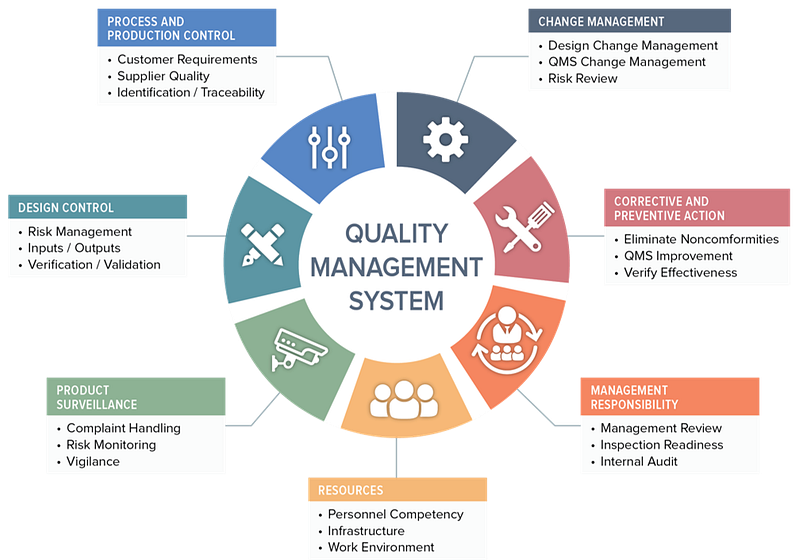
Medical devices, including IVDs, need to comply with regulations in most countries before they can be released. The most important regulation is that of a quality management system(QMS) as per the standard ISO 13485, which encompasses, usually, the following elements: —
- Identification and documentation of general performance and safety requirements.
- A risk management system(RMS) for mitigating risks associated with misdiagnosis, leakage, etc. ISO 14971 provides a guide for this.
- Setting up a post-market surveillance system(PMS) to monitor possible issues.
Usually, the development and the auditing of a QMS by a notified body can take up to one year. The QMS needs to be continuously improved. In addition to that, a CE marking needs to be affixed for medical devices sold in Europe.
Thus, experienced firms have an advantage over startups, that they may have an existing and robust regulatory platform to dish out tests in response to an epidemic, while the latter’s inexperience may confer a disadvantage, even though their ideas may be innovative.
The governments can also ease certain regulations, to meet the demand for testing. Recently, MedTech Europe, a trade association representing medical technology industries, has urged the European Union to delay the implementation of the updated In-vitro Diagnostic Regulation(IVDR), to reduce the burden on manufacturers of COVID-19 tests.
3. Adapting to the changing viral genome
The long-term effectiveness of a test may be affected by genomic mutations in the virus, antigenic shifts in response to the introduction of vaccines, and the creation of new ecological niches due to global climate change.
So the detection element of a test needs to be modified appropriately in response to these changes. For example, in PCR, a primer is the detection element, which is a single strand of DNA that is designed to bind a specific sequence corresponding to the viral genome. These specific sequences will change with mutations and hence, so must the primers.
In this sense, databases that offer public and private access to genetic sequences of viruses, like GISAID, a public-private partnership in Germany, are incredibly helpful.
How different countries have carried out testing so far…
Countries have approached COVID-19 testing in different manners. While China being ground-zero had a head start over others, Germany started preparations for the testing early on back in January, and South Korea has carried out an aggressive approach. India has also expanded its testing capacity, going from 13 labs in the first week of February, to 609 labs as of now.
Meanwhile, in the US and UK, companies are reported to be lagging behind other nations in rolling out tests. Experts have also expressed their concern over the risks of low supplies of test kits in African countries, as lockdowns begin to ease and movement of people has started to increase.
Also Read
.
.
.
We are now on LinkedIn…Do follow us there…
Follow us on medium for more for International events, news, MUN guides, and detailed analysis. Follow us on Social media to stay in the loop- Facebook| Instagram|Telegram Channel |Youtube|Twitter|LinkedIn. We also invite guest writers to publish their material via this blog!


