
Develop 52 Content Ideas to Grow Your Business
Turn your blog or channel into an educational resource in a year

My goal is to craft my YouTube channel into a one-stop source for all science graduate students. Over the last year, I have been unsuccessful at consistently producing high-quality content. The primary reason that I fail to produce content is a lack of ideas. Even when I do have ideas, they are often not well related.
Currently, my channel is nothing like the resource I want it to be. Instead, it is a random conglomerate of videos that loosely relate to graduate school.
My YouTube channel serves as content marketing for my coaching business. So, I want it to attract qualified leads and depict me as an expert.
This year I am using a different approach to plan my content. I created a guided method for crafting 52 ideas that I can easily select from throughout the year. This guide also allows me to develop my channel into an educational resource. I want to share this method to help other channels that have educational content.
Content Buckets
Content buckets are essential to creating content that works well together. Content buckets are themes of the content that relate to your overarching message.
Your content buckets help ensure that your content is both well-rounded and focused. With content buckets, your content pieces will all contribute to your brand’s message. Yet, multiple content categories allow you to become a comprehensive resource to your ideal audience.
For my guided plan, I first created 4 content buckets that relate to my brand’s message. Since my channel focuses on graduate school, my content buckets are research, academic writing, research communication, and graduate school life. My channel presents primarily as a guide to research, but also includes important videos related to graduate school life.
Under each content bucket, I planned out three different types of content: tutorial, versus, and educational.
Tutorials
Tutorial content is step-by-step guidance on how to complete a specific task. In tutorial content, you want to show how you are doing something rather than only explaining the principles of the topic.
In my guided plan, I created 3 tutorial ideas per content bucket.
For example, in my research content bucket, I plan to create videos on “performing t-tests in excel” and “how to use google scholar to search for literature”. In these videos, I plan to share my screen and dive deep into each step of performing these actions. That way it will feel like I was sitting right beside my audience teaching them.
These tutorial content pieces allow you to become a resource when your ideal audience has questions about a specific process. Furthermore, it can help attract clients because you can appear in search results for a specific problem.
This content is compatible with both video and blog content. In blog content, you would want to share images of what you are doing for your audience to have a visual.
Versus
The next type of content I planned is versus content. Graham Cochrane discussed the success of versus type content in “3 Best Types of YouTube Videos To Grow Your Channel”. In a versus content piece, you are comparing two different things, such as different products or topics.
I have found great success in many of my versus style videos, primarily because people are searching for this style of content. An example of a video that has done very well for me is “Abstract vs. Introduction: Important differences between a research paper abstract and an introduction”.
This type of content is actually fairly easy to generate by using Google or YouTube autofill. Simply pick one topic or product in your content bucket and put it into the search bar and add “vs”. Then, the autofill will fill in a comparison based on common searches. (If you type a certain comparison in your browser a lot it might be best to do this in an incognito tab.)
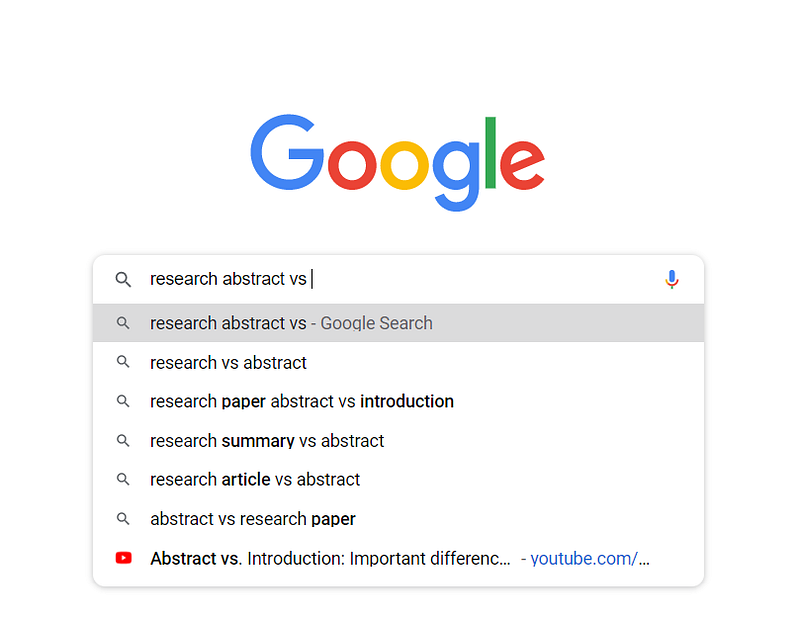
In my guided plan, I planned 3 versus ideas for each content bucket.
Educational content
Educational content is any general content that is educating a person on a topic. These videos are not step-by-step tutorials, but instead, help the audience understand a specific topic.
Examples of my planned educational content include “how to write a research proposal”, “what t-test should you use?”, and “what I learned in graduate school”. In these videos, I plan to have about 3–5 talking points on the topic, instead of showing a step-by-step process.
In my guided plan, I developed 3 educational content ideas for each content bucket.
Overall, if you follow this plan with four content buckets, then you will create 36 content ideas that are well-rounded both in terms of content type and content bucket. The last 16 content ideas that I created are what I believe will up-level my channel as a resource.
Product Reviews
In every niche, there are certain products that your audience may consider buying. If you are seen as an expert, people will come to you to see your experience with a product that they are considering buying.
In my guided plan, I included 4 product reviews.
A successful product review will be something relevant to your ideal audience. However, you also want to have actual experience with this product.
Product reviews further your outreach because people searching for the product may find you! Graham Cochrane also explains how product reviews have affected his YouTube channel because many people have found him through review videos for Kajabi (a course management software).
Additionally, product reviews can be a source of affiliate income if you have a positive view of the product you are reviewing.
Lists/Favorites
Lists are a common content piece that can level up your educational content.
These lists can include your favorites of a category that relates to your audience. For example in my channel, I have planned the content ideas of “the best books graduate students should read in 2020”, “the 5 Google Chrome plugins every graduate student needs”, or “the 3 quotes that every graduate student should live by”.
This content will capture people searching for a specific category, but not a specific product. Furthermore, this will make your audience aware of things that can make their lives easier or change their mindset.
In my guided plan, I included 4 lists/favorites.
Behind-the-scenes
Behind-the-scenes content is really common in vlog-type channels. However, even in educational channels, showing the behind-the-scenes content will be interesting for some of your audience. In this content type, you want to detail what it is like doing what it is you are teaching.
For example, in my channel, I may show the behind-the-scenes of editing a paper for publication or studying for an exam.
This type of content is important if you are currently working in the field of what you are teaching. For example, if you teach about YouTube, you can share the behind-the-scenes of creating a video.
While this content is important to develop your channel as a resource, it will likely not be attractive to all of your audience.
Therefore, in my guided plan, I only included 4 behind the scenes ideas and I will try to spread these throughout the year.
Flex Content
The final content type is flex content. There are 4 videos dedicated to being open or flexible throughout the year.
Good ideas for this content include gift guides, reactions to current events, and interviews.
The goal of these four flex videos is to allow you to have more unfocused material that could be helpful to your audience, but controlling unfocused content to only 8% of your content.
A Year of Content ideas
This system has turned content creation from stressful, disorganized chaos to simply answering questions that I believe my audience would be searching for. In a few hours on one day, I have set my channel up for success that I believe is greater than simply developing 52 varied topics without any structure. (You can get this guided plan simplified down into a worksheet in my Content Planner.)
Adding these videos to my channel throughout the year will allow me to create an educational resource with my content that will attract qualified leads to my business.