avatarTT

Free AI web copilot to create summaries, insights and extended knowledge, download it at here

3099

Abstract

ure id="3b07"><img src="https://cdn-images-1.readmedium.com/v2/resize:fit:800/0*VisYWhjNrpsGthGi"><figcaption>Photo by <a href="https://unsplash.com/@brett_jordan?utm_source=medium&amp;utm_medium=referral">Brett Jordan</a> on <a href="https://unsplash.com?utm_source=medium&amp;utm_medium=referral">Unsplash</a></figcaption></figure><h1 id="a3b9">3. Form a hypothesis or opinion. Make a statement on the matter.</h1><p id="180a">Making a statement is important to get you going and create your voice. You have to decide what you want to tell people and what you want people to read.</p><p id="7149">What is your statement or opinion on the matter?</p><p id="e299">What is probably going to happen?</p><p id="6f5d">It does not matter that you feel the discomfort that you may be wrong. Leave that complexity to the development stage next. <b>For now, make a statement that someone can disagree with.</b></p><p id="024a">In my example with the inspiration of driverless cars, I made the following hypothesis:</p><p id="d33a"><b>Hypothesis 1: </b>We may lose many benefits of having a human driver if we allow driverless cars to replace taxi drivers. Empathy and value judgments are two such things that computers cannot replace so easily.</p><p id="919d"><b>Hypothesis 2: </b>Driverless cars may threaten the livelihood of an entire segment of the population. The ability to driving a taxi may be society’s best social safety net and the livelihoods of many locals depend on it. The economic consequence of rendering an entire industry irrelevant has serious social consequences.</p><p id="c7cd"><b>Hypothesis 3: </b>Clearer rules on the liability of malfunctioning driverless cars are required before it is fully implemented. There are many possible reasons for a driverless car to malfunction. This could be due to a bug in the programming, hardware issues, a malicious virus, software corruption or even hacking of the system. This may result in accidents or bringing passengers to the wrong destinations. In this case, providers of driverless cars may have to be liable and be insured for when things go wrong.</p><figure id="ae41"><img src="https://cdn-images-1.readmedium.com/v2/resize:fit:800/0*bzNQfnjxkx82xwA6"><figcaption>Photo by <a href="https://unsplash.com/@jasonrosewell?utm_source=medium&amp;utm_medium=referral">Jason Rosewell</a> on <a href="https://unsplash.com?utm_source=medium&amp;utm_medium=referral">Unsplash</a></figcaption></figure><p id="c6de">Don’t worry about feeling the discomfort of making a statement as we will develop the thought.</p><h1 id="f376">4. Development. Find sources to support and elaborate on the statement. People and materials may have views on the matter which can develop the article.</h1><p id="366d">Having your hypothesis, development becomes much more organised. You generally either find materials that agree with it or disagree with it.</p><p id="309c">This dichotomy helps to merely organise your research mentally. Simultaneously, you soon may realise that your hypothesis can be improved or changed entirely. This gives <b>colour</b>, <b>con

Options

text</b> and <b>complexion</b> to your initial thought. With this, we can amend the statement such that it becomes a more holistic opinion.</p><p id="1284">The depth and resources spent on researching will also lead to different outcomes. For instance, in our case study on driverless taxis, I may wish to spend considerable resources to interview people who are likely stakeholders. In other cases, I may simply wish to do desktop research or refer to a book. For instance:</p><p id="9f42"><b>Development & Outline 1:</b> I will be researching on the full scope of a taxi driver’s job. Particularly, there is a lot of potential in looking into emergency situations such as when passengers are pressed for time or when passengers are partially incapacitated.</p><p id="956d"><b>Development & Outline 2:</b> I will be researching on the economic and social impact of replacing taxi drivers with autonomous cars. I will determine the extent which the industry helps people to earn an honest living when they lose their jobs or during a transition between jobs.</p><p id="590b">First, I intend to thoroughly understand the economic & employment situation of our taxi drivers. Second, I will obtain a broader picture from the local Taxi Association to understand the landscape. Third, I will round the discussion up with comments from social analyst experts and obtain their opinion on the current state of affairs regarding the threat to the taxi industry.</p><p id="2b11"><b>Development & Outline 3:</b> I will research on the current state of the technology of autonomous vehicles and explore the ways which autonomous vehicles may malfunction. Next, I will write on the expert opinion of possible consequences of such a malfunction.</p><figure id="3468"><img src="https://cdn-images-1.readmedium.com/v2/resize:fit:800/0*lErv4w-n8HFCVxd8"><figcaption>Photo by <a href="https://unsplash.com/@single_lens_reflex?utm_source=medium&amp;utm_medium=referral">Dan Burton</a> on <a href="https://unsplash.com?utm_source=medium&amp;utm_medium=referral">Unsplash</a></figcaption></figure><h1 id="2a80">5. Final Article Titles</h1><p id="d1a4">I can’t promise you’ll get 3 articles after going through this process. Sometimes it could be 5, or 10 or even just 1. Still, it is important we give each of our sparks of inspiration a proper shot.</p><p id="66a2">Here are the final 3 titles as an example of where the simple spark of “driverless taxis” led us, each so distinct and could be within a genre of its own.</p><p id="4e9c"><b>Topic Angle 1: </b>Autonomous Taxis- Drivers without humanity</p><p id="735a"><b>Topic Angle 2:</b> Seeking solace in Taxis</p><p id="face"><b>Topic Angle 3: </b>When Robots Malfunction, Who is to be Blamed?</p><figure id="3b60"><img src="https://cdn-images-1.readmedium.com/v2/resize:fit:800/0*cqdmjGqwGpZhTGpw"><figcaption>Photo by <a href="https://unsplash.com/@andrewruiz?utm_source=medium&amp;utm_medium=referral">Andrew Ruiz</a> on <a href="https://unsplash.com?utm_source=medium&amp;utm_medium=referral">Unsplash</a></figcaption></figure></article></body>

Develop a diverse range of articles from 1 source of inspiration

Follow these steps to find different angles of a single spark to create multiple diverse topics to write about.

Photo by Nadine Shaabana on Unsplash

1. Start with any source of inspiration. This can be any thought, a topic, an opinion.

In this case, a possible inspiration could be looking at the disruption Uber had on the taxi market. Your initial thought may come in the form of something like this:

The changing landscape of the transport industry is presenting a whole host of issues. Many taxi drivers are worried about how Uber and driverless cars may render their jobs irrelevant.

For various reasons, you may think that this topic has already been written about, may not be interesting to your audience or you don’t have enough material directly on this topic.

Hold that thought. Because let’s exploit spark to its fullest potential.

Photo by Jamie Street on Unsplash

2. Determine what is the question to be answered. What is the purpose? What are the holes in other stories which you can pick up?

Asking further questions is an important step to the brainstorming. The 5 “W”s and 1 “H” very basic and extremely useful. We learn this since learning to write in grade school and I’m sure we are all familiar with it already.

Beyond that, we can increase the complexity of the questions by questioning:

  • the premise,
  • the context,
  • the consequence,
  • the impact,
  • any other missing elements.

In this case, the single point of inspiration about driverless cars can lead me to ask:

  • Question 1: Can an autonomous vehicle really replace a human driver?
  • Question 2: Is there a social reason for maintaining the taxi industry?
  • Question 3: Assuming that we allow autonomous vehicles on the road, in what ways may an autonomous vehicle malfunction? Who is then liable when autonomous cars do somehow malfunction?

These angles are inspired by, first, questioning the role of taxi drivers. Second, I question the role of the taxi industry in society. Third, I question the stability and safety of this technology as well as the legal and practical consequences arising from stability and safety issues.

Photo by Brett Jordan on Unsplash

3. Form a hypothesis or opinion. Make a statement on the matter.

Making a statement is important to get you going and create your voice. You have to decide what you want to tell people and what you want people to read.

What is your statement or opinion on the matter?

What is probably going to happen?

It does not matter that you feel the discomfort that you may be wrong. Leave that complexity to the development stage next. For now, make a statement that someone can disagree with.

In my example with the inspiration of driverless cars, I made the following hypothesis:

Hypothesis 1: We may lose many benefits of having a human driver if we allow driverless cars to replace taxi drivers. Empathy and value judgments are two such things that computers cannot replace so easily.

Hypothesis 2: Driverless cars may threaten the livelihood of an entire segment of the population. The ability to driving a taxi may be society’s best social safety net and the livelihoods of many locals depend on it. The economic consequence of rendering an entire industry irrelevant has serious social consequences.

Hypothesis 3: Clearer rules on the liability of malfunctioning driverless cars are required before it is fully implemented. There are many possible reasons for a driverless car to malfunction. This could be due to a bug in the programming, hardware issues, a malicious virus, software corruption or even hacking of the system. This may result in accidents or bringing passengers to the wrong destinations. In this case, providers of driverless cars may have to be liable and be insured for when things go wrong.

Photo by Jason Rosewell on Unsplash

Don’t worry about feeling the discomfort of making a statement as we will develop the thought.

4. Development. Find sources to support and elaborate on the statement. People and materials may have views on the matter which can develop the article.

Having your hypothesis, development becomes much more organised. You generally either find materials that agree with it or disagree with it.

This dichotomy helps to merely organise your research mentally. Simultaneously, you soon may realise that your hypothesis can be improved or changed entirely. This gives colour, context and complexion to your initial thought. With this, we can amend the statement such that it becomes a more holistic opinion.

The depth and resources spent on researching will also lead to different outcomes. For instance, in our case study on driverless taxis, I may wish to spend considerable resources to interview people who are likely stakeholders. In other cases, I may simply wish to do desktop research or refer to a book. For instance:

Development & Outline 1: I will be researching on the full scope of a taxi driver’s job. Particularly, there is a lot of potential in looking into emergency situations such as when passengers are pressed for time or when passengers are partially incapacitated.

Development & Outline 2: I will be researching on the economic and social impact of replacing taxi drivers with autonomous cars. I will determine the extent which the industry helps people to earn an honest living when they lose their jobs or during a transition between jobs.

First, I intend to thoroughly understand the economic & employment situation of our taxi drivers. Second, I will obtain a broader picture from the local Taxi Association to understand the landscape. Third, I will round the discussion up with comments from social analyst experts and obtain their opinion on the current state of affairs regarding the threat to the taxi industry.

Development & Outline 3: I will research on the current state of the technology of autonomous vehicles and explore the ways which autonomous vehicles may malfunction. Next, I will write on the expert opinion of possible consequences of such a malfunction.

Photo by Dan Burton on Unsplash

5. Final Article Titles

I can’t promise you’ll get 3 articles after going through this process. Sometimes it could be 5, or 10 or even just 1. Still, it is important we give each of our sparks of inspiration a proper shot.

Here are the final 3 titles as an example of where the simple spark of “driverless taxis” led us, each so distinct and could be within a genre of its own.

Topic Angle 1: Autonomous Taxis- Drivers without humanity

Topic Angle 2: Seeking solace in Taxis

Topic Angle 3: When Robots Malfunction, Who is to be Blamed?
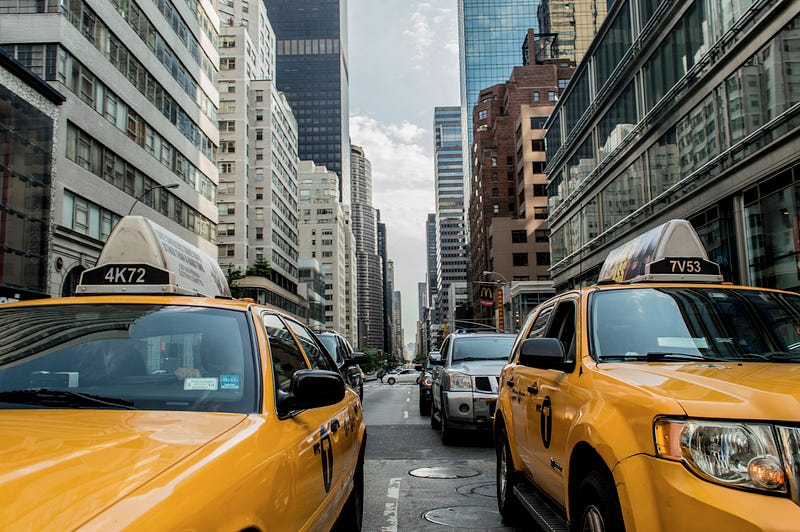
Photo by Andrew Ruiz on Unsplash
Writing
Writing Tips
Inspiration
Writers Block
Journalism
Recommended from ReadMedium