
Desperately Seeking Afro ‘Samarai’
A uniquely nerdy look at Papua New Guinea through the lens of Japanese anime
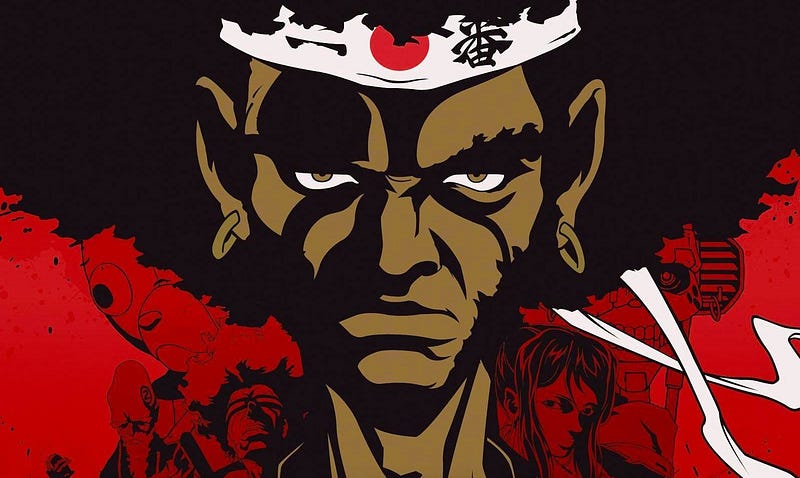
Fear not, True Believers, this senses-shattering essay wasn’t published with a spelling error in the title. Instead of the well-known Japanese word samurai, what you see in the above is actually a clever-ish bit of wordplay that uses the name of an island in the South Pacific Ocean province of Papua New Guinea. A little island called, obviously enough, Samarai.
With that partial explanation out of the way, please take note that today’s life-altering lesson will begin with a brief story about how I ran into Bob Okazaki, the creator of the comic book, action figure and animated character Afro Samurai, at San Diego Comic-Con.
For those who’ve never heard of Afro or Bob Okazaki, don’t worry, you’ll know all that you need to know before this is done.
If all goes as planned and time permits, this light-emitting lesson will then seamlessly blend into a brief overview of Papua New Guinea and its beautiful people.
For those who don’t know all that much about Papua New Guinea or understand its significance in human history, don’t worry. You’ll know everything that you need to know by the time this lecture is over.
And for the smarty pants who know all about Afro Samurai and who can easily point to Papua New Guinea’s location on a map but are wondering just what one will have to do with the other, sit tight. You’re going to receive just as as much edification from this as the rest of the class.
edification |edəfəˈkāSH(ə)n| noun: instruction or enlightenment, especially when it is morally or spiritually uplifting.
Okay, students, settle down, please. Class is now in session. Approaching the podium is my brilliant alter ego Professor Paco. He’ll be stepping in today and assuming the role of your intrepid instructor.
intrepid |inˈtrepəd| adjective: fearless and persistent in the pursuit of something.
All right, class… Let’s begin.
Intro to Afro
The fictional character Afro Samurai came to existence in Japan on the flat pages of a doujinshi, an amateur self-published magazine. Ten years after his creation the character then leaped to three-dimensional life as a limited-edition action figure. And then, through an almost “magical” series of coincidences, Afro became the basis for an animated cable series in the US.
Created by artist Takashi Okazaki or “Bob” as he is affectionately known, Afro was conceived as futuristic take on the old school Japanese adventure character: A pimped-out, cigarette smoking samurai with gold hoops in his earlobes, gold bangles on his wrists, and a big green Afro sprouting from his head like broccoli.
According to Okazaki, the character was a mixture of everything he loved: old samurai films, blaxploitation flicks and Star Wars movies. Added to that eclectic fusion was a love of 1970s Soul Train re-runs (which were later broadcast on TV in Japan), 1980s R&B and contemporary hip-hop music. And topping all of that off was the simple fact that Bob simply loved Afros.
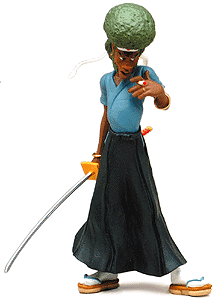
It was in the fall of 2004 that I first ran across the woolly-headed samurai, which was three years before most other fans. The character was in his limited-edition action figure incarnation then and I was cruising the interwebs trying to find cool looking items to write about for the first issue of my zine, Kung Fu Grip. “Afro Sam-rai,” as he was then called, was found on a website that specialized in cool collectibles.
Without a doubt, the eye-catching action figure was one of the coolest things that had passed before this writer’s eyes in quite some time.
Analyzing the photos and then devouring the tiny bits of information that appeared with the listing, I quickly found myself not only wanting to write about Afro Samurai, but wanting to own an Afro Samurai.
What I didn’t want to do was pay retail.
The limited edition action figures were selling for $100 dollars a pop. It was a price that I could have afforded, but it didn’t seem very prudent for a starving artist type to be dropping a whole-ass Benjamin on a decorative toy. Once cash ran short (as it would, sometimes) that Afro-coiffed collectible could’ve ended up being sold on one of Ebay’s cyber-auction blocks.
So, instead of buying and then losing a coveted collectible, I wrote up a review and used one of the photos from the site in the first issue of Kung Fu Grip. Two issues later, the character was written about again when a second figure made by an American company was produced in conjunction with the animated series that was then being developed.
Made for TV
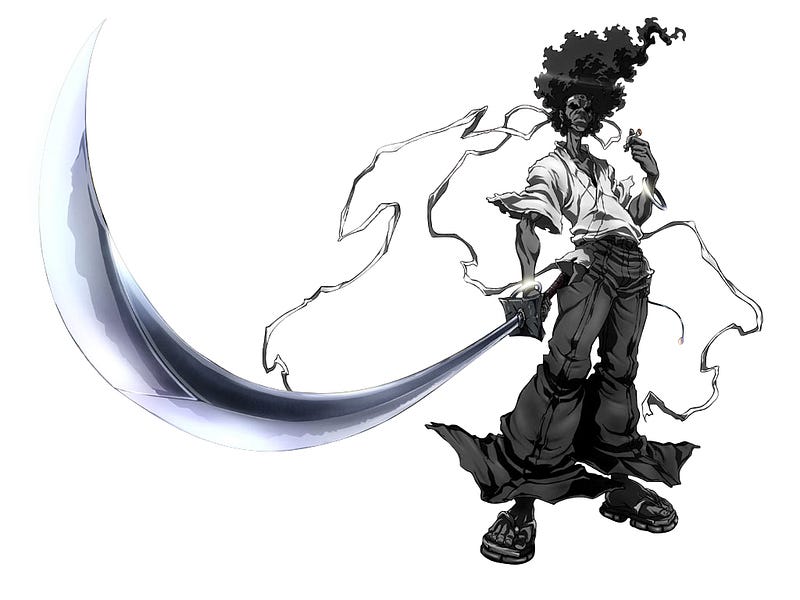
In January of 2007, the Afro Samurai animated series aired in the US on Spike TV. The clever east-meets-west amalgamation proved to be a resounding success. Soon after, the fine folks at Funimation, the company that produced the show, began working on another storyline that would expand the animated exploits of the surprising-looking samurai.
In the ‘Making of’ documentary on the Afro Samurai DVD, Eric Calderon, one of the show’s co-producers, talked about his first meeting with the Okazaki. According to him, the artist was sweaty, nervous and shy on the day that he met with him to discuss securing the rights to make an Afro Samurai animated series. And on the day that I met Bob at the San Diego Comic-Con in 2008, he seemed that way to me, too.
Well, he wasn’t all sweaty. But he came off as a bit nervous and shy. I had no idea that Okazaki would even be at the booth of his publisher that day. This was on Saturday, the third day of the four-day convention. I was just casually roaming the convention floor and glanced down to see two large stacks of Afro Samurai posters at the edge of a display table. Glancing back up seconds later, I noticed Bob a few feet behind the table with a female translator.
Stopping there in my tracks, I suddenly became the third person in a little line that had quickly started forming; right behind was an excited group of other fans that had knowingly come there to meet and greet Afro’s maker. Amazed by my good fortune, I pulled my camera from my backpack and cranked off few snapshots to capture the moment.
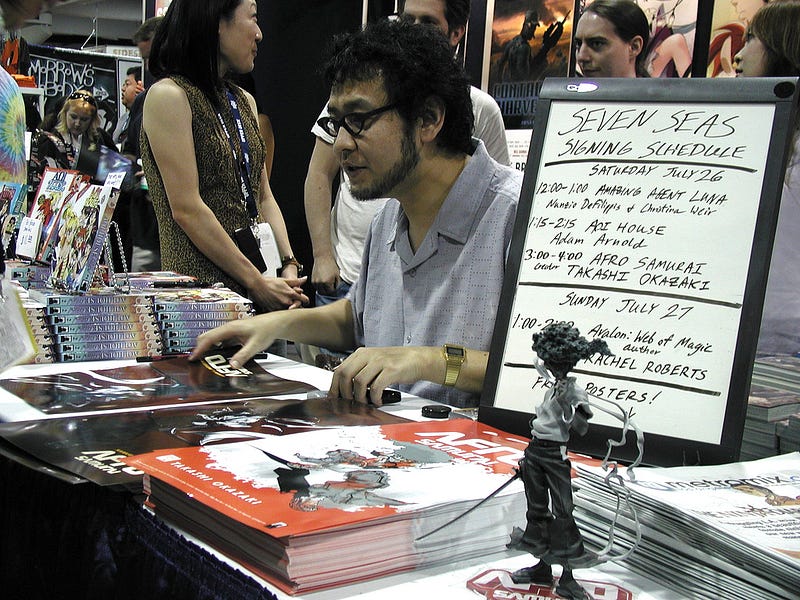
Within minutes of my fortuitous arrival, I was shaking Bob’s hand. The artist doesn’t speak English and I don’t speak any Japanese, but his interpreter enabled us to exchange a few pleasantries. Had he and I spoken the same lingo, though, instead of the formal handshake I might have broken the ice by holding out an open palm and telling him to “slap me five,” and then five again on the black hand side.
But I also would have told Bob how much his work on Afro Samurai had resonated with facets of my own life. Although I was quite sure that he’d already heard it before, he hadn’t heard it from me: a guy from Chicago who could see in this guy from Japan a kindred spirit, a soul brother.
After picking out the poster I liked, Bob looked down at my convention badge to make sure that he spelled my name correctly and signed it “To Paco!!” with two exclamation marks.
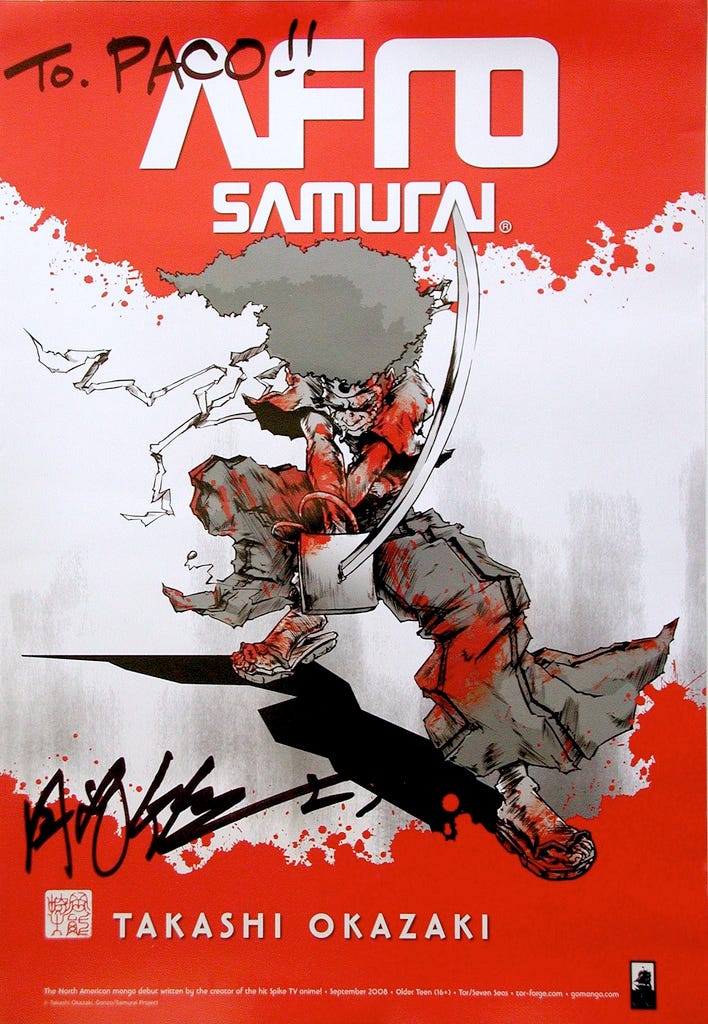
That chance meeting added another layer of frosting to the cake of a weekend that I had already had at Comic-Con. Just the day before I had already sat in on an hour-long panel that provided fans with a sneak peek at the then-upcoming Afro Samurai episodes, and a preview of a related video game that was only weeks away from completion. A few of those action figures were also on hand.
Geek Gods
Sitting on the stage four or five rows up was Bob and the translator that I would see him with on Saturday. To their left was the RZA (pronounced “rizza”) from the seminal rap group Wu-Tang Clan, who provided the show’s soundtrack. And to their left was Samuel L. Jackson, the box office backed actor whose voice breathed life into two of the shows characters, the strong and largely silent Afro and his mouthy sidekick Ninja-Ninja.
On Saturday, just a few hours before the Okazaki encounter I saw Sam again during the panel for the film The Spirit. Samuel, just for the record, is one of my favorite talents on the planet. His box office credentials basically say it all, but I’m gonna nerd out for few seconds and point out a few of the ‘little things’ that underscore why I also admire him.
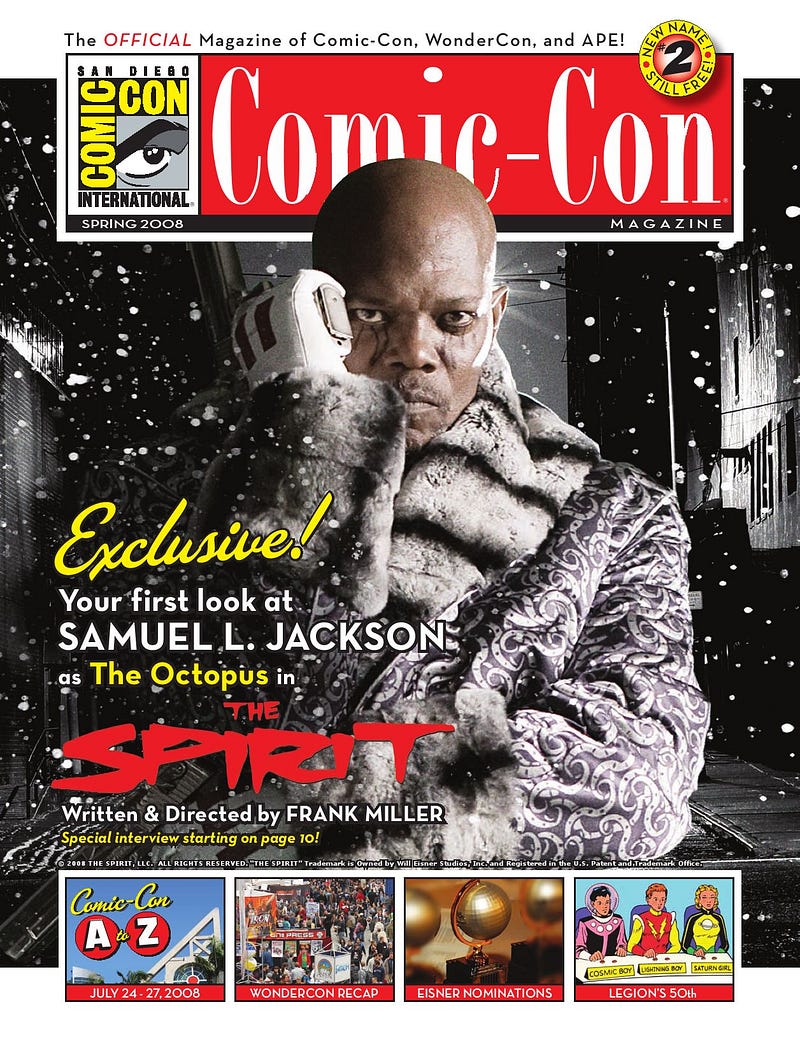
The first item that comes to mind was learned by way of an article published in the mid-1990s. A blurb in a trade publication reported that Sam, who grew up as an only child who read lots of comics, was a still a customer at a Los Angeles comic book shop. It was surprising to learn that one of Hollywood’s biggest, most liked (and also most feared) actors was still a big fan of comics.
The next item comes from his work as the host of a documentary on martial arts cinema called The Art of Action. There’s this point when Sam begins to talk about the extremely influential Shaw Brothers film studio and then mimics the trumpets that blared at the start of every Shaw Brothers film, just as the company logo branded the screen. Seeing the excited expression on his face when he does it really reinforces the fact that Sam is also very much a fan.
The next two items come from the previously mentioned ‘Making of’ documentary on the Afro Samurai DVD. In one clip Bob, who was at home in Japan at the time, receives a surprise visit from Sam by way of video chat. It’s endearing to see how they interact with one another. Bob runs around his room in Japan excitedly pulling toys from shelves and pointing out posters on his walls, and Sam reacts with the same level of geeky enthusiasm.
In another clip, viewers are shown a series of still photos that capture Sam and Bob together at a blessing ceremony in Tokyo, just before starting to work on the animated series. Seeing both men formally dressed in traditional samurai garb, complete with swords, I couldn’t help but wish that my life were somehow more like theirs.
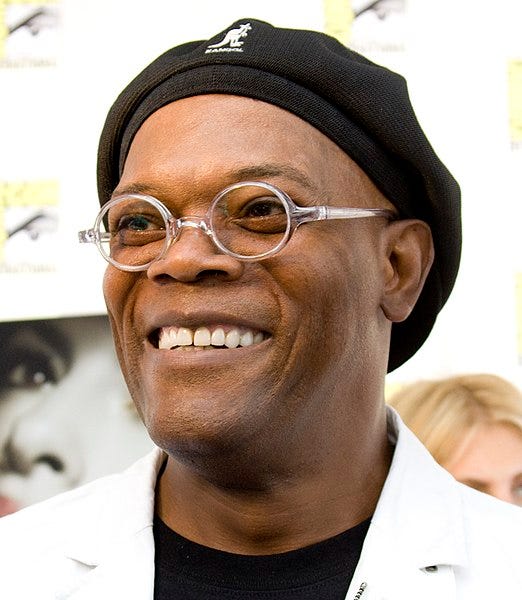
Other than trips across the Arizona border into Mexico, I’ve never been anywhere. It’s only through reading that my mind has visited Ethiopia, Somalia, Yemen, India, Thailand, Japan, Papua New Guinea, the Solomon Islands and many other places. In the back of my mind, though, hangs a nagging doubt as to whether I’ll actually touch the soil or breathe the air of even one of these far-flung places.
Anywho, I was thrilled to have a chance to sit in a darkened hall with other fans at Comic-Con listening to Bob, Sam, the RZA and others discuss their contributions to the multi-media world of Afro Samurai. Sitting before me were artists whose creativity impacted my life in a number of ways and the experience made me even more eager to somehow carry a similar torch in my own life.
Stranger than Fan Fiction
In Japan, the word that is most often used to describe people like Bob, and maybe even Sam to some degree, is otaku. Say it with me, class: “Oh-tah-koo.”
In the English language, the word ‘geek’ is probably the closest equivalent. People who are otaku are deeply passionate about their geeky interests, which often include comic books, animation, robot model building and other related hobbies — like cosplay!
o·ta·ku |ōˈtäko͞o| noun (in Japan) a young person who is obsessed with computers or particular aspects of popular culture to the detriment of their social skills
Another common interest among many otaku is bootlegging intellectual properties. These geeks aren’t satisfied with the finite number of tales that feature their favorite fictional characters. So, to get more of a fix they write and often illustrate ‘fan fiction’ stories that propel the characters into new adventures.
In some cases, even adventures that are, how shall I say it, uh, mucho porno-graphico.
Among all of the things that I am (pop culture archaeologist, writer, dreamer) I am also something of an otaku. And it must have been a touch of that last otaku strain that compelled me to come up with my own ideas for an Afro Samurai prequel or origin story. It was nothing ever intended, but there was a problem with the existing story for which part of me desperately needed an answer: Where the hell does Afro come from?
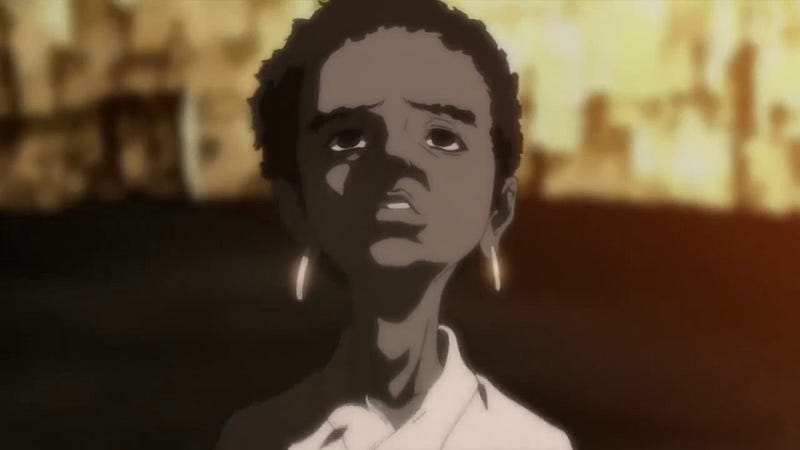
When the story first opens, our protagonist is just a small child. Within the first few minutes of the first act you witness him becoming an orphan when his father is cut down in a duel with a man that had once been his best friend. It is a defining moment that marks the rest of Afro’s life path: a singular course of violent vengeance.
Now, Bob is a serious otaku. As such, I don’t have any smidgeon of doubt that he has come up with his own detailed backstory about how characters like Afro and his father ended up in a post-apocalyptic future Japan. But my brain needed an explanation of where they came from and how they got there.
Africa, the Motherland of people who look like Afro and his father, is a good 12,000 miles or more west of Japan. As such, it didn’t seem like the most logical choice for their point of origin. I mean, sure, this is all just science fiction, but…come the hell on. That’s just not very logical.
Giant Robot magazine published a piece in 2010 that I wrote on the “Negritos,” i.e., the so-called “little blacks” of Southeast Asia. But someone from this group would be a bit too short for the samurai mold, so I had to quickly rule them out.
And for both geographic and historical reasons, North and South America, despite having large post-slavery populations of African descent, wasn’t even up for consideration. So what region was left?
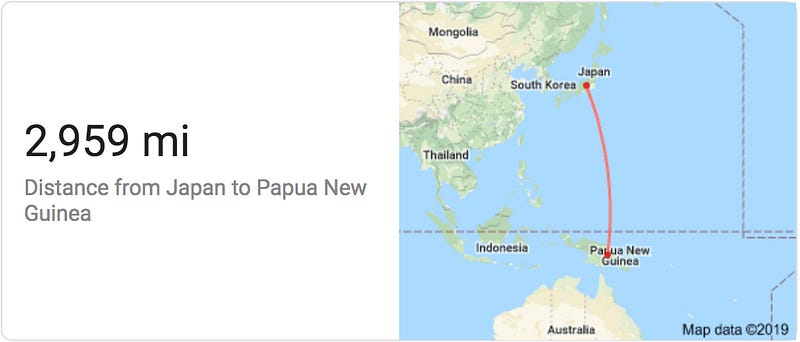
Well, it seemed like a pretty good idea to look for Afro Samurai’s homeland about 3,000 miles south of Japan.
Notorious PNG
Situated in the South Pacific Ocean, several nautical miles south of Japan, lies Papua New Guinea, the world’s second largest island. Since 1974, Papua has been violently divided into the Indonesian claimed half of Irian Jaya (West Papua), and the independent nation of Papua New Guinea, which takes up the island’s eastern half.
Credit for the name New Guinea (Nueva Guinea) goes to the Spanish explorer Yñigo Ortiz de Retez, who reached the island in 1545. The moniker that he applied to the island was inspired by the puzzling, twin-like resemblance found between the people seen living there and those living in the Guinea regions of Africa, half a world away.
Papua, the older name by which the island is known, derives from the Malay word papuwah, meaning “fuzzy’”or “woolly.” Like the later Spanish appellation, it too was applied as a remark on a physical aspect of the native population. In particular, it was the fluffy hairstyle that African-Americans in the late 1960s came to call the “Afro.”
Genetically, the brothers and sisters of Papua share a common origin with people on several nearby islands in the South Pacific. These include the islands of Maluku, the Trobriand Islands, the Solomon Islands, the Torres Island Straits, New Caledonia, Vanuatu and the Fiji Islands (Yes, class, that mystical land from which that delish bottled water originates.)
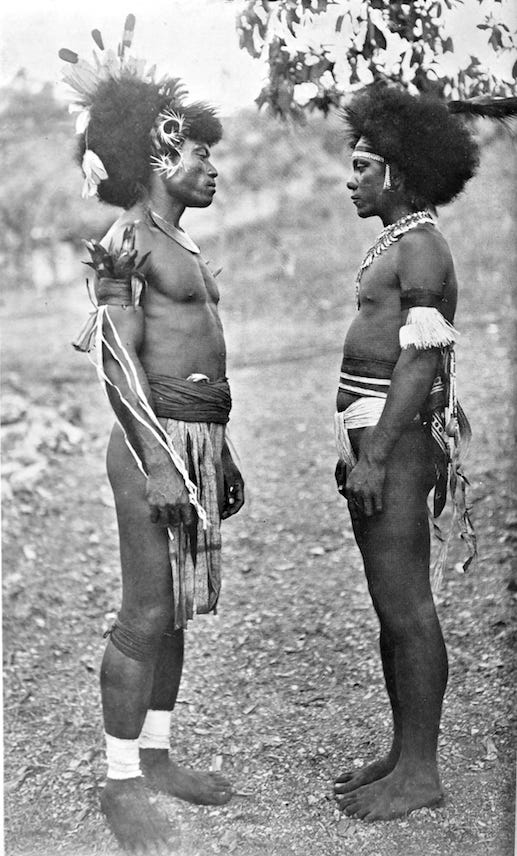
It probably should not have required a DNA study, but genetic tests have shown that the aboriginal peoples of Australia are directly related to the people of New Guinea. The fact that all of these folks are…black didn’t make it obvious enough? Shoot, those scientists could have donated all of that money at the strip…um, to youth education programs.
Or just given it to me. Hell, I might even have told ’em that sh…uh, stuff for free.
According to that no doubt costly 2007 study, Papua and Australia were populated roughly 50,000 years ago by a single group of humans who, until recently, lived in near total isolation from the rest of the world. The nearly extinct aboriginal people of Tasmania, an island suburb south of Australia, are also part of this Oceanic Afro family.
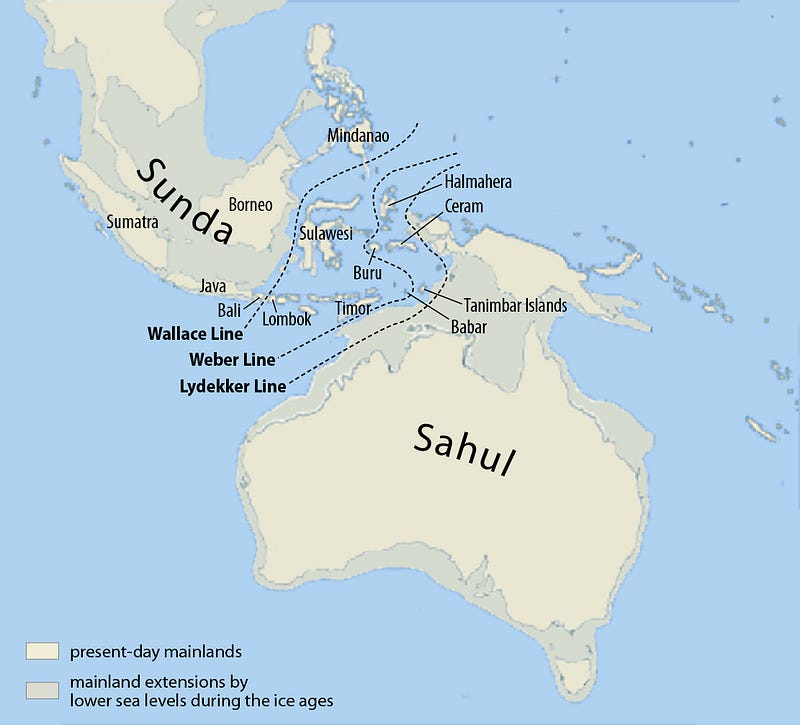
When and from where their ancestors arrived is still hotly debated, but they most likely originated from India, a significant early settlement point outside Africa. From there, other settlements would spread along the coastlines of Southeast Asia until reaching the now lost continent of Sahul, a landmass which was once comprised of both Australia and New Guinea before ocean levels rose and separated them.
In the 19th century, when Western naturalists were still busy dividing humankind up into racial groups, various names were applied to these little known folk. Before settling on the Greek-based term “Melanesians” (black islanders), they were referred to in various texts as Asiatic blacks, Austral blacks, Papuan blacks, Oceanic blacks and, my personal favorite, Oriental blacks.
Flower Power
And so it was that I found in Papua New Guinea what seemed to be the most logical location for Afro Samurai’s homeland. Even more fitting, the location was narrowed down even further to one particular island off the southernmost coast of Papua proper named, appropriately enough, Samarai Island.
Years ago, before most of the Afro Samurai stuff discussed here even existed, I found a cool black and white photo taken in 1905. Standing within the frame are three men of Samarai.
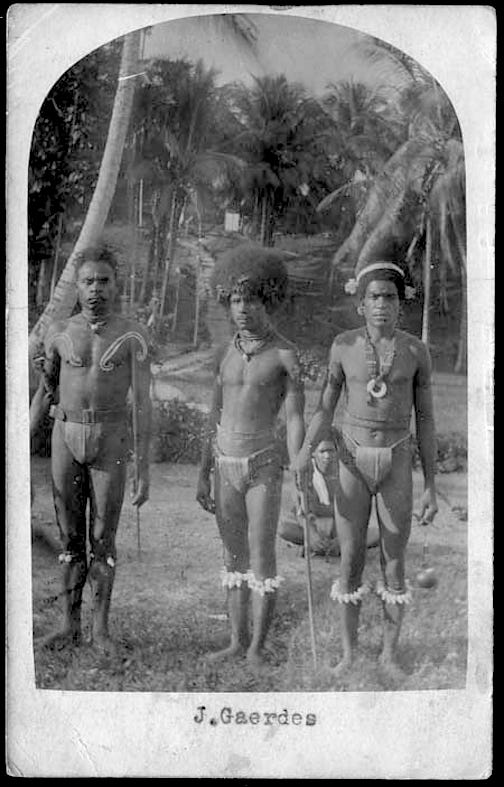
Methinks that the man standing in the center with his hand on a wooden stick would make the perfect model for Afro’s dad in my prequel story idea.
In fact, looking at him, it’s easy to envision him dressed in samurai garb and taking a similar stance. This after drawing a line in the soil with his sword, kind of the way that Wesley Snipes did in the first Blade movie. His bearing and expression could easily communicate to some would-be challenger the unspoken dare to, “Bring it on, punk.”
And, yes, of course. That particular phrase would probably not be the most samurai-like thing to think. But, you know how we do.
It’s also worth paying special attention to the fact that the brother has flowers in his hair. This was once traditional ornamentation for both men and women in this part of the world. So it would be ideal to have them worn in the hair of Afro’s dad, because that’s how hard this man would be: So hard that when seen with flowers in his hair and a samurai sword in his hand, muhfuckas would get extra scared.
But I think there’s also something about the juxtaposition of the hardness of a steel sword against the softness of flower petals that works really well, too, from an aesthetic point of view. Such a stark contrast even brings to mind the words of Cuban revolutionary fighter, Che Guevara, who once wrote that a man “has to grow hard but without ever losing tenderness.”
Split Ends
Because I’m a geeky-ass genius, coming up with how Afro Jr. and his dad made it to Japan was easy: The people of Papua, like many others throughout the islands of the Pacific, have long been in the possession of sea-going canoes. In the book Folkways (1907), William G. Sumner writes that Solomon Islanders were known to travel as far north as the Polynesian islands of Palau in order to obtain the mineral aragonite, which they used in various items of decoration.
In the book Argonauts of the Western Pacific (1922), archeologist Bronislaw Molinowski mentions the kula ring of Melanesia’s Trobriand Islanders. The kula is a trade network which involves expeditions over vast areas of sea within the Trobriands, but also to other neighboring islands. It’s an exchange network around a wide ring of islands, a thousand miles by sea-going canoe, to conduct ritual exchanges of jewelry made by various groups.
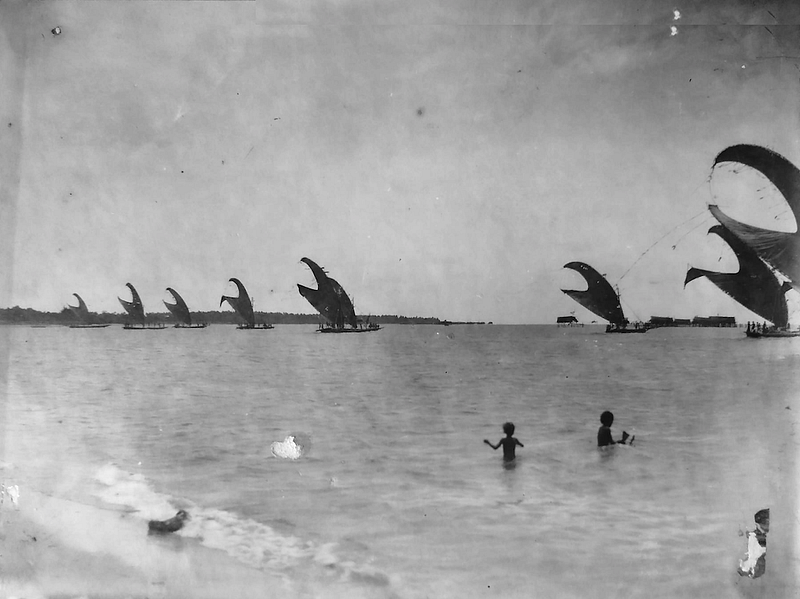
The travels of both Trobriand and Solomon Islanders hints at the possibility of trade existing even between the Afro-haired peoples of Southeast Asia and those of the South Pacific. I haven’t had the time to research this as thoroughly as I’d like, but the hair combs, earrings and other items of material culture shared by these peoples are too similar to be coincidental.
Anyway, in my fan fiction story, Afro and his dad are traveling with ten others on an outrigger canoe to Palau, or maybe even to one of the southernmost islands of the Philippines. Caught in a flash storm, their canoe is dragged far out to sea.
Days later, the derelict Papuan craft is found by Japanese fishermen trolling for fish near the coast of Okinawa. Afro and his dad are the only survivors. Barely clinging to life, the two are rushed ashore to a nearby village and gradually nursed back to health.
Okay, there’s a lot more story to tell now, but too much has already been revealed. If you have connections to Bob or Sam, put a bug in their ear about me, huh? Tell ’em you know this cat who has some epic-ass ideas for an Afro Samurai prequel and that they should have their people get in touch with my people. Then we can arrange a meet-n-greet at some dive bar in Tokyo and chop it up over cold saké and hot pork rinds, ‘cause that’s how just how I roll.
Class dismissed.
An earlier version of this essay appeared in issue #5 of the self-published subculture fanzine Kung Fu Grip!


.jpg)
