Design That Changed The World
A few unusual stories of usual things
Every day we make use of an endless number of different objects that have long since become normal for us. We utilize ballpoint pens, lighters, and razors without any interest in how they were invented and why they have this exact shape. These things have served us faultlessly for dozens or even hundreds of years, perfectly addressing our everyday tasks and improving our lives.
Let’s look back into the past and search for the answers to those questions. There is quite an interesting story behind every ordinary object.
Gillette
By the end of the 19th century, the American King Camp Gillette was dreaming of money and leaving his mark on history. Gillette had been working as a salesman and traveled most of his life. During this time, he thought about ideas for mass consumption goods, which could bring him millions of dollars easily. Until his forties, these attempts were unsuccessful. Then, Gillette received some important advice from his boss, which turned our hero into a bright example of a rigorous UX designer.
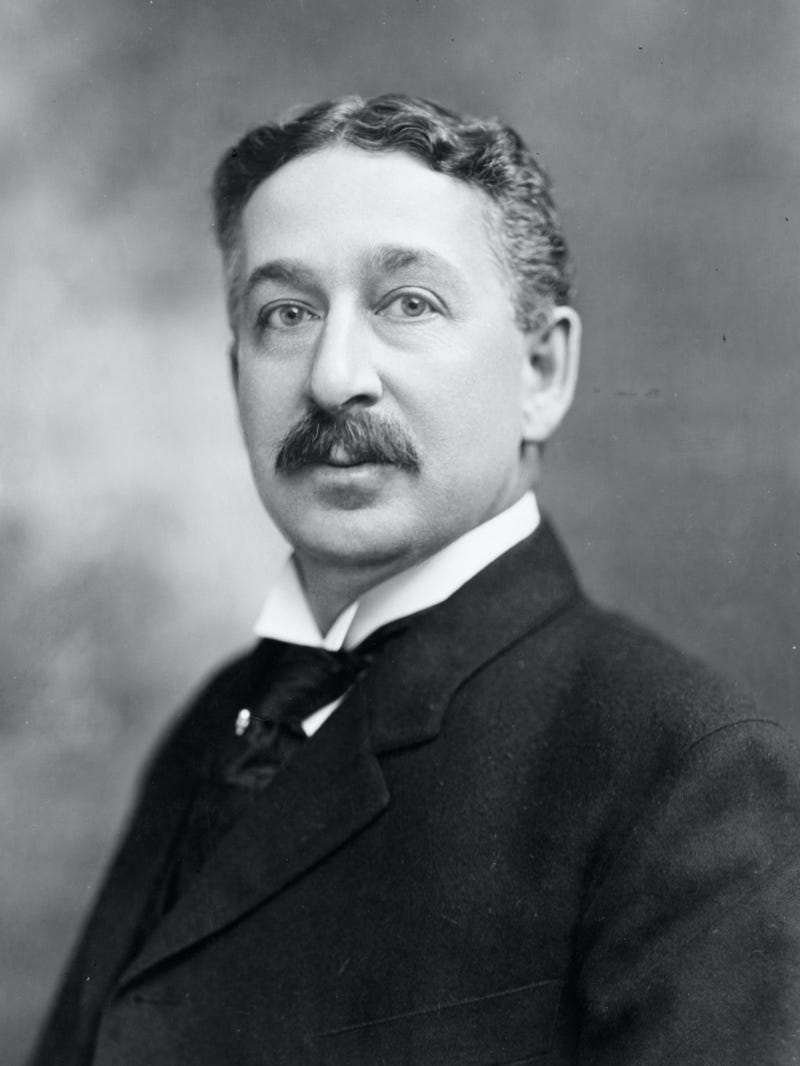
Gillette’s boss recommended his subordinate to direct his search to the outer world, to look at the surrounding context, and focus on people’s daily actions, and then create something that would be easy to use and toss. The boss knew what he was talking about because he had already created an indispensable product — a tin plug with rubber padding that can still be found on the bottles of different drinks.
It was easier said than done, but Gillette paid attention to his mentor’s tips. In the end, it was this very tip that led to a sudden discovery that changed the morning ritual of every man in the whole world.
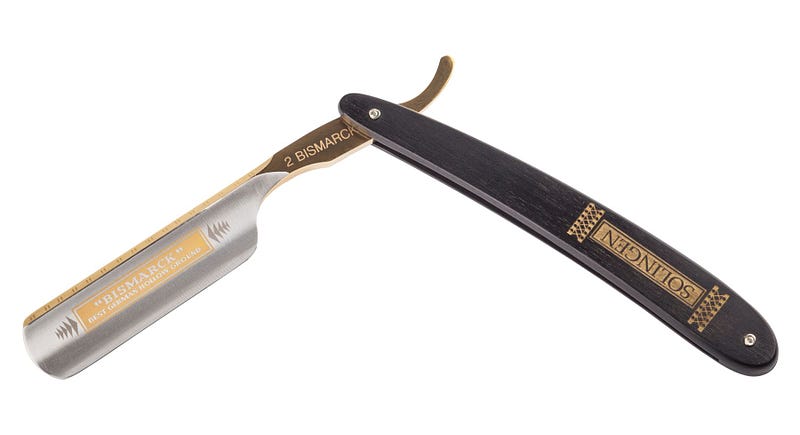
On the morning in 1895 Gillette saw that, once again, his razor required sharpening. Back then, this was a particularly drawn-out process because it was only possible to do so at the grindery. Faced with this prospect, he decided to just shave with a blunt razor. The procedure was quite displeasing and even dangerous, but it was necessary none the less. Today nobody would be surprised by your two-day stubble or a big and bit untidy beard, but for a man living in the 19th century, it was unheard of to go outside unshaved or even with an uncombed mustache and beard. The razors used back then are now known as open or cut-throat. They required skill, experience and care when using them.
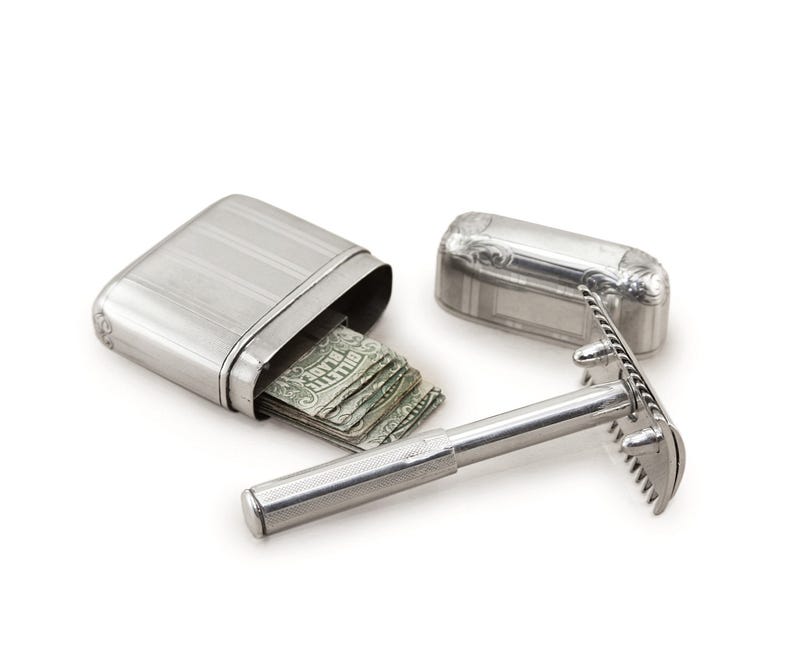
“If only those razors could be disposable!”, Gillette thought while he got himself prepared for the raining down of multiple cuts and the feeling of hellfire running through his skin after the blade dealt its blows. Suddenly he came to a standstill because of these words. He thought about it once again, and then again. His face slowly filled with a smirk. Gillette imagined a razor of a new kind, one that was able to solve a problem faced by him and any other man in the world. He visualized a thin steel blade, easily replaceable. It was clipped between two plates attached to the razor’s handle.
Gillette, turning his attention to his invention, spent the next six years with engineers making the metal plate of the necessary thickness, and he even constructed the razor itself. Finally, in 1903, Gillette was ready to mass launch the razor, and it hit the market.
The razor was easy to use, and its blade could be replaced when needed. You could still cut yourself with it, but those cuts weren’t dangerous and didn’t threaten your life nor your health. This is when people started to differentiate cut-throat (or straight) and safety razors.
While the novelty of Gillette’s razor immediately got positive reviews, it was pretty expensive, which prevented the business from scaling up. For the first two years, only 50 razors and just over 100 blades were sold. Gillette was even forced to go back to his previous job to make ends meet. In despair, he decided to lower the price of the razor to $1 and profit from consumable materials such as shaving creams and brushes and blades.
This approach is now known as the ‘razor and blade’ business model. The main product is offered lower than its net cost, and the profit is generated from the accompanying products. After introducing this strategy and producing a successful advertising campaign, by 1915, Gillette had sold 450 thousand razors and 70 million blades.
King Camp Gillette became a millionaire by creating the most important tool in a gentleman’s daily life. Furthermore, its worth was demonstrated because it started saving the time of its users (on average, a man would save 15–20 minutes every day) and make a previously dangerous process quick, easy, and even pleasing.
BIC
On the 29th of July, 1914, while Gillette was winning the market of disposable goods with its iconic shaving razor, Marcel Bich was born in the French-speaking part of Italy. Further, it was Bich who was destined to make a new step in the development of consumer goods by creating the company today known as “Société Bic” or simply “BIC”.
The Bich family often moved from place to place, and Marcel traveled a lot during his youth. Born in Turin, he went into school in Marcel and finished it in Bordeaux. It was in France that Marcel settled and started working as a sales manager in “Stephens”, a company producing stationery.
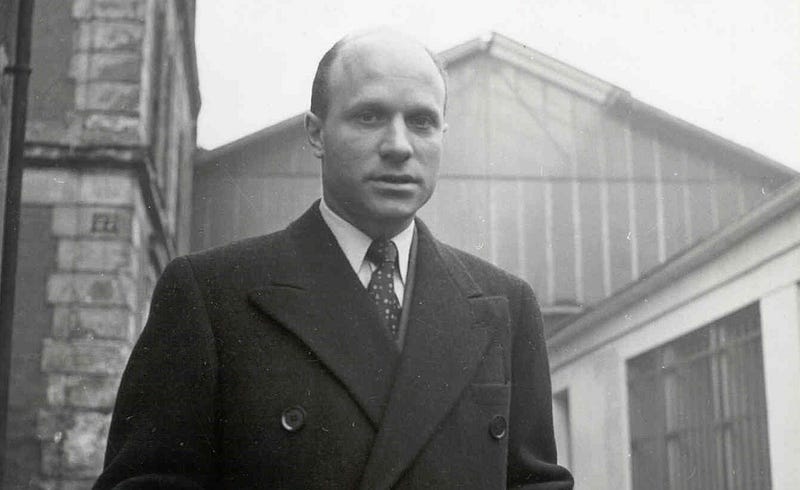
Another cause was Bich’s experience of numerous trips and shifts. During his younger years, Bich was often forced to pull heavy luggage and dreamt of leaving old things in the place he departed from and buy new ones wherever he stayed next. However, even considering his noble ancestry and wide-ranging capabilities, this required enormous money and was impossible to bring to life.
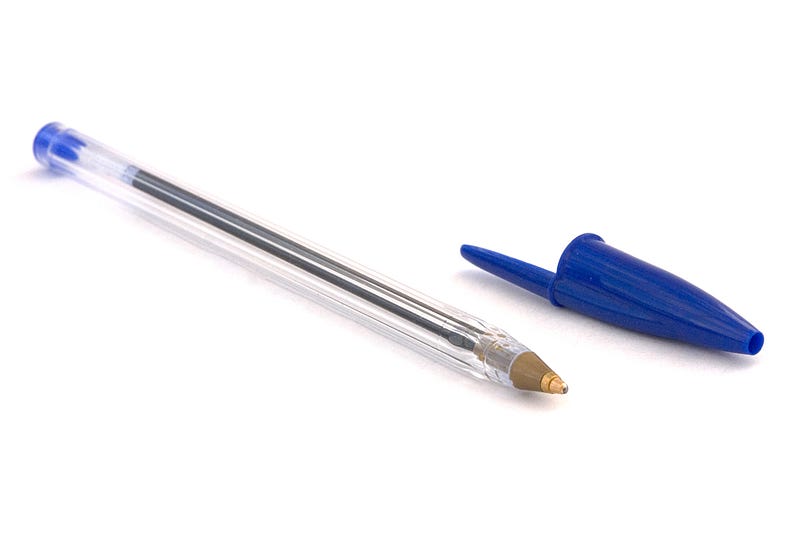
Working with stationery helped Bich direct his thoughts. In 1944, he started his own business where he first produced details for feather pens and mechanical pencils. Then the production of plastic bodies for ballpoint pens started, and in 1949 the world was introduced to his own project, the “BIC Cristal” pen. For that, Bich purchased the patent from brothers László and György Bíró, who were the inventors of a ballpen. Bich didn’t invent anything particularly new. He optimized an object that had already existed, and it is thanks to Marcel Bich’s simple and elegant design solutions this tool became so popular and accessible.
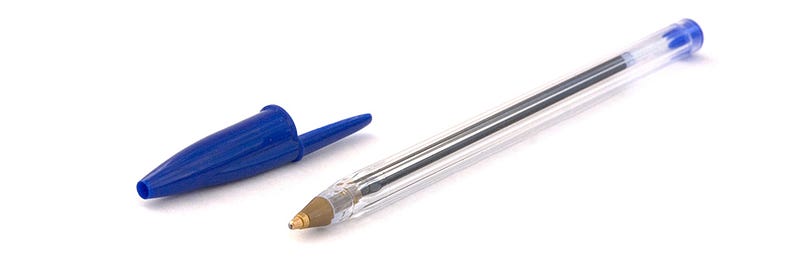
During the last 70 years, the design of this item hasn’t changed much, because it still perfectly performs its primary function and addresses the consumer’s need. Simple but unique ideas for that time were embodied in Marcel Bich’s product.
Cheap plastic allowed Bich to sell the ballpen only for ¢23 per item while rival offerings cost an average of $10 each. Today, you can lose such a pen without any regrets.
The plastic opaque body quickly answers the question of how much ink is left. Thanks to its hexahedral form, the pen is handy to hold and it slides less on table surfaces.
A colorful cap is an example of a perfectly performed job of the designer, who considered all cases of using the product. The color of the cap immediately indicates color of the ink inside the pen. A long stick works as a hold for the pocket. Finally, the creators of “Cristal” took care of those who love to bite the cap or keep it in the mouth — it has a little drainer that will help the oxygen get into the lungs so that if a person inhales the cap, they wouldn’t suffocate and could wait for the arrival of an ambulance.
Success wasn’t long in coming. The pen quickly conquered Europe, and three years later Bich entered the American market by acquiring the Waterman Pen company. It was the first company that started selling ballpoint pens in the US. Through the sixties, the company produced more than a billion pens per year, each costing ¢10.
Today BIC is an international giant, and in every country, you can find its products: stationery, disposable razors, and lighters. But it is the BIC Cristal pen that still remains the company’s flagship product and one of its primary sources of income.
Zippo
The Zippo lighter has always been shrouded in an enormous number of legends, as well as no less interesting and genuine facts. The first of these is that “Zippo” isn’t an original idea. Its success is only the result of one perfect design solution. But let’s start from the beginning.
George Blaisdell was a co-owner of a company making facilities for oil production and spent his life working with metal. Once upon a time, he was watching his friend fighting in despair with “Hurricane”, an old Austrian lighter. He tried to take off the lighter’s lid to light up his cigarette. Finally, he won this battle and then Blaisdell asked his friend: “Why won’t you buy a more modern lighter?”
The friend responded, “What for if this works just fine?”
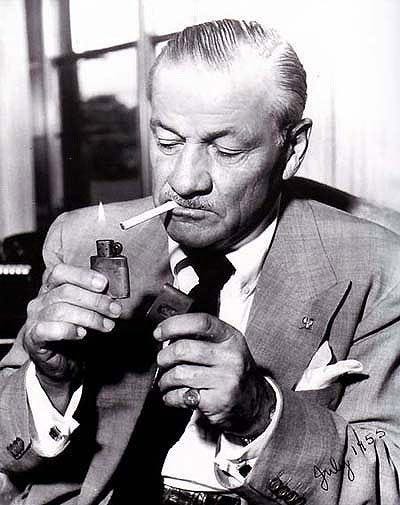
Having entrepreneurial aspirations, Blaisdell decided to sell that exact Austrian lighter that “works just fine”. But he quickly failed as he didn’t sell a single lighter. Then George Blaisdell had an insight. He recalled his friend’s attempts to open a lighter and the necessity to hold the lid with another hand when lighting up a cigarette. That wasn’t handy. No, he didn’t imagine a new revolutionary lighter, and he didn’t require improved technology to produce something else. He just decided to attach the lid and make it flip.
Blaisdell took an existing Austrian gasoline lighter and made some changes. First, his was a flipping lid which it allowed someone to light up their cigarette quickly with one hand. Second, Blaisdell changed the form so that the lighter would gracefully fit into one’s hand and looked more modern. Even the glorious windshield technology wasn’t new: the sides protecting the fire from wind had already existed in the Austrian prototype.
In 1932 Blaisdell founded a plant where only 6 workers were employed in the beginning. He wanted to call the company “Zipper”, but it turned out this name was occupied by a firm producing slide-fasteners for clothes. It is likely that the “Zippo” name inspired Blaisdell because of the sound of the flipping lid. It was that same sound that made the lighter truly musical. Experts and collectors unmistakably recognize it by ear, and Eric Clapton, along with Sting, used a Zippo as a musical instrument in the song “It’s Probably Me”.
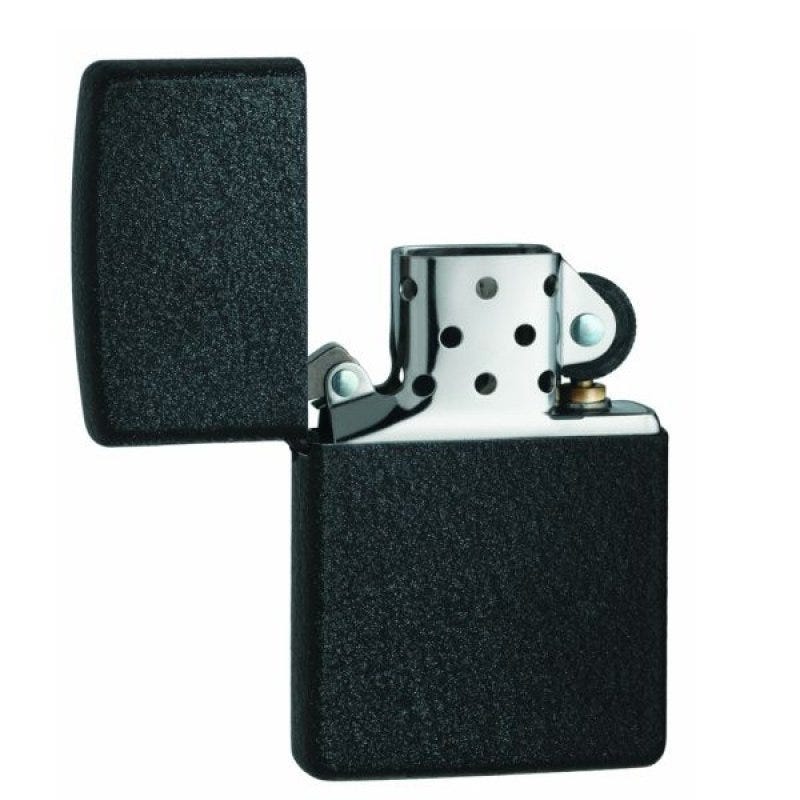
Compared to Gillette or Bich, Blaisdell’s engineering concept wasn’t so elegant. It is even questioned whether it was his idea to update the Austrian lighter because Zippo was patented by Blasidell’s companion, George Gimer. But it was Blaisdell who was the owner and ruler of the Zippo company. As it turned out a few years later, he was also a genius marketer.
Sales were growing fast. A lighter, that was handy and always worked, was in great demand.
On three years after the launch, Blaisdell started offering personal engravings, initials, and individual images to his customers, all of which could be done at a very reasonable price of around one dollar. A reliable and quality product became personalized and its owner could get attached to it. There were other promotions, such as corporate branding and collector’s items, as well as contracts with the U.S. Army and Navy. American warriors were the ones who made Zippo truly world-famous during World War II and the war in Vietnam.
Their main promotional feature was a lifelong guarantee. If you have kept a Zippo lighter that is dozens of years old, but stopped working years ago and you have no idea what happened to it, you can still send it to the Zippo Manufacturing Company in Bradford. (You just pay the postal services). The lighter will be fixed and sent back to you. (Now they will pay for the delivery). However, the guarantee doesn’t cover engravings and the outer finish of the lighter.
Jerrycan
This thing doesn’t have a single creator, but history doesn’t get any less fascinating because of that. Today, it can be found in your car or in your garage. We can state with certainty that it affected the outcome of the Second World War.
The 1930s were a time of military strength intensification and preparation for the next big war. Germany wanted revenge and the USSR was getting ready to expand its influence further to the west. The allies were trying to contain their colonial empires that were bursting at the seams.
Car transport, aviation, and tanks require enormous amounts of fuel. This resource became essential when planning fighting seasons. It won’t come as a surprise that the optimization of the container for fuel transportation happened in Germany. The maneuverability and the moving speed of the German tanks played a crucial role in the “Blitzkrieg” strategy, the lightning speed-like war of 1939–1941.
In 1937, the German army got “Wehrmacht-Einheitskanister,” which literally means “a can of armed forces.” The moving speed of the German tanks was affected not only by the transport specs themselves, but also by the maintenance speed. The Germans knew that the old kind of the can will waste their time and fuel. So, the German army engineers dedicated themselves to optimize the fuel transportation tools and to develop a new form of can.
The old cans were problematic. They were either in a rectangular box or a triangular prism. They were hard to put on top of each other and required a lot of additional space. Those cans were heavy and needed a pair of soldiers to be brought from one place to another. To open them one must have a special tool in the form of a wrench. Due to the construction shortcomings in the can and the lid, the fuel often leaked and evaporated.
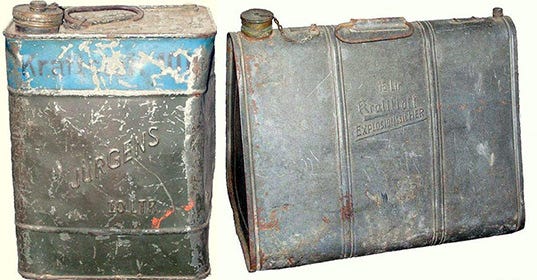
But before the Second World War, the German army and aviation crews were equipped with a new kind of can. This kind of can became a true sanctuary of calculated design solutions.
The first thing engineers changed was form. Instead of different bizarre and inconvenient figures, this one was done in a form of a cuboid and exclusively in the capacity of 20 liters. The new form allowed the use of space in the transport more rationally, and its exact volume sped up the calculations of the remaining fuel.
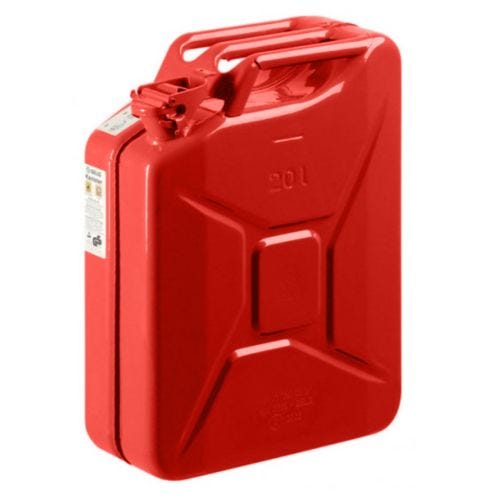
The new can had a handle made of three tubes. This solution considered all possible scenarios of carrying it by one or two soldiers.
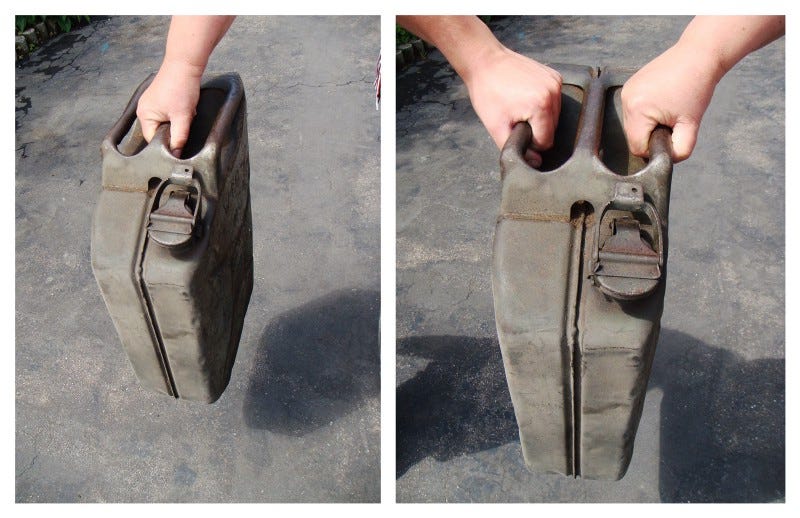
The lid of the can became a true piece of art. It could be opened in an instant with only one hand without any need of additional tools. It closed in the same way, safely sealing its contents.
The final touch of the new can was the technology of metal welding that ensured fuel impermeability and sustainability from the surroundings. The fuel remains safe inside regardless of the weather conditions.
With the beginning of the war, English, American, and Soviet soldiers captured German cans and spread them among armies of all parties. Before 1943, the “Jerrycan” (the name Americans called it because they called Germans “Jerry”) was in the hardware of every Allied army. Over time, this can became irreplaceable for transporting fuel and other liquids among civilians. To date, this outcome of engineering thought has not been modified significantly, as it rigorously performs its functional tasks and helps people all over the world to transport liquids.