
Joshua trees are not really trees
And other surprises about life in the desert
Hot and sweating, I leaned against the cool granite wall on the shaded side of the canyon and sucked down more water. On the opposite wall, an array of prickly, twisted, gnarly and beautiful desert botanicals tucked into every nook and cranny. The longer I looked, the more I saw.
Tubby red and gold barrel cactus, bushy pencil plants without leaves, skittering lizards, lemon-lime churro that look fuzzy enough to pet (don’t try that.) Sagebrush dull in color but vibrant in scent, tall angular ocotillos, crusty lichens layering the boulders around burrows and snake holes.
The moment gave me a flashback to a scuba dive along a reef wall, years ago in Tahiti. That day, we swam across a shallow field of sand with occasional swaths of seagrass and not much else. We headed toward the watery horizon marked by a darker shade of teal. Then the edge of that sandy field suddenly dropped away — one minute the ocean floor was a few feet below me and the next minute I was looking into an abyss the color of twilight. My stomach lurched and my adrenaline surged with a fear of falling — it felt like I’d just stepped off a cliff. Until my brain remembered that I was in the water, not dry air, with full control of my buoyancy.
Everything changed as I started to descend. The reef wall, the cliff, was crammed with color and texture, and life. The slower we went the more we saw: coral and anemones and neon flashes of tiny fish. A mesmerizing community of life adapted to thrive on a dark rock wall in a salty water world.
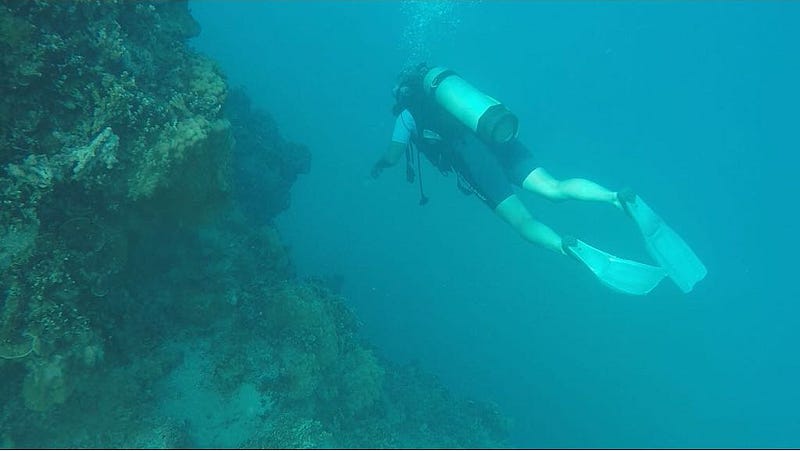
That reef wall in Tahiti was eerily similar to this canyon wall in the Mojave. The survive-and-thrive adaptations, the extreme conditions, the pockets of stunning beauty — they are mirror reflections, upside-down versions of each other. Deserts and oceans, they’re not opposites. The two worlds have more in common than you’d think.
Five ways deserts and oceans are the same.
- Both environments are missing an element essential to human life. Seems obvious, right? In the ocean, that would be air. In the desert that would be water. In both cases, its a BYO situation for survival. Humans need to pack along an air tank and regulator in the ocean, or jugs of water for the desert. We adapt by what we pack.
- Humans need to BYO, but other life forms adapt. Both desert species and reef species evolve in ways thorny, protective, poisonous, weird. Extreme adaptations for extreme conditions, beyond imagining, fodder for both sci-fi and Dr. Suess stories.
- Best to keep your hands to yourself here. Move slowly, in both environments: compare the stinging sea urchin spines to those teddy bear churros — the ones with needles that detach from the branch at the slightest touch into pant legs, backpacks, or fingers. Or the moray eels with their toxic spit and pit-bull jaws — like desert rattlesnakes, they teach us to think twice before moving rocks or reaching into holes.
- Time in these places can be the most meditative and mind-expanding experience a human being can have. Time slows down when you lean against one granite wall, tired and unplugged, comparing cactus shapes. Nothing sparks our collective imagination like freaky species. Case in point: the giant roadrunner, better known as the nemesis for Wile E. Coyote. This bird can fly, but chooses to run across blazing hot sand, maybe to be closer to a favorite snack: scorpions. Another case in point: the flock of eagle rays that passed overhead, like a squadron of Millenium Falcons from Star Wars. Mind blown.
- Deserts and oceans both feel immense, and sturdy, like nothing could change them. They are too big too fail. But we once said that about banks, too. In truth the cumulative effect of human progress is fraying the edges of life at the extremes. Enchanting dives along reef walls are harder to find, as coral bleaches out and climate-fueled tropical storms murk up the shallows. Even deserts depend on occasional downpours to refill the reservoirs. Shifting up the thermostat by a few degrees may not feel deadly in some places, except when life is already hovering on the edge. The fossil fuels we burn elsewhere has an impact here.
By the way, those Joshua trees?
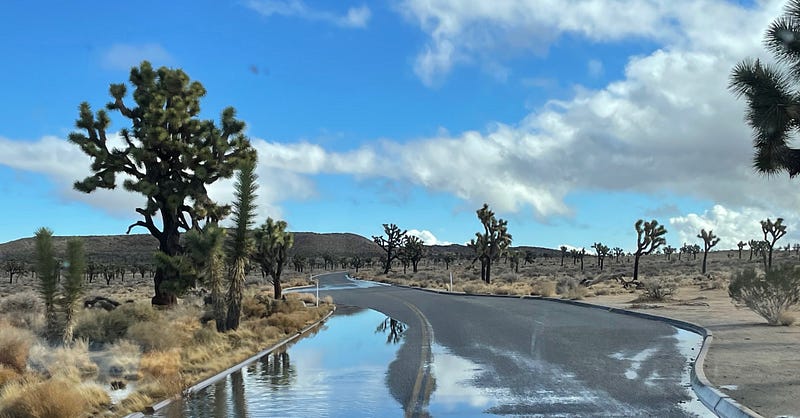
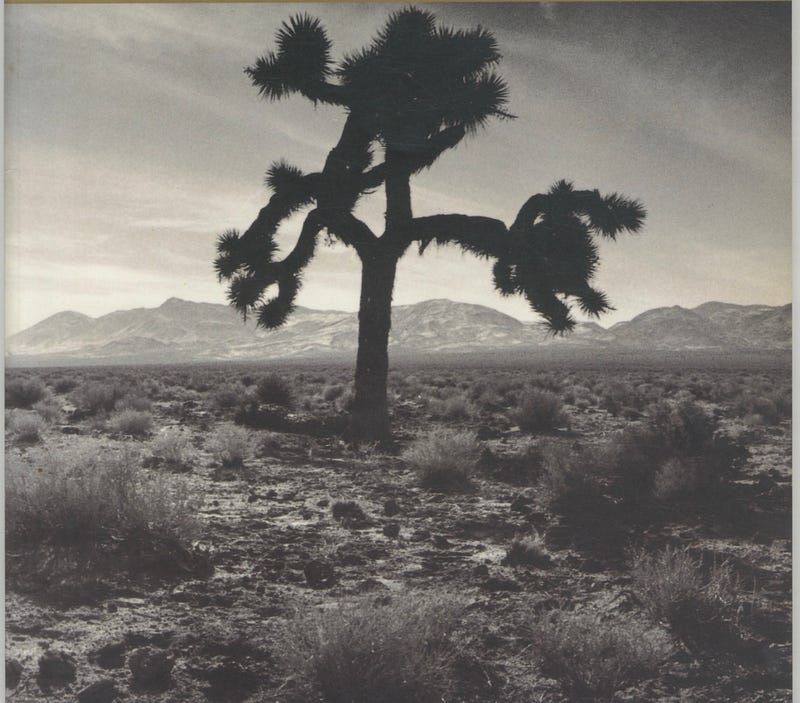
The plant I fell most in love with in the Mojave Desert is the Joshua Tree. Yes, they are tall as a tree, with a trunk and branches like a tree, but … surprise! Joshua trees are actually yucca plants and in the Agave family (next time you have tequila, give a toast to those magical desert plants!) Joshua trees are not just cool to look at, like on the classic U2 album cover, they are critical to a web of desert life: birds nest up high, critters burrow among the roots, and the seeds feed a number of species.
It breaks my heart to know that like rhinos and sage grouse, Joshua Trees are running out of places to live. Not due to human encroachment on their space — this time the threat comes from rising temps.
The National Park Service projects that within my lifetime, Joshua trees will lose 80% of their habitat. Most of the Mojave, where elevation and temperature and spring rains combine to keep Joshua trees happy, will get just a little hotter and dryer. Too hot and dry for seeds to germinate. Those tough little nuggets will keep waiting for better times before they try to send out vulnerable tendrils of life. Which means no baby Joshua trees.
So what can we do? What’s within our reach? First, we can get to know these places. Read about them, watch documentaries, go experience it first hand if you can. We can keep them in mind as we live our lives, as we make purchases, as we vote. We can embrace science and the people who work to protect these ecosystems.


