
Derek Sivers’ 20 Paradoxical Truths for a Good Life
The most popular guest ever to appear on Tim Ferriss’ podcast will change how you think — and live.
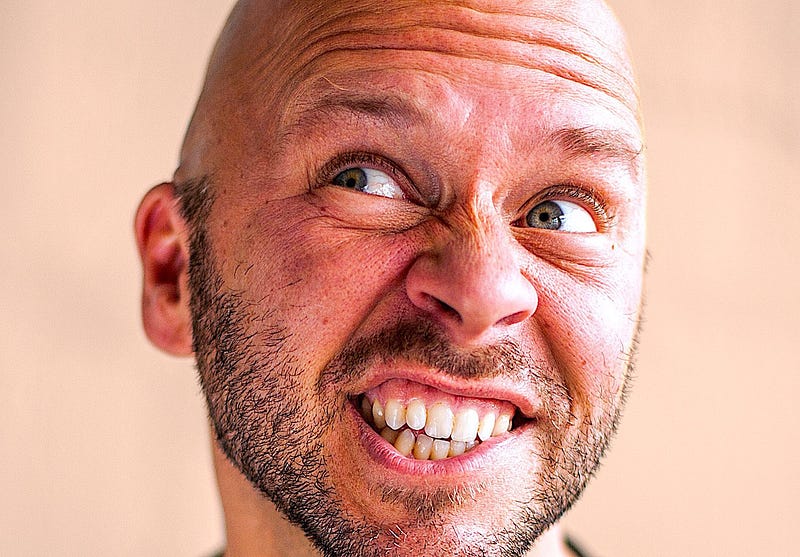
Derek Sivers is perhaps the most bizarre human being on Earth.
He shot into the spotlight when he appeared on the most downloaded podcast episode of The Tim Ferriss Show to date and shared the idea of “Hell Yes or No.” It was a simple tool to make every decision in your life.
Derek shared during the interview with Tim how his career started in the circus. He then went on to start a business called CD Baby that helped artists sell their music on the internet.
That tiny little business he started by accident went on to become the largest seller of independent music on the web with more than $100M in sales. Derek says, “ I didn’t even want the money from the sale.”
So in a rather bizarre move that would define his career and make millions of people listen to this single podcast episode that featured him as a guest, he gave away the vast majority of the money to a charitable trust that supports music education (the thing that made him successful).
I became fascinated with Derek. He offered simple advice and short paradoxical truths directly from his own life. Derek bragged in one of his blog posts that he answers every email. I decided to test what he said. Sure enough, Derek responded within a few hours.
“This must be you” was the opening line of his email with a link to my website. He had a way of instantly making you feel special.
Ever since the first email Derek sent me, every once in a while, I send him an email. A week ago another happy accident occurred. Derek sent a message to his email list.
“I made an update to my site and uploaded it [his book], then went to go test it. But oooops! I had accidentally enabled the ability to buy ‘Hell Yeah or No’ — my new book that I wasn’t going to enable for another month!
I quickly went to take it down, but then thought… eh. Let’s roll with the randomness of that. Accidents are fun.”
I was excited and went to buy his book. The checkout process didn’t work. No matter how hard I tried to hit the buy button and get his new book for some simple wisdom to deal with these uncertain times, I couldn’t buy it.
I messaged Derek and he replied back saying it was fixed. I eagerly went and bought the book. It took me 24-hours to read.
Here’s what you can learn from Derek’s’ counter-intuitive randomness.
We do so many things for money whether we need it or not
This thought from Derek is powerful. Think of all the work you complete for money. Have you ever sat back and wondered whether you need all that money or not?
If the money game ended because you realized you had enough — or could live with a lot less money — what would you do next? This is the question posed by Derek.
The work you do after you no longer need or want money is a form of intriguing work you want to explore. Why wait? Start that work or transition to that work as soon as you can.
Our actions always reveal our real values
Influencers are full of shit.
That’s why I only judge them based on their actions. Behind the scenes, these famous people you look up to are not who you think they are.
Many of them are total twats that are in love with themselves. Except Keanu Reeves — he’s awesome. Before you fall in love with an influential person, look at them based on their actions not their values. Values can be faked.
Your actions show you what you actually want
When people say they want to write or start a business and then don’t do anything, it shows me what they want.
You don’t want the things you say you do. You want the things you actually do. The things you can’t live without or block out time for.
Let your actions tell you the truth about what you want.
Keep earning your title, or it expires
Pure gold from Derek. We hold on to titles from our past. We tell people stories about someone we no longer are. I used to tell people how I was a musician and a DJ. The truth is I haven’t touched music for more than five years. That’s not who I am anymore.
When you admit what you aren’t anymore, you can get on with who you want to be.
Your past titles take up space in the area of your potential.
The richest people in Hollywood are the ones you’ve never heard of
Derek has been lucky enough to hang around famous people when he was living in LA.
The thing is, Derek doesn’t tell you who he is. He’s like a fly on the wall, watching the world go by.
By meeting these people he realized a lot of them weren’t rich at all; the media made them look that way. Most of the rich people Derek discovered in Hollywood were people you’ve never heard of because they were willing to choose money over fame.
You are always giving up one thing in exchange for something else.

When you go against the stereotype, people get confused
I feel like that as a writer.
People assume I write to build something. When you think of a writer, you think of a person who wants to have the #1 blog or a New York Times Best-Selling Book. I don’t really care about that which people find odd.
Derek shows us that through his example. He’s an entrepreneur that doesn’t like money. He’s an author that doesn’t care about attention.
It’s confusing to people when you do the opposite of the stereotype. It’s also a differentiator and a way to get closer to authenticity. Because living a fake life will ruin your life, eventually.
It’s impossible to copy
All good artists imitate their idols. Artists are quick to get on their high horses and accuse people of copying their work or stealing their ideas. You can’t copy. It’s impossible.
Whenever you try and copy or imitate your idols, you’ll distort their work. Your work is made up of every person you’ve met and been inspired by.
You’re copying your idols by default. And when you share an idea, you will naturally add your own twist and expand on it.
You will love what you used to hate
I used to hate classical music. Then I discovered the power of movie soundtracks as background noise while I write. Now I love them.
Whatever you love is temporary. You might change your mind, so don’t be romantic and form extreme, rigid opinions.
You are an avatar online, not the real you
Derek says the online version of you is a cardboard cutout. Think of the online world like a game. There’s the real you with skin and bones and eyes, and there is the online version of you that has a username and profile image.
When someone attacks the online you, don’t stress. It’s not the real you. They probably haven’t met you. And if they did, they’d have a different opinion and perhaps withdraw their harsh comments of your work or opinions.
You can tweak your online image too, says Derek. What people think of you is based on how you tell your story and share your thoughts on social media. I used to be an asshole on social media and troll Youtube videos because I was sad and lonely. So, I woke up one day and changed.
I obsessively studied the power of kindness and started acting differently. First, my avatar changed, then the real-world version of myself followed. You can change what people think about you online. Let people attack your avatar and don’t take it personally.
When you don’t try to win debates, you experience peace
“I don’t mind. I’m not trying to win any debates,” says Derek.
I feel the same way. People wonder why I don’t get down into the weeds of comments and tweets and defend myself. It’s because you can’t win a debate. There is always someone smarter that comes along.
Winning debates has very little to do with your goals.
Don’t be so protective of your precious opinions.
Your first reaction is outdated
This was an a-ha moment. We all can say “I felt like that once too” to this advice. It’s one reason I hate podcasts. My answers reflect what I used to think. But who you are today is always rapidly changing.
You need time to reconsider your beliefs.
That’s why answering people’s questions via email is better because you can truly think about the answer without coming up with some knee-jerk fluff ball you dug up from underneath your couch two years ago when you were almost famous.
Evolution is a daily event, so your answers to questions need time to caramelize.
Tilt your rearview mirror
One of the best lessons from Derek’s book. He tells the story of driving up a mountain with his son. The drive was more pleasurable when he went slow.
The problem was all the drivers behind him would get upset and he could see them in his rearview mirror. So he tilted his rearview mirror upwards so he couldn’t see them anymore, and enjoy the drive and scenery with his son.
What problem in the world could you tilt your rearview mirror up at the sky to so you no longer see the critics behind you shouting?
Quit something you love to make room for change
This was a paradoxical thought from the book that held immense power.
Quitting what you love creates room for change.
You can quit what you hate. But if you have quit everything you hate and you still feel as though something is off, maybe you need to quit a few things you love to make room for change.
You get no competitive edge by consuming the same stuff everyone else is consuming
That’s why it pays huge dollars to be different; to be yourself.
Content creators make this mistake all the time. They reach for an Einstein quote when a quote from their mentor that nobody has ever heard of would be ten times better.
Act like a Bronze Medalist
Bronze equals good enough.
One second slower and you wouldn’t have got any medal. One second faster and you would have got a healthy sense of silver medal envy which will keep you hungry. But if you get the gold medal, it’s hard work. Pretty soon you’ll become outdated or second-best; it’s only a matter of time.
This thought from Derek sums up the Bronze Medalist way of life nicely:
I’ve met a lot of famous musicians.
The miserable ones were upset that they weren’t more famous, because they’d bitterly compare themselves to the superstars.
The happiest ones were thrilled to be able to make a living from making music.
Do you think of your goal as one step or many?
People ask Derek how he was so successful at business. He thinks he just took one step and set up a website. Other people try and make out as though what he did was made up of millions of impossible steps. Both are right.
The same goes for the corporate world. The more steps and the more confusing those steps are, the more money you can charge.
Greed is what made the world complex.
If you think in terms of one simple step, you’ll go far. Thinking in terms of thousands of tiny steps will cause you to overcomplicate, overthink and defer taking action until “someday.”
For example, how do you write on the internet? You start writing one story that nobody will probably read (that’s my answer).
How many steps am I picturing?
Assume you’re below average
Benefits:
- You’ll listen more.
- You’ll ask more questions.
- You’ll subconsciously admit you’re still learning.
Trying to look smart blocks you from doing anything at all. Acting as though you are a student with average grades will change how you show up. You’ll have nothing to prove because people expect very little from a student.
Average people blend in nicely and can focus on action rather than looking good to people they don’t care about or even know.
Do something for love and something for money
This is why I work a 4-day workweek. I want two days to write, and four days to make money.
One type of work rarely satisfies you. And if you depend on your creative work to make money, you might make terrible decisions. De-risk yourself with paid work and unpaid work you do for the love or hell of it.
Go from expert to feeling like an idiot
You may have known a lot about something many years ago, but now that knowledge and those skills might be outdated.
Unlearning and subtracting helps you let go of what you used to know or do, so you can make room for what you want to do now and into the future.
Be frightened by your old outdated ideas, says John Cage in Derek’s book.
Think that everything is a coincidence
Life is more beautiful when you do. It’s how I got to know Derek.
Every person you meet and every experience you live is a beautiful coincidence secretly working in your favor — or in favor of someone you care about.
Discovering Derek was random. His odd approach to conventional ideas will change how you think. Challenge yourself by taking metaphors and simple ideas and experimenting with them in your own life.


