

Depression Doesn’t Look the Same for Everyone, But It’s Really Different than Your Normal
I started monitoring my depression with Fitbit and I had incredible insights!
Highly functioning depression
After a depression, last year that was finally diagnosed and I could really understand „how it feels like” for me, I started to notice how different I feel when my mood changes and what is my normal compared to this episode that I had now as a reference.
It was no surprise to see that there are major changes in the physical body during depressive episodes.
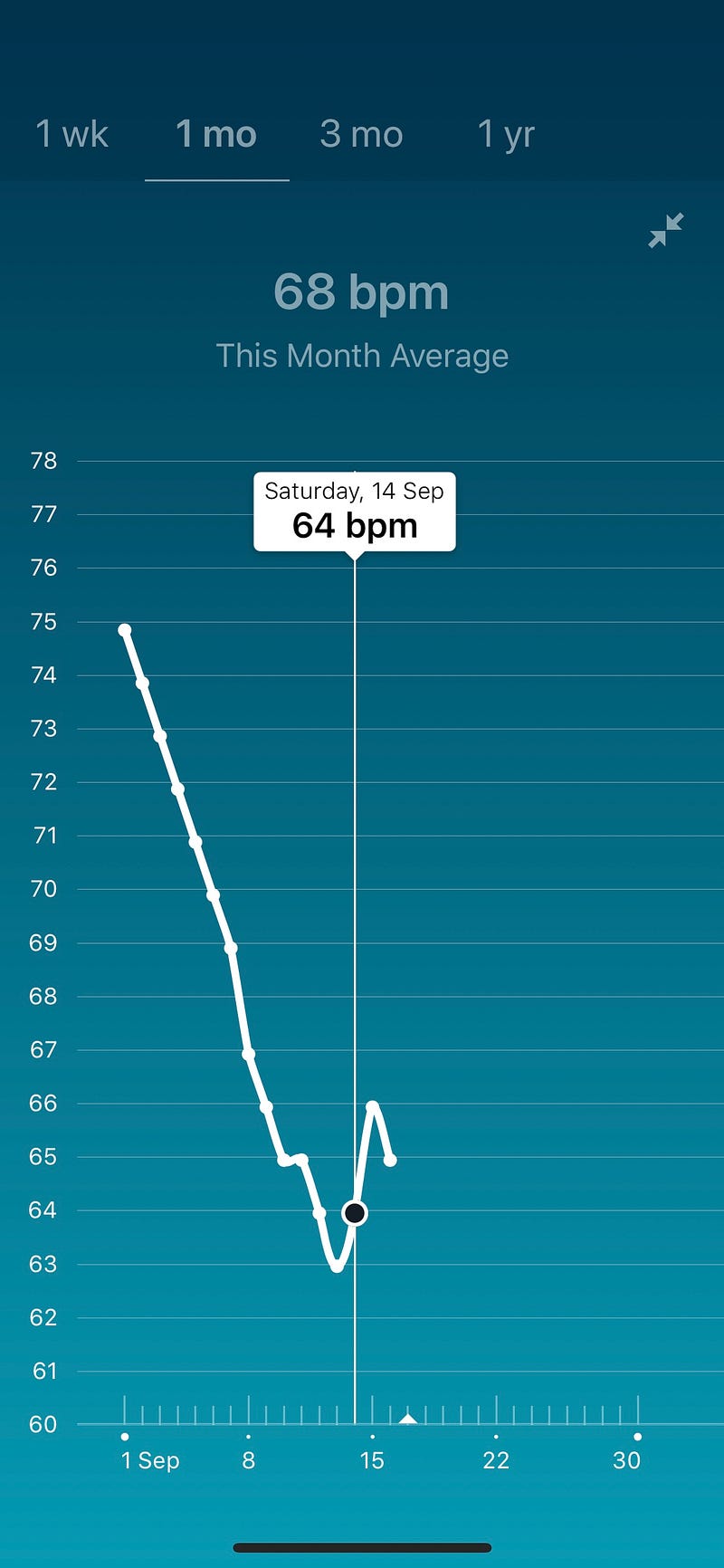
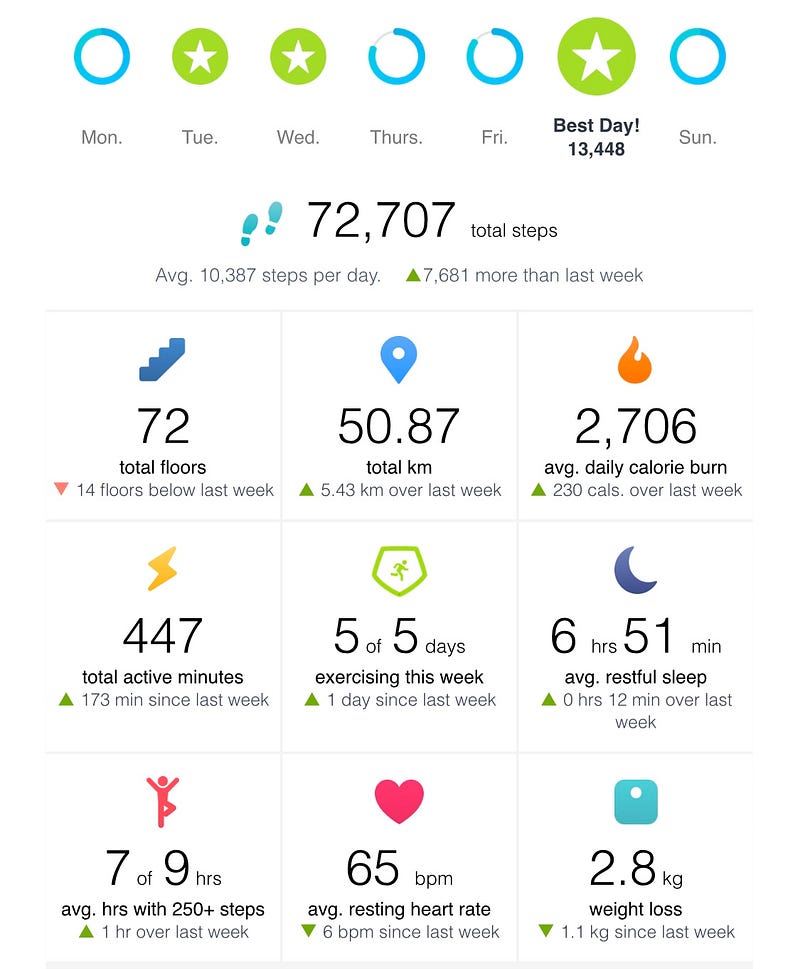
As my Fitbit stats indicated, I had lost weight, did a lot of intense workouts, slept bad and my average resting heart rate dropped significantly in only one week. All these are also signs of depression but a highly functioning one. These are even more difficult to spot as the signs are subtle for the rest of the people around the person suffering from it.
Let’s see some of the major ones that got me in an alert system:
- I am easily irritable and I get anxious in almost any situation where there’s a bit of uncertainty. This is mainly due to the lack of serotonin which makes my cognitive abilities slow down while my emotions take over much faster.
- I cry a lot. Well, that’s obvious when you’re going through a grief period, but the last time I had that it went like that for 4 months daily for 5–6 hours in the beginning and then changing to 1–2 hours mostly before going to bed and early in the morning or middle of the night 4 AM crying.
- I am hyper-vigilant. Meaning that I have a permanent state of alert to any subtle sign from the environment and feel that someone constantly looking to trick me, harm me, shame me, etc. This fight or flight state is causing problems in any interaction and making my defense mechanism go on autopilot.
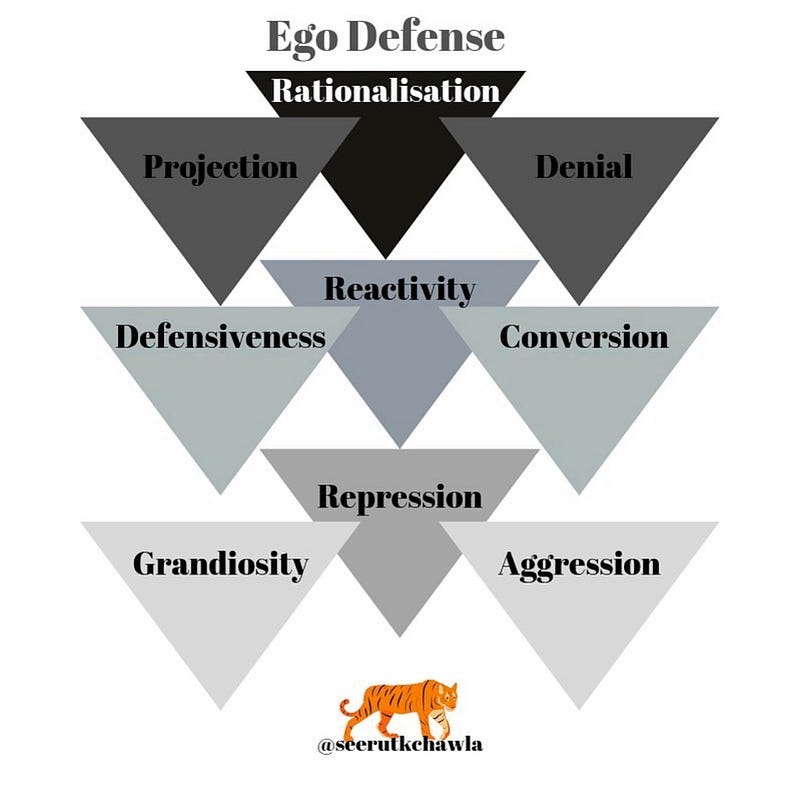
4. The capacity to stop and reflect before reacting is greatly affected. I am aware of the error only after I get to make it. I feel less in my physical body the messages and signals of the anxiety, therefore, I don’t spend time thinking and filtering with my ration the reasons why I feel an impulse and I just react on it with my primal instinct. Some interactions are worse, others and less, but it very much depends on the trigger and intensity so the inner compass is not allowing enough balance and control from the inside. I depend more on the external control of the environment.
5. Productivity decrease. Despite being able to “function”, I was actually a lot below my average productivity. I was able to work less than 4 hours per day and even those hours were not continuous and the breaks made me feel I lost a lot of productivity time so the overall feeling was bad.
6. Ability to engage and empathize with others also decreased. Since I was burdened with my own grief, I wasn’t able to take in more stories from others. Despite being able to go out of the house, being able to be social, I was not able to fully listen, I was rushing to conclusions and preconceptions and assumptions about stories I heard from others. It made it difficult to be able to open up about my own struggles because I wasn’t willing to reciprocate the help they would give me.
7. I canceled appointments. The beginning of September 2019 was so hard for me especially because I had a full agenda planned from the beginning of the summer when things looked very different for me on the mental health aspect. It was disappointing to have to give up on the plans I made and go back to a very slow pace and rhythm as my heart rate also indicated.
8. I had to consume the energy I had in a different way than by doing the things I had in my original plan. I had to shift everything and consume energy in a different way. It had to be more physical activity so I went for runs, walks, cycling, yoga, swimming. I did it all! Got myself physically exhausted and then went back to my agenda and re-planned everything to later dates. That’s also the reason for writing the piece in October instead of September. I have over 40 drafts from that week that need to be completed on the blog.
If you’ve read this far you’re probably wondering how does this looks like depression. It might just be a very busy mind or schedule. But it’s not. It’s just another face of depression. Depression is subtle, it takes you by surprise, it starts with a few unbalanced moments and then it expands and takes over all the other areas of your life.
How to detect depression when you seem to be highly functioning?
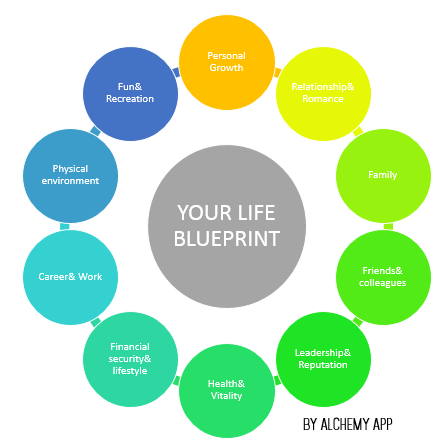
I recommend using the Life Blueprint tool. This is a tool I developed after going through more than 300 books on psychology and leadership starting from 2015 when I attended THNK School of Creative Leadership in Amsterdam and I started accelerating my growth and personal development. Back then it was mainly focused on performance and leadership, now after burnouts and depression I realized there is a softer and more compassionate way to go about personal growth and I made a tool for it which I am happy to say is more holistic and systemic than the famous Steven Covey’s, John Maxwell’s and Richard Branson’s of this world. That’s because it combines more than metrics into the tool. It brings awareness into the role of the self-assessment tool and our inner critic which I described in this article here.
You start by taking down each aspect on this wheel and rating it from 1 to 10. Your scores on each area will indicate where there’s room for improvement and will indicate which areas of your life are in critical pain and indicate the beginning of an endemic spread across your entire system. This would require you to take action and go search for help.
Remember that even one area of your life scoring in a critical way can change the interactions in the entire system!
How to rate each area?
You have your own personal spectrum of what each number represents. For me each number would look like this:
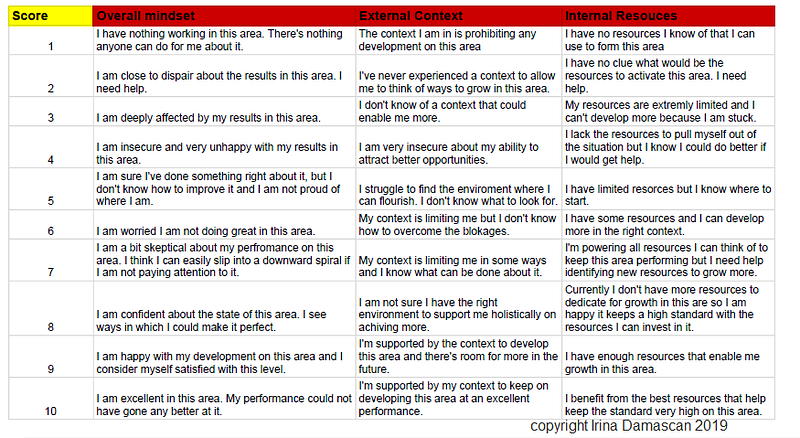
After you’ve graded each area of life you’ll see the ones where you can still work on to improve and you’ll work the inter-dependencies. This is, in fact, the most important aspect of all. We don’t work in isolation.
I’ve done many hours of coaching myself before getting into therapy and getting even more help and serious about my growth. I spend hours evaluating why my first business was not working, why I need to move to a new country to enable myself more on the professional side while putting myself in a starters position with all the other aspects of my life…I can tell you, it is draining. But in order to be able to move on from depression and get back on your feet, you need to consistently look at these aspects with responsibility and accountability systems in place for powering through. The more awareness you bring, the better it will feel about getting your goals clear and straight.
Most coaches and therapists would not openly share their formulas, but I believe that even with enough awareness, we still depend on accountability partners to DO THE WORK. We can see all these, but we still need someone to guide us, walk us through, hold our hand through the hard times we encounter on our journey of growth. That’s the empathy and compassion I was talking about in the beginning.
Feel free to reach out and get help on scoring yourself on the life blueprint. Happy to coach others through the process I designed by looking at the best existing tools on the market.


