Depersonalisation-Derealisation Disorder Was The Most Terrifying Experience Of My Life
Acceptance is the key to recovering from this dreadful disorder

I spent over five years in a state of chronic dissociation referred to clinically as Depersonalisation-Derealisation Disorder (DPDR). I obsessively researched the condition to understand and ultimately recover from it. In line with the stories of countless others, my recovery came as I learned to accept my symptoms and tended to the anxiety, shame and trauma which triggered them. Mindfulness and counseling therapy were crucial to my recovery.
DPDR is a dissociative disorder. Depersonalisation (DP) describes dissociation from the self, often giving the impression of watching or operating your own body from afar. Derealisation (DR) is dissociation from reality, which can make the entire world and the people inhabiting it seem lifeless and unreal. People may experierience more DP than DR, or vice versa. My experience was predominantly of severe derealisation.
I’m sharing my story to raise awareness and empathy for this agonising condition, and to assist, inspire and empathise with those of you who are currently going through DPDR.
The Descent into Dissociation
I was in the car with my parents when it began, looking out the window at fields passing beneath the overcast sky. But I wasn’t really looking. Or rather, I was looking, but not seeing — while I was aware of the experience of looking out of the car window, it was if I was in someone else’s brain, observing their perceptions of the fields and sky.
It was like watching a film on the living room TV, but it wasn’t my living room, and I was watching through the window from the street outside. But instead of a someone else’s living room, it was their brain, and instead of a film, it was their perception of the external world. Of course, the brain and perceptions were my own, but the experience was of them belonging to someone else. This became my reality, or rather my unreality, for most of five years.
Upon talking to my close friends I found that some of them were also experiencing DPDR. We discussed our experiences and shared tips on how to cope. This made me feel somewhat less alone in my struggle, but despite finding solidarity, the dissociation remained. I also had the unpleasant situation of growing bitterly resentful of my close friends when their DPDR reportedly dissapeared, while mine continued unremittingly. I was afraid I would be stuck forever with this lonely and terrifying experience.
I brought up my experiences of unreality with a mental health counsellor. She suggested it was my body’s response to tiredness, as the sense of unreality became more intense when I was walking home from university after a long day of lectures. I also told her I’d written a song which encapsulated the feeling of derealisation, and she commended this creative ability and achievement. She helped me see how at least one positive had come out of it: art.
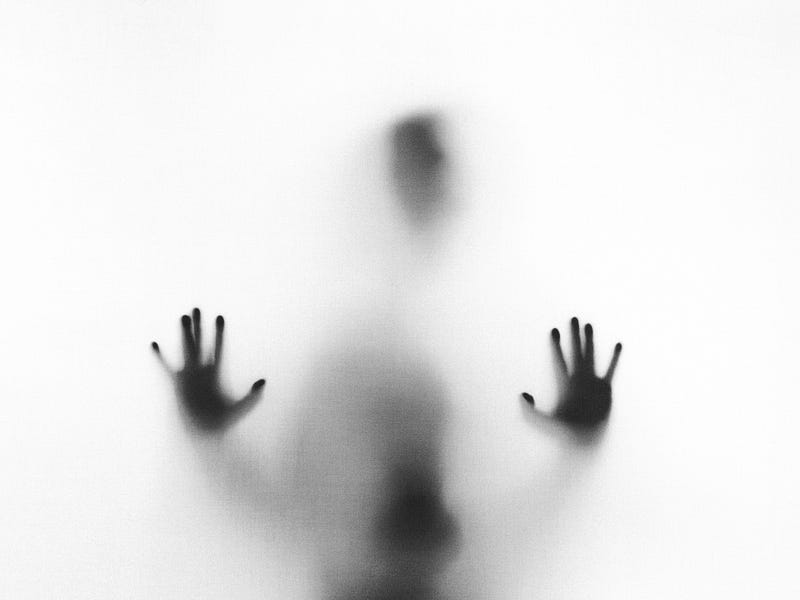
But still, there was no change in my experience — it seemed like there was a psychological glass wall between me and the world, trapping me somewhere deep in what was apparently a stranger’s body, while the world itself appeared foreign, lifeless, and unreal.
The Paradox Of Dissociaton
At one point I told a friend and spiritual companion about my pervasive feelings of unreality. My friend, who I’ll call Alan (as he is a fan of the spiritual teacher Alan Watts) had himself been through incredibly alienating experiences of psychological suffering, which meant he could empathise more than most with my struggles. I trusted him enough to open up.
I said to him, while we were sat on a park bench by a duck pond, “I don’t feel like any of this is happening to me.” By this, I meant the ducks, the water, our conversation. I meant reality. None of it felt like it was really happening to me.
Alan pointed out the irony that it was me who happened to be saying that.
Many weeks later, this point hit home: nothing felt personal, except the depersonalisation — and nothing seemed real, except the derealisation.
So I had some form of reality, but I didn’t want it, because my reality was of a psychological glass wall seperating me from nature, music, other people and even — by some bizarre and cruel paraodox — my own self. I could see my thoughts, feelings, memories, essentially everything I considered to be me on the other side of the glass, but as with the external world these supposedly internal, intimate, personal things seemed cut off and out of reach. Hence the term depersonalisation.
Coming to accept this impossibly bizarre and paradoxical experience was undoubtedly the most important part of my recovery. The alternative — becoming resentful, despairing and hopelessly confused— only made the feelings of isolation worse, and aggravated the sense of unreality.
Acceptance meant coming to terms with the fact that for reasons I didn’t understand at the time, my experience of the world and my self had lost its sense of ‘being real’. Without acceptance, I would still be in exactly the same state I was five years ago. Acceptance was my saviour.

Stigma, Shame and Secrecy
One reason why it’s so hard to accept, and therefore recover, from DPDR is because the experience is so heavily stigmatised. Western society judges detachment from reality as one of the most shameful manifestations of madness. This pervasive stigma is internalised in almost every member of the society, so when we experience DPDR these internalised stigma become active and make us feel ashamed. This shame is far more damaging than the dissociative symptoms.
The symptoms can also contribute to the shame by making it feel like you are witholding a terrible secret from everyone around you. After all, the people you’re interacting with probably can’t detect anything peculiar about you, but your experience might be of a vast psychological chasm or glass wall separating you from them. Or perhaps every fibre of your being is screaming that this person, and the rest of the world, are not real. Both of these experiences may be happening simultaneously.
Holding a conversation while this is happening can draining, to say the least. You may not be fully present with other people because you are distracted by severe dissociation and are trying to ‘act normal’. The secrecy and alienation generate even more shame.

The Importance of Curiosity
Recovering from DPDR requires us to become curious about what thoughts and emotions may be triggering our dissocation. Dissociation by its very nature disguises and represses its underlying causes, but with curiosity, self-compassion, patience and possibly therapeutic assistance we can bring dissociated thoughts and emotions back into awareness.This will begin to reveal more about the relationship dynamics and traumas which are triggering our dissociation, which allows it to subside.
We can take up creative practices like writing, music, dancing and drama to get more in touch with our emotions and the traumas they point towards. We may also seek competent counsellors and therapists to facillitate our curiosity.
We can also take up practices which build our self-awareness and ground our attention in the present moment, such as mindfulness meditation. Awareness and presence will naturally shed light on our emotions and traumas, giving insight into our past while keeping us grounded and present. In this way, awareness and presence-building practices treat the symptoms of DPDR while naturally shedding light upon their hidden causes.
I highly recommend you make mindfulness a central part of your life, no matter who you are, but especially if you experience DPDR. The physical and psychological grounding it gives you is just as important as the intra- and inter-personal insights it facillitates. There are plenty of resources online to help you integrate mindfulness into your life. The free version of Headspace’s app was enough to set me on a lifelong path of mindfulness which greatly aided my recovery.

Acceptance Is The Key
Recovery from DPDR comes as we accept the paradox, strangeness, anxiety, shame and intense loneliness that surround the dissociative symptoms. Acceptance requires an attitude of curiosity, compassion and patience towards ourselves. Mindfulness and therapy can help cultivate this attitude.
With acceptance of our dissociative symptoms, we are more likely to gain insight into the emotions and traumas which are triggering them. Acknowledging these emotions and memories requies courage. Mindfulness and therapy can help us find this courage.
As a reward for our courage we discover a more solid sense of self. We also gain wisdom through the process of recovery, as we are forced to deeply confront the meaning — and meaninglessness — of what people unthinkingly refer to as ‘real’ and ‘reality’.
While you are deep within the grip of DPDR you will not care about the potential benefits to your sense of self and level of wisdom, because you are suffering immensely. As with most mental illnesses, these benefits become apparent only in retrospect. But by the time you can look back on the experience, it is entirely possible that you will be grateful for it, as it taught you so much.
Depersonalisation and derealisation have become the most profound spiritual teachers in my life. Above all, they taught me that peace can come only through acceptance. If you cannot find peace because you have not found acceptance, you are in the perfect position to find peace. As Eckhart Tolle puts it,
“Forgive yourself for not being at peace. The moment you completely accept your non-peace, your non-peace becomes transmuted into peace. Anything you accept fully will get you there, will take you into peace.”
Acceptance doesn’t require you to feel like you and the world around you are real. It doesn’t require anything other than an attitude of curiosity, compassion and patience towards yourself. Acceptance will shed light upon what’s triggering your dissociation. Acceptance will allow your suffering to transform into a stronger sense of self and deeper wisdom. Acceptance is the key to recovering from DPDR.