Denis Diderot: A Sensual Materialist Ahead Of His Time
Also, claimed by rationalists, empiricists, and libertarians, Diderot left his mark
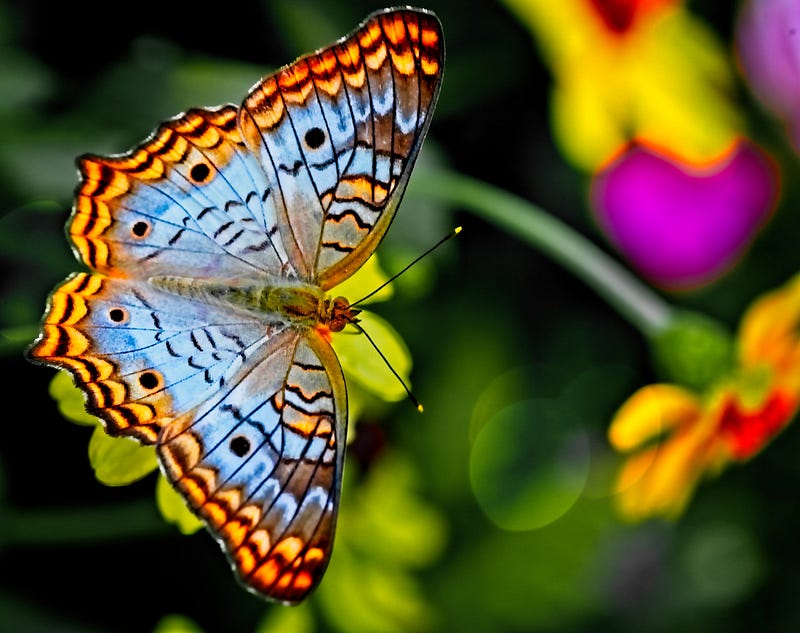
A sensual “butterfly”
As a contemporary to Voltaire, as a Frenchman, and as a philosopher at a time when independent thought could carry a prison sentence, Denis Diderot was transformative to history.
Largely forgotten as a “natural philosopher” by the time the French revolution rolled around along with the heads of authority and privilege, Diderot most famously said:
“Man will never be free until the last king is strangled with the entrails of the last priest.”
Half of the power of that quote is in its extreme graphic imagery. This resounding call to reason against the divine authority of kings and any blind loyalty to religion is compact, and complete. It says so much about authoritarian rule, dynastic power, the danger of concentrated wealth and influence; all issues with which we are still grabbling today on the global stage.
Although he did not personally believe in such violence, his words were powerful fuel. Words, he understood, could paint vivid pictures, and have consequences as well as influence.
His atheism, or what today we may call spiritualism, about a “wider God”, got him into plenty of trouble around the mid to late 1700’s.
Sense and sensation
Yet, at his core, Diderot was a sensual materialist, that is, he was fascinated by the nature of nature, senses, self, and the very idea of molecular matter, or what he called “animalization.”
He ventured that any material, a ground up stone statue, for example, could become the raw materials for more potential life.
He also wrote that “the wing of a butterfly puts me closer to divinity than an entire thick volume on metaphysics.”
This is fascinating, and spot on for those of us who realize our shared DNA with the rest of the tree of life, and it also suggests an appreciation of beauty, inspiration, and wonder that goes far beyond early enlightenment thinkers of his day.
Take this example of an empirical study of an egg. He noted that matter is sensitive. Add thermodynamics — heat and motion — to an egg through fertilization, and suddenly inert material becomes a living process. All things are either living, or potentially living.
This again, is his idea of “animalization.”
He felt that relationships between people were especially powerful and dynamic if they were aware of the primacy of touch. He spoke often about the body and soul as being so entwined as to be of the same substance. He wrote called the brain/body connection a “composite entity” wherein “it is nothing without the body.” Regarding consciousness, he described it as a book that can read itself, although in translation, our interpretation of this is somewhat garbled.
“There is nothing in the mind that is not first in the sense(s)” is an empiricist idea about which he wrote: “there is only one operation in man,” he said, “sensing.”
Departures from ideas of he day
He makes good arguments against Rene Descartes’ overly mechanistic view of non-human life, and Immanuel Kant’s call to our separateness of “race” and civilization.
For the sixteenth century, this is a very modern idea. It resonates powerfully today with movements for equality on every continent.
This universality reminds one of Baruch Spinoza and a fuller understanding of body, soul, and our necessary attachment to the outer universe. The human animal is part of a wider revealing — an ongoing process of conceptualization of creator/creation.
By 1776, these deist ideas, as well as the yearning for representation apart from royalty and religion, would cross the pond and inform the early American colonists that maybe a “wider God,” is something worthy of investigation. They also influenced poetry, music, and art.
From the secular to the spiritual
My enchantment with Diderot came as a starry-eyed idealist upon first hearing his quote about kings, priests, entrails, and freedom.
Today, more people than ever before are abandoning formal religion, and finding spirituality in belonging to nature and the cosmos, or other eclectic ways.
Diderot is so much more than an idea about freedom, though. We can see how much deeper, and dearer, he is to many hearts and minds, a person who realized our separateness (even race!) is an illusion, our bodies are connected to all living matter, and even to the inorganic stars.
How very beautiful, and insightful this actually is.


