
Politics
The Democratization of Science.
Science Needs to Socialize with Society for Democracies to Function More Efficiently.
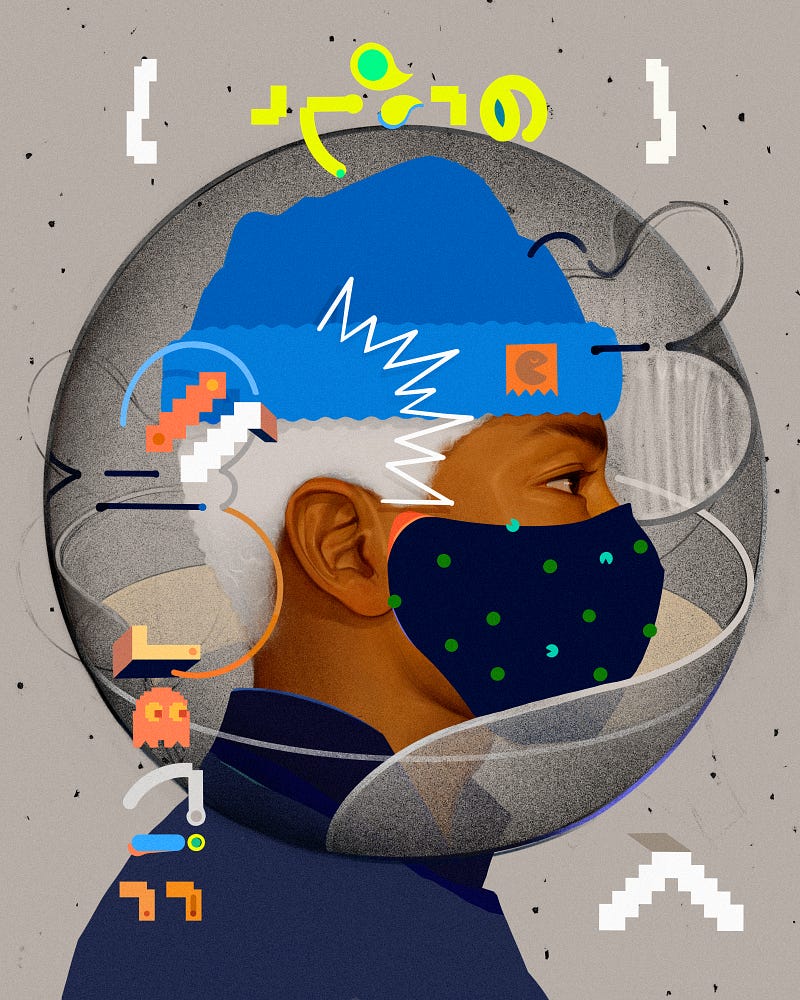
There’s a marked increase in our understanding of science — medical as well as other sciences, and it’s only ingenuous to expect an increase in its application in proportion to the increase in its depth with evolving times — in policymaking and other respects. However, the pandemic is telling us a different story. It has instead revealed to us the shallow foundations our societies are based on.
Science is inherently democratic. It cannot disappoint as long as it is used virtuously. A science-based society exhibits a high level of trust in the values of democracy. And by that, I mean, in the aspirations of people, in terms of equality, information, and knowledge. These societies ought to favor accountability and more explicitness as compared to other societies that are founded on authoritarianism and fascism. Science cannot be jeopardized to save administrative liability.
There is no perfect society. Economic affluence still decides the weight of your opinion. Amidst all this chaotic political drama, we need to make exceptions — exception for facts and expertise. Instead, democracy needs to give more weightage to the opinions of those who know what they are talking about and why. On the contrary, science is under attack by leaders who are either unable to see its implications in political and economic terms or choosing to ignore it, to impress voters who make their vote banks or fill their real “banks.”
Likewise, people are also confused between facts, rights, and freedom. I am not putting all of the United States in the same category. I am aware of its diversity not only in terms of its population but also in terms of its federal polity. But being a developed country, it has been so disappointing to see pockets of extreme irrationality coming out in disguise, under democratic rights and freedom. I don’t understand, What’s more important to them :
Freedom from disease or just random freedom of not wearing the mask?
Demanding freedom to not wear a mask and roaming around freely is not democratic in any way. As it not only undermines the lives of others but also necessitates a compromise with medical science, which, more often than not, is objective and neutral to people’s opinions — case in point, pandemic. Had there been a better understanding on their part of their obligations and not just the rights that come along with it, there would have been perhaps different alphas and omegas to this pandemic. It is, therefore, a cue of more significant underlying problems in the system.
It requires discipline on the part of the government, public sector, private sector, and citizens to bring an unprecedented situation like this under control. I would say it’s not just the inefficiency of the governments and the irrationality of the political occupants and leaders, and their sluggish bureaucracy, it’s also the poor state of public institutions, early warning systems, the overall preparedness in terms of technology and gaps in the deployment of that technology, if available.
Some also blame the size of a country, which, to some extent, is a valid argument. But if we look at the size of China, which is comparable to the U.S.A, clearly it can be deduced that China’s robust public institutions have played a big part in their fight against the disease.
Failure that we are going through requires systemic change and not just change in leaderships. These systems include healthcare, education systems, transport, religious places, financial systems, housing, and others. Leaderships form an essential part of these systems.
However, it’s the summation of these systems that make up our society, along with the culture it thrives in. The culture runs through each of these institutions and, thus, has to be scientific.
These institutions need not only become better, but they also need to become simpler so that citizens can make informed choices, as currently, they are too complicated to access and, if accessed, to understand.
We are seeing the world turning into a battleground between unscientific rudimentary leaders and science. Finding a solution to this novel “disease” could have become easier and faster if only science had taken precedence over everything else. Every time we deflected from science, it showed repercussions which these leaders were better prepared to face than they were to brace the pandemic.
Science shall not be compromised, especially while dealing with a health emergency.
The support that’s necessary to sustain scientists includes listening to them and choosing to include their findings in policymaking. It’s the science that can get us through these times. Democracy without information assimilation is nothing but a vague ideology. After all, it’s not just the outcome of the majority in the parliament. As I mentioned before, it has to be systemic.
How does one safeguard democracy, retain people’s voice as well as stimulate and uphold the scientific temper in the society?
Learning to make decisions based on evidence and facts should be imbued with children. It is a skill that cannot be learned in one’s adulthood as much as we think it can be.
Science is a way of thinking. It’s not just the facts. We are in need of institutions that can grow into models of “fusion” — a fusion between science and morality.
As aforementioned, successful democratic societies are not brought into existence only by the electoral process, where the majority gets precedence; they are brought into life by people who have the vision to see things more clearly than others and, thus, are in a better position to lead and guide fellow citizens, to think compassionately yet scientifically. And hence, lead by example. These leaders use scientific advice in policymaking and don’t distort the country’s vision by blurring the facts or by fiddling with them in any way.
Participation in decision making shall remain as assorted and diversified as possible as it happens in a democracy; however, non-experts shall not be allowed to take relevant decisions and hence repress and malnourish the democracy. Participation shall remain meaningful.
Democratic principles are not, in essence, incompatible with science, it’s the politics that gets in the way as its generally busy accumulating power and influencing choices.[1]
Conflicts come to the surface, even more raged out when public institutions of a country don’t rush to save science upon being attacked by the illogical and unreasonable attitudes of the administration and citizenry. It doesn’t mean that the scientific claims will not go under the scrutiny of the public or parliament. That is rather one of the steps of functional democracy and cannot be skipped. There needs to be a scientific consensus and institutionalization of the same. These accords are significant in a democratic state as they determine societies.
However, just being a democratic society does not mean that you will be well-governed. Its the dismantling of older administrative philosophical structures and rebuilding of the newer capacities to deliver solutions, that matters much more than holding one leader accountable for all the wrongs — matters even more in crisis such as the pandemic. Nonetheless, these consensuses shall remain open to discussions and debates. The point is, we need to develop and foster better democratic societies that follow scientific norms more than societal norms. And if there’s a clash between the two, societal norms need to be broken to follow the direction of the evidence as science lays the prerequisite for better moral leadership as well.
[1] Page 41, Why Democracies Need Science, Harry Collins and Robert Evans,2017.


