
TRAVEL | VENEZUELA
Demise Of The Sacred Tree Of Fruits
A boat trip to see a stump
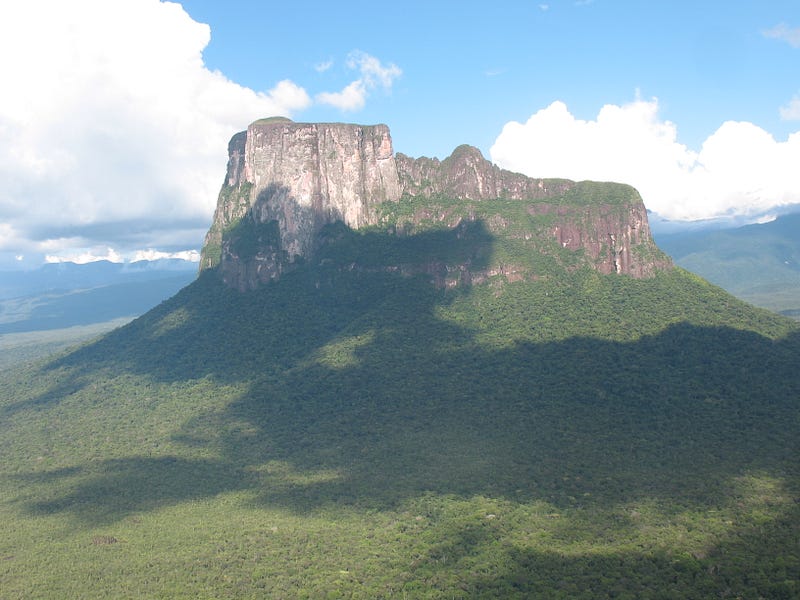
The southern half of Venezuela, specifically Estado Bolívar and Estado Amazonas, holds less than 2% of the country’s population. It is a wild place, carpeted by rainforest and punctuated by sheer-sided mountains called tepuis.
Over ten years ago, when it was easier to travel in Venezuela, my wife and I took the night bus from Puerto Ordaz westward. We crossed the country to the capital of Estado Amazonas, Puerto Ayacucho. This large town is at the end of the road, where Venezuela and Colombia share a border along the Orinoco River. Any travel deeper into the interior takes place by boat.
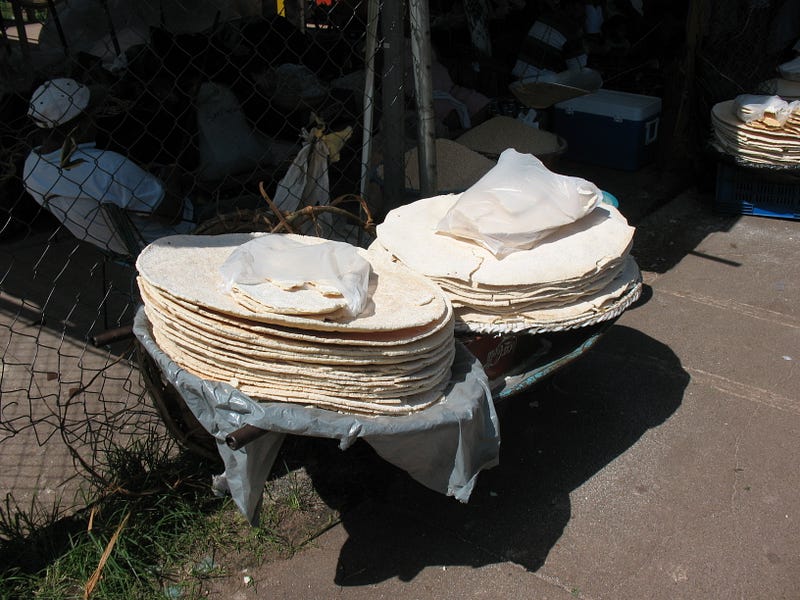
Like many towns on the edge of the South American rainforest, Puerto Ayacucho is populated mainly by indigenous people and mestizos (mixed Spanish-Amerindian ethnicity). The layout was like most Latin American towns: centered around a central plaza with big, leafy trees and a small cathedral. It was lively, its street markets full of contraband merchandise smuggled from Colombia. The river made for a porous border, with canoes going every which way and little enforcement to control them.
We had a day to hang around before meeting up with our guide. The tour we had arranged by phone from Puerto Ordaz was a three-day boat tour up the Orinoco and its tributaries to see one of the famous tepuis of the country.
I wanted to try one of the local soups with ants in it. In Colombia, there is one called hormiga culona (literally ‘ant ass’), and I was curious to see if they had it here. The restaurant where we dined did have ant soup, but I’m still not sure it was the same type. The ants in it were bachacos (Atta laevigata) and it was very spicy. It was called katara.
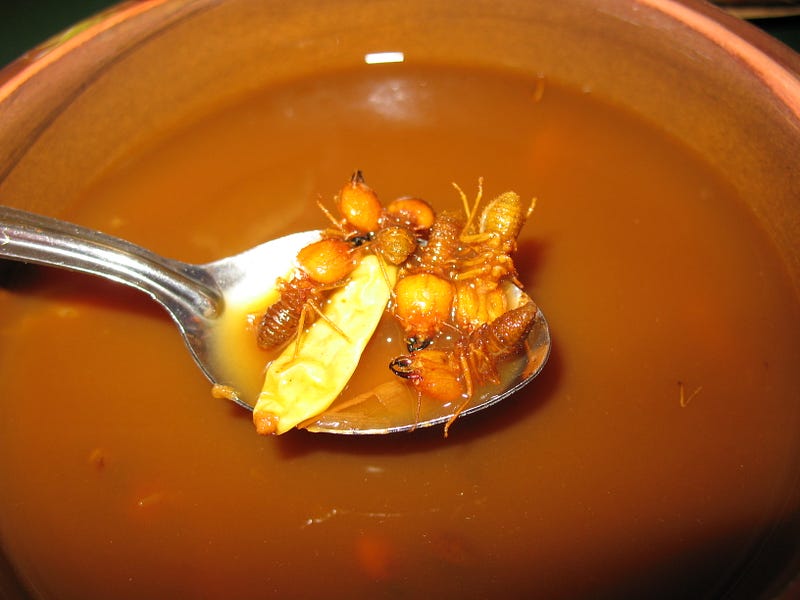
I recognized the ants because, having worked in South American rainforests, I frequently ran across certain species of animals. Bachacos are one animal you don’t forget quickly because of their painful bite. They are aggressive and swarm out of their many burrows at the slightest vibration.
North of Puerto Ayacucho is a natural feature called Tobogan de la Selva (slide of the jungle), which can be reached in 20 minutes by taxi. The local stream flows over an extensive smooth rock surface. Algae made it slippery, leading to a fun but somewhat risky water slide.
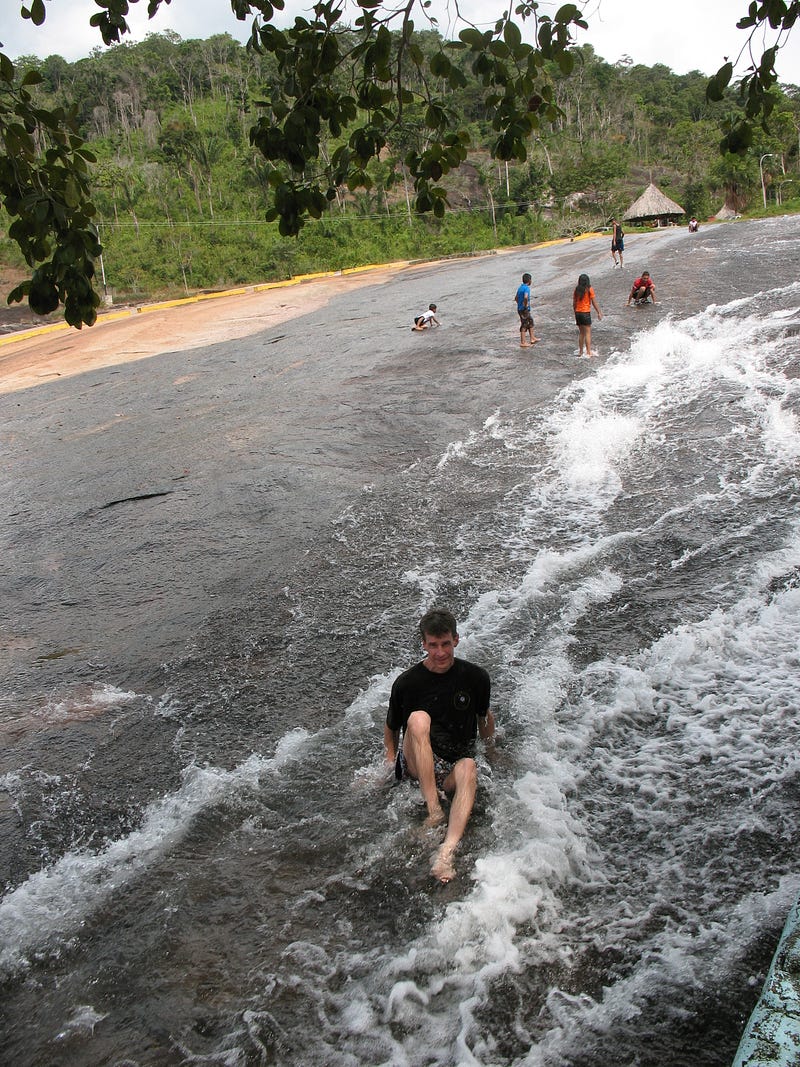
A large swath of Estado Amazonas is underlain by sandstones that weather smoothly, leaving expansive flat surfaces. Usually, this is covered by a layer of organic residue that the rainforest grows on, but when that gets eroded away by water, bare rock lays exposed for thousands of years.
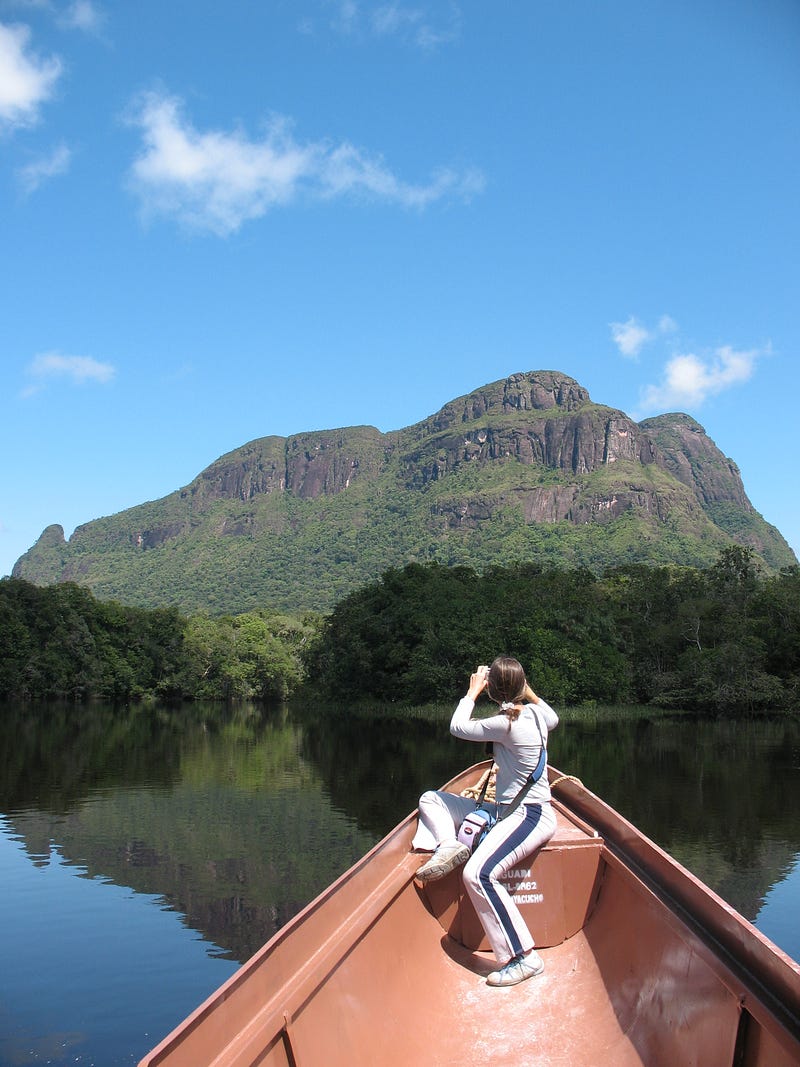
The dramatic tepuis occur when vertical cracks form in a thick layer of this sandstone formation and it breaks it into chunks. Over millions of years, those chunks peel off and erode away, leaving an ever-shrinking core of unweathered rock. The title photo of Autana Tepui is an example of this phenomenon.
We met with our guide and drove to Puerto Samariapo, just upriver from a series of rapids.
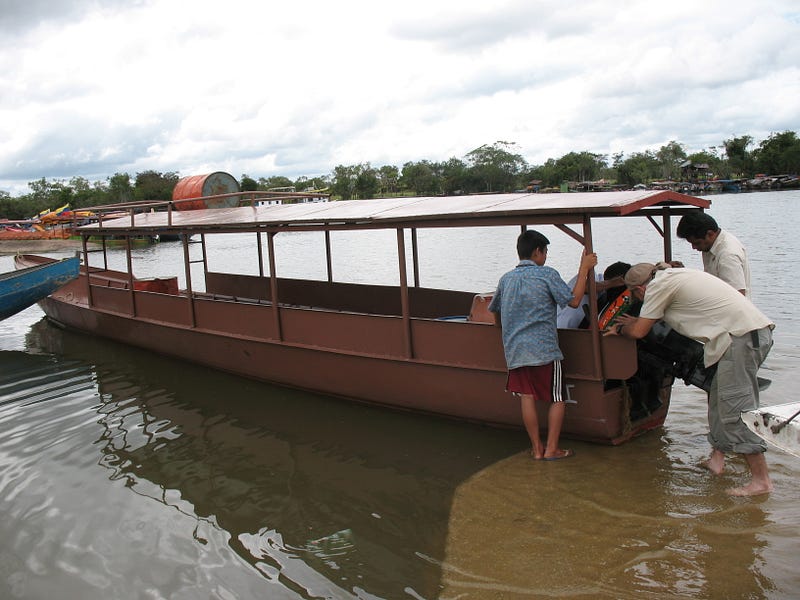
The Orinoco River is the fourth largest in the world in terms of average annual discharge. It crosses the entire country of Venezuela from west to east and empties into the Atlantic Ocean near Trinidad and Tobago. North of Puerto Ayacucho, we were still over 300 kilometers from its headwaters. The Orinoco River system is unusual in that it connects with that of the Amazon Basin through an area called the Casiquiare Canal. Depending on the discharge level of the tributaries, this canal flows one way or the other. Hence, one can take a boat from the Orinoco Delta upriver and arrive at the Amazon Delta without any portage.
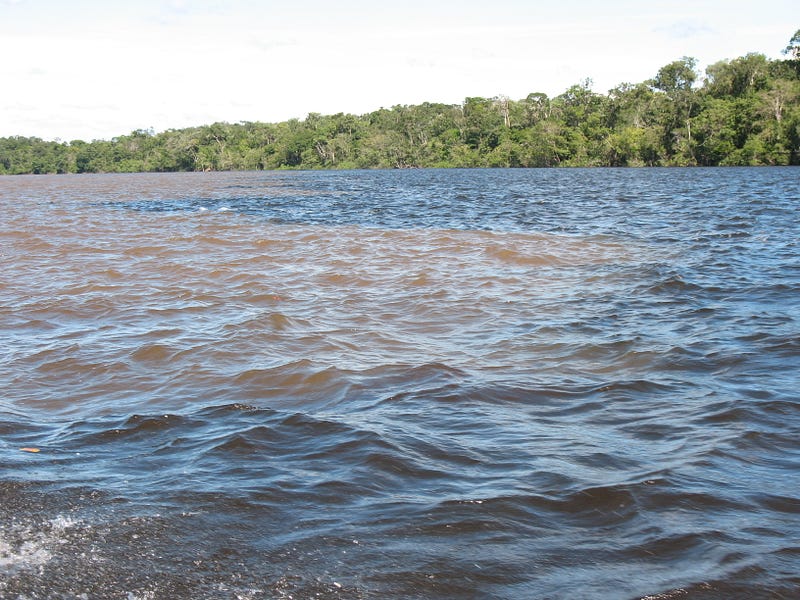
After a short time boating up the Orinoco, we split off to the Rio Sipapo, a tributary on the eastern side. The water changed abruptly from a cloudy light brown to a clear, dark brown.
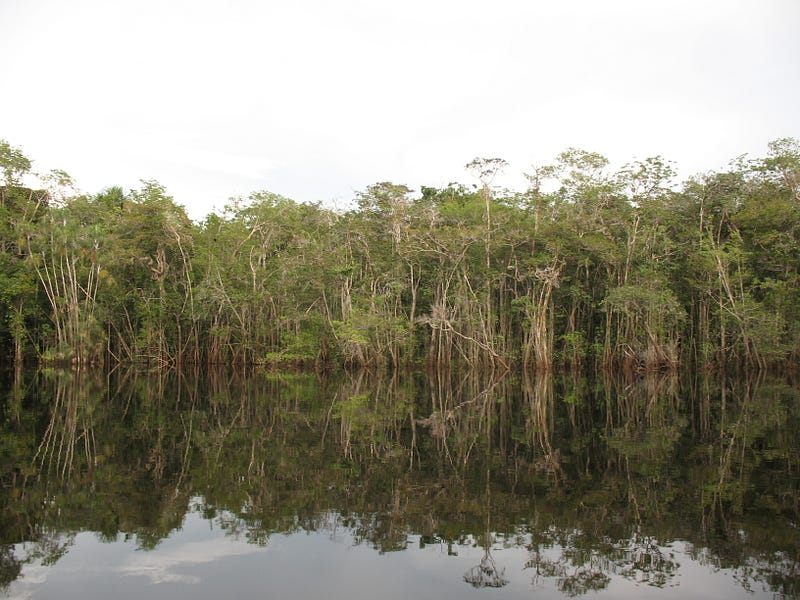
From here on, it was unbroken rainforest interspersed with sheer smooth rock outcrops. Beautiful and almost entirely unmarred by humans.
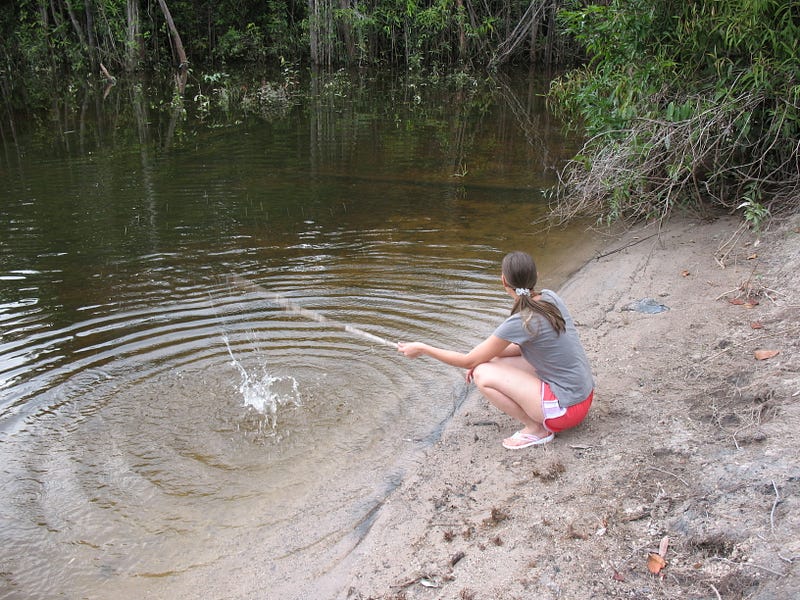
We made a stop at a conical hut called a churuata for lunch. It sat on a rise beside the river, freely available to anyone who needs it. The water was clear and inviting for a swim, but first, my wife wanted to hit the water and frighten away any electric eels (technically fish) hiding in the shallows. They are common in Venezuelan rivers, and alone, they don’t pose much danger. However, they often gather in tight groups, shocking in unison when stepped on. The combined voltage from a group of eels can cause heart failure.
Her efforts were probably futile, but we went swimming anyway.
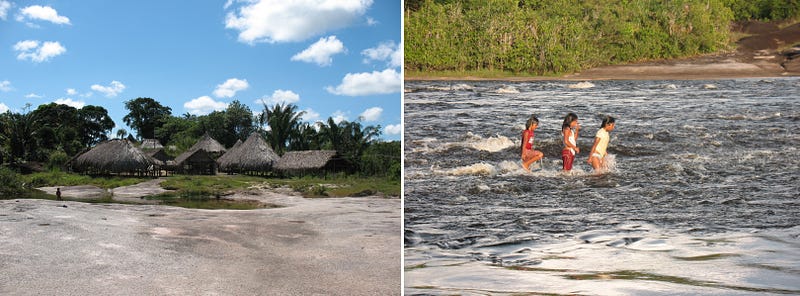
From the Sipapo River, we took another tributary, Rio Autana, to a series of rapids at Campamento Ceguera, a small Piaroa village. This is where we were to sleep for two nights in hammocks.
Once we docked and the boat motor switched off, no further mechanical sounds spoiled the afternoon. There were just the noises of birds and insects, distant rumbles of thunder, and the occasional shout of a child from the village.
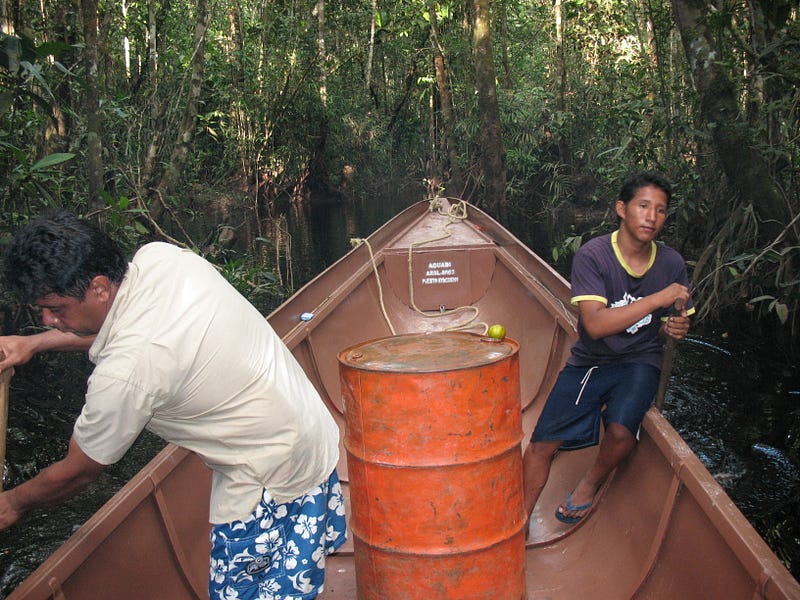
The following day was a trip to see Autana Tepui from a viewpoint on a nearby hill. We got back in the boat and headed up an even smaller tributary. From there, we hiked several hours more.
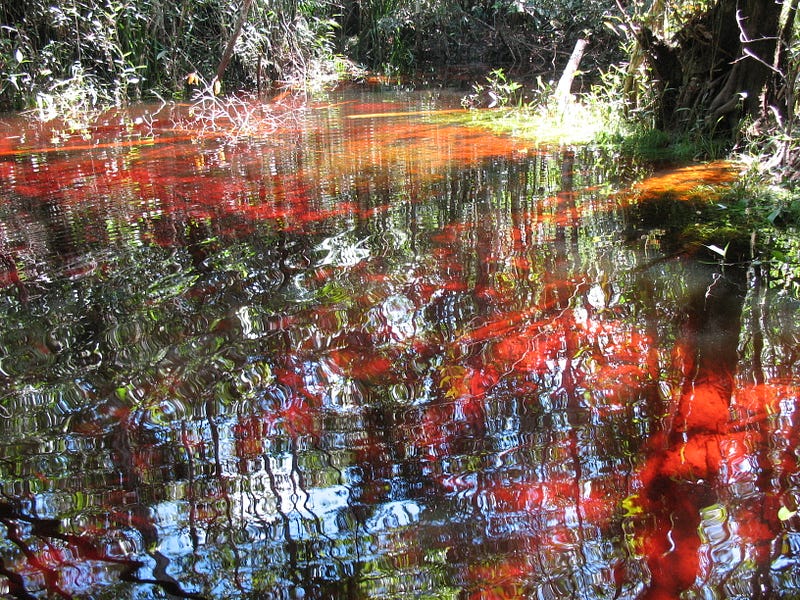
The further one goes up the small streams of southern Venezuela, the more the water looks like tea. This is due to the tannic acid generated by decomposing leaves. The clarity of the water is typical of well-forested areas where suspended sediment loads are very low.
The hike was a long scramble up a tangled path to the top of a steep hill, listed on the map only as the ‘Autana viewpoint.’
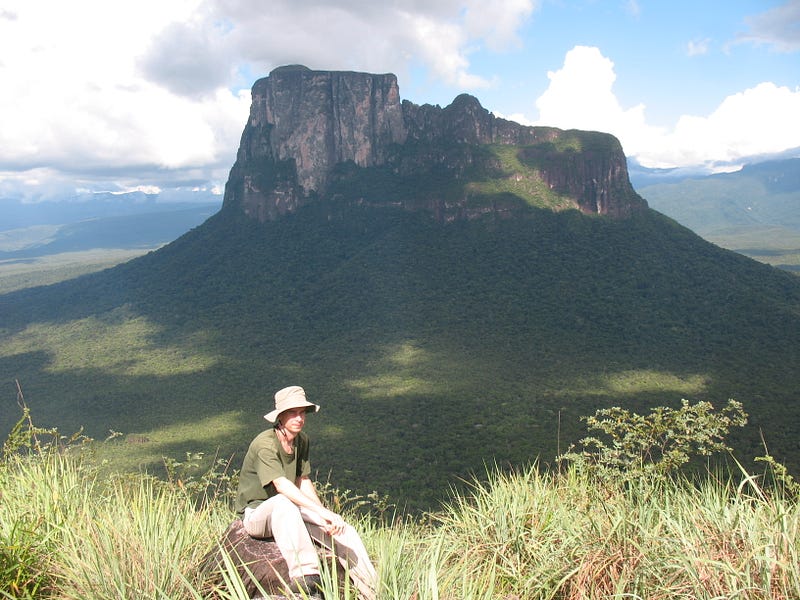
Autana Tepui is known by the Piaroa people as Wahari-Kuawi, meaning ‘sacred tree of the fruits of the world.’ The myth goes that once a gigantic tree stood here, but two greedy gods conspired to gnaw through the trunk and topple it to take all the fruit for themselves. The stump is all that is left today. An apt analogy to the damage modern humankind brings upon the natural world. Or the storyline for a movie we’ll call ‘Avatar.’
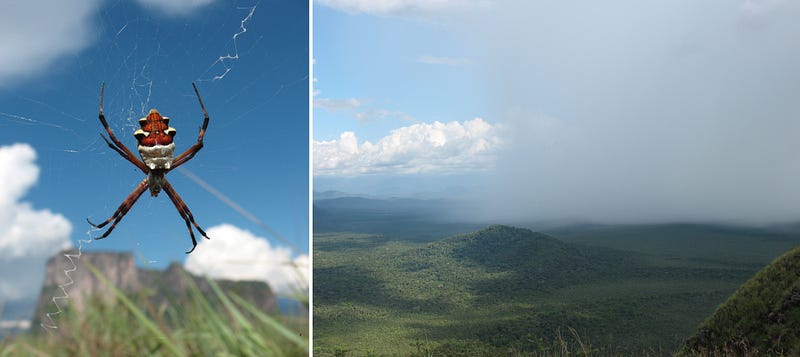
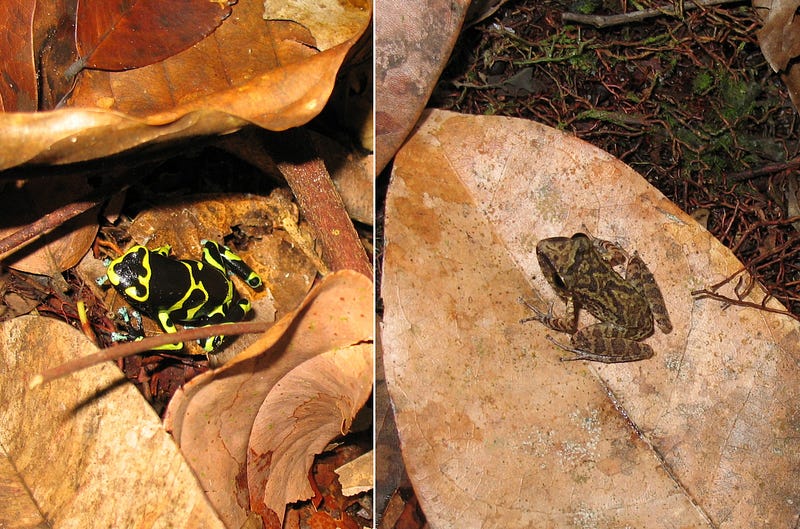
As expected, we were hit with a downpour. This brought out many happy frogs. Under a full canopy, the dark, humid rainforest floor crawls with animal life that is not easy to see unless you stop, let your eyes adjust, and observe.
Back in Ceguera, we spent the afternoon swimming in Rio Autana and watching a boy from the village weave baskets using dried palm fronds. What children miss in formal education in remote places like this is compensated by learning practical skills that serve them and their community well. The problem lies only when they venture out to make a living in the city. There, they must learn quickly how to deal with the speed and greed of modern society.
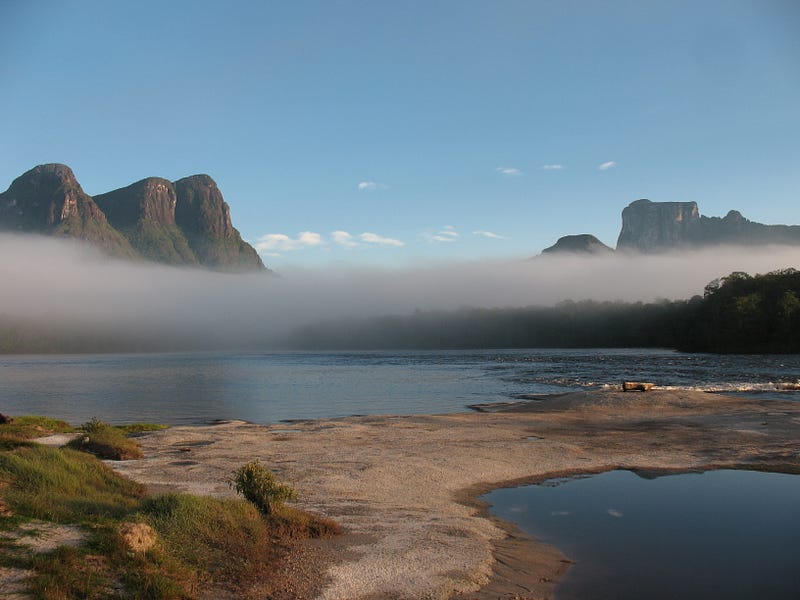
The next morning brought a thick, low-lying mist and clear skies. The stump of the Sacred Tree sat profiled against the blue, testament to the insatiability of the gods. We loaded the boat and headed downstream back to Puerto Ayacucho, far too soon to really appreciate the quiet rhythm of this paradise.
The following article by CosmicDancer reminded me of this trip through the mention of ant soup in the following article:
Thank you for reading! And thank you, Globetrotters editors JoAnn Ryan, Anne Bonfert, Michele Maize, Adrienne Beaumont and Jillian Amatt. Please check my profile for other travel-related articles at Brad Yonaka.


