

Demanding Black Forgiveness Is Just Another Way To Control Us
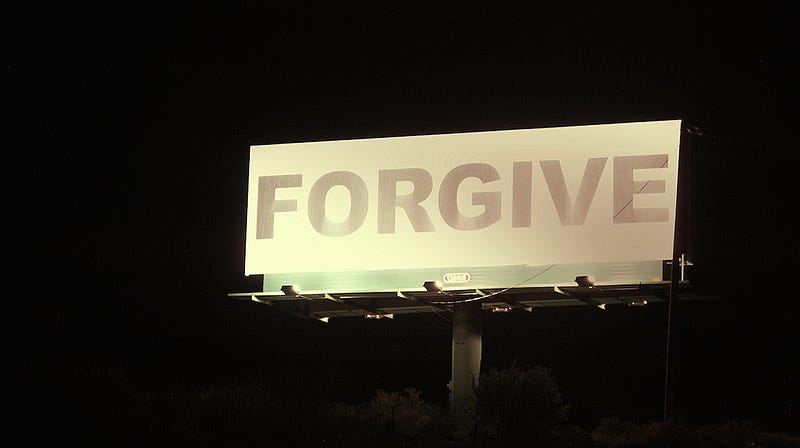
Forgiveness is complacency. I cannot be outraged by you and forgiving of you at the same time.
When I was six, my favorite uncle came by to visit. I loved spending time with him; he was always playful and fun. On this day for some reason I didn’t want to hang out with him. When he called me to him, I refused. A few minutes later he offered me a dollar, and being six with no allowance, I went. That was when he pocketed the dollar, grabbed my wrist, and spanked me in front of my entire family while laughing at my humiliation. Afterward, he demanded I apologize for making him spank me. I refused, ran off, and never spoke to him again.
I was fortunate that my parents didn’t undermine my will by insisting I forgive someone who’d overstepped my boundaries. I wasn’t forced to be polite or acknowledge him ever again and I didn’t. I mourned his death when he passed, but 35 years later, I still haven’t forgiven him.
I’ve always been perplexed by the obligation to forgive. For my family, forgiveness was part of Christian belief, but I’ve never been able to accept church teachings without asking questions. When I think of forgiving my uncle, I’m confused; while a part of me feels like I missed out on our relationship, the rest of me thinks about a grown man who tried to control me and punished me for demonstrating my autonomy. Why would I forgive that person? What good could it possibly do?
I feel the same when I see demands, carefully designed to appear as requests, for forgiveness from grieving Black families who have lost loved ones to racial violence. We see this asked for, implicitly and sometimes explicitly, every time there’s a new tragedy. We’ve seen Black people punished for refusing to grant it, for exposing their pain and expressing their rage; we’ve seen their forgiveness made into a public show for white America’s consumption. We’ve seen people forced to apologize for daring to be human. We’ve seen this message twisted every possible way, from those saying it’s the Christian thing to do to others saying it’s a way to help you move forward.
On a societal level, this public spectacle of forgiveness is complete and utter bullshit. But white people eat it up. Our forgiveness reassures them that Black people still know their place in this country; it eases their minds, reassures them that nothing has to change, that they don’t have to upset their carefully crafted, artfully curated, violently maintained societal advantages. Black forgiveness sends the message that white people are still on top.
On a personal level, we are told that forgiveness is a tool for healing — that it will help us through our pain. That is a confusing message to me. Forgiveness, to me, means recognizing that the pain has dissipated. I can’t recognize that when the wound is still fresh, and being reopened all the time.
We are told that forgiveness will help us with our anger, that it will keep our rage from destroying us. This doesn’t make sense to me either. My anger fuels me. Almost every positive change I’ve made in my life has been because something bothered me enough to want to do something about it. If I forgave the people and situations that outraged me, I am not sure I’d be motivated enough to change it. Change often means destroying the old, and I wouldn’t destroy something I found acceptable.
We are told that forgiveness allows us to move forward. This, too, is not true. One of the few constants is that life goes on, regardless of what tragedies we face. Time is what allows us to move forward — indeed, it means that moving forward is something we can’t avoid. Forgiveness is not required for progress.
We are told that forgiveness is personal. If the act of forgiveness is personal, why does it need to be shared publicly? People ask for forgiveness. They demand forgiveness. If forgiveness is personal, something I should do for myself, then you don’t need it and you don’t get to ask for it. That you are seeking it tells me that it’s a tool for you, not me.
We are told that forgiveness and anger aren’t mutually exclusive, that we can be angry and still forgive someone. I don’t know what definition of “forgiveness” people are using for that one, but for me, anger is something that demands change, while forgiveness means accepting things as they are. Forgiveness is complacency. I cannot be outraged by you and forgiving of you at the same time. Either I’m angry and we’re going to work on improving the situation or I’ve decided to accept your bullshit. It’s not both. It’s never both.
Forgiveness requires that I lie to myself; I choose to live my truth. It demands I rot inside; I opt to continue my growth. It expects me to swallow my anger and suppress my pain; I express my rage and refine my voice. It requires that I choke on my discomfort to appease you; I allow you to choke on your discomfort and exit, unappeased.
I do not forgive — and please, if I wrong you, I don’t want you to forgive me either. I want nothing to do with a tool designed to quiet the mistreated, to manipulate them, to deny them humanity.
I do not seek your complacency. I do not want you to tell me shit is fine when it isn’t. I do not want you to hide yourself, lie to yourself, deny yourself. I do not want you to cull your emotions, quell your anger, or gut your pain to meet forgiveness’ demands. I do not want to keep you still, silent, and part of the status quo.
I want us to be free.
In the beginning of our relationship, when my S.O. said racist shit, I explained how he messed up and forgave him. I was hurt. I was angry. It hadn’t been resolved, but I forgave him. Then he did it again and I went through all the forgiveness narrative a second time.
Then he did it again and that time I did not forgive him.
I let my rage fly and let my pain show through. I stopped trying to be stoic and understanding and told him that he was a shitty human being who was fucking up. I let him know that he did not make me happy and I wrestled with whether I would stay in this relationship. I did not forgive him. I do not forgive him. When he fucks up, I express my anger and demand better. And he works to be better. I’ll admit, both of us live with the fear that we will say or do something that the other cannot live with, but we accept that as a part of our relationship. This is what it means to be in an interracial relationship where racism is the norm. This is the burden we carry and work to unpack in a white supremacist world.
This is what it means to destroy the lie that is forgiveness.
Be angry. Be outraged. Feel what you feel. Do not pretend to be something you aren’t. Do not pretend to be calm when you are enraged. Do not pretend to be fine when you are hurting. Do not pretend you don’t care when you do. Do not suppress your emotions with those who help or harm you. Stop lying about how you fucking feel and just FEEL.
What is guiding me if not my emotions? The law? That’s often wrong. Morality? That shit is fluid at the best of times. My joy and pain tell me what is happening around me. My fear and disgust protect me. My love shields me and my anger motivates me. Forgiveness sacrifices my anger, and that is too high a price to pay. There are too many people shaming others into being what they want instead of letting them be who they are. It’s ugly and oppressive, all to the benefit of those controlling the narrative.
Don’t let that bullshit control you anymore. Recognize, acknowledge, grieve, target, destroy, and change everything.
We all deserve to be free.
