
Demand and Supply Trading Strategy
Comprehensive guide

Stock Market Trading is like a game with its own rules. Demand and supply are forces behind market moves.
Definition
When demand is greater than supply, the price goes up.
When demand is equal to supply, the price goes sideways.
When supply is greater than demand, the price goes down.
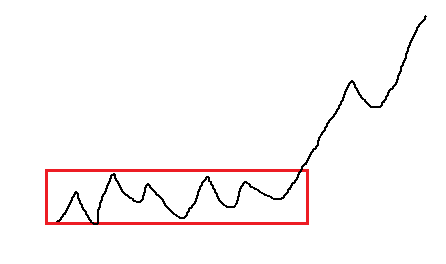
A demand or accumulation zone is formed before a strong uptrend.
A supply or distribution zone is formed before a strong downtrend.
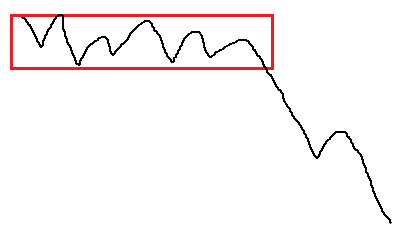
As you can see, usually price goes sideways during the demand and supply phases. During these sideways, there is a balance between demand and supply. When this balance is broken the uptrend or downtrend occurs.
Speed is another feature of demand and supply zones. That’s how we identify these zones. Speed is the key here.
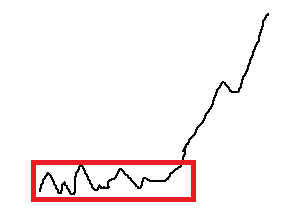
The zones or levels, where the price has increased sharply afterward, are marked as demand zones.
The zones or levels, where the price has decreased sharply afterward, are marked as supply zones.
Long story short, we find the demand zone and wait for a pullback expecting that it would go up again from that zone. This strategy has details and is not easy in practice.
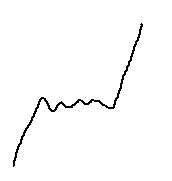
There are two types of Demand Zones:
- Drop-Base-Rally
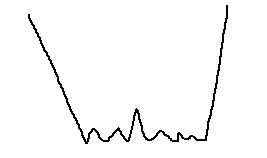
- Rally-Base-Rally
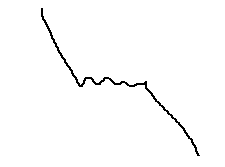
There are two types of Supply Zones:
- Rally-Base-Drop
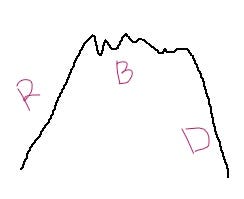
- Drop-Base-Drop
What makes a good demand zone? Why does a demand zone fail?
Time, speed, and depth define the quality of a demand zone.
As we said the speed of the uptrend decides if a zone is a demand zone. If the uptrend has occurred gradually and slowly then it is not a demand zone. The more the speed, the better the zone.
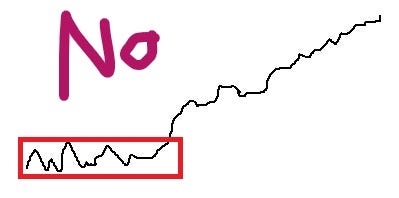
The following is a demand zone:
Only buy demand zones that have taken out supply.
For example, consider the following image. We imagine zone A is a supply zone, zone B is a demand zone, and the price could not have passed zone A after breaking out from zone B. Then zone B is not a good demand zone so when the price later comes back toward it we don’t buy with the hope of another breakout from this zone.
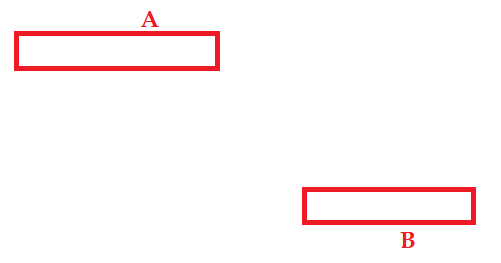
When the price comes back to a demand zone, we don’t want the price to stay too long in the demand zone. If that happens, then that demand zone is more likely to fail.
When the price comes back to a demand zone if it goes too deep into that demand zone, it is not a strong demand zone and is more likely to fail. We don’t want the price to go deep into the demand zone.
What makes a good supply zone?
I don’t short stocks so I only use supply zones to stay away from dangerous trades.
Time, speed, and depth define the quality of a supply zone.
As we said the speed of the downtrend decides if a zone is a supply zone. If the downtrend has occurred gradually and slowly then it is not a supply zone.
The more the speed, the better the zone.
When the price is coming up to a supply zone, we don’t want the price to stay too long in the supply zone. If that happens, then that supply zone is more likely to fail.
When the price is coming up to a supply zone if it goes too deep into that supply zone then that is not a strong supply zone and is more likely to fail. We don’t want the price to go deep into the supply zone.
How to enter a demand zone and when to exit after that?
You can enter once the price hits the demand zone or wait for it to spend a little time inside the zone. It depends on the situation. Day trading is not an exact science.
The bottom of the demand zone is chosen as the stop-loss.
Some times price immediately bounces from a demand zone and sometimes it first spends some time in the zone.
A demand zone shouldn’t have a wide range. It should have a relatively narrow range.
A demand zone in a 5-minute chart can have its own demand and supply zones in the 1-minute chart.
I use a daily chart, a 5-minute chart, 1-minute chart for day trading stocks.
Regarding the exit, our reward should be at least twice our risk.
I wish you a happy day. You can follow and subscribe to my newsletter to stay updated. My posts are categorized here.
Subscribe to DDIntel Here.
Visit our website here: https://www.datadriveninvestor.com
Join our network here: https://datadriveninvestor.com/collaborate


