
Deliveroo
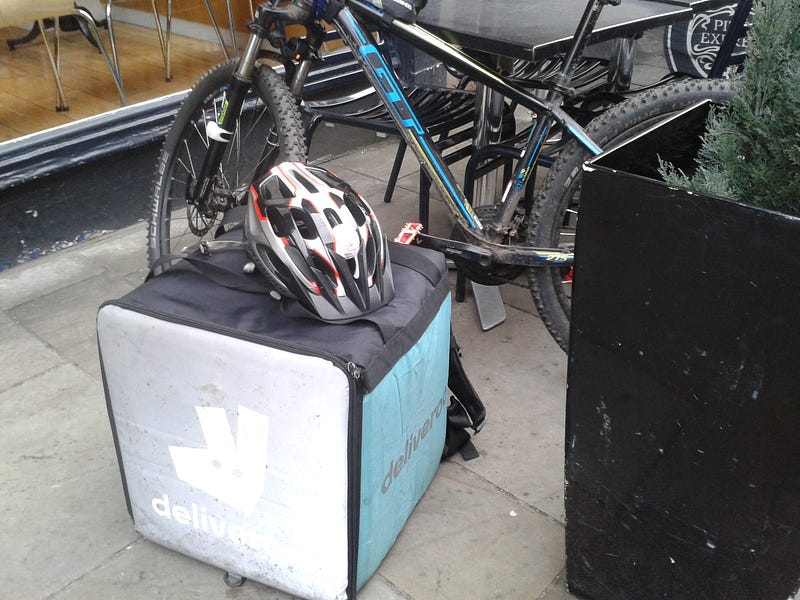
Deliveroo, like Uber and Wheelys, is another example of serfs working for an app, exploitation.
The serfs provide the capital, take all the risks, hang around in the cold.
Deliveroo creams off the profit.
Deliveroo gets paid by both the sender and the recipient.
The boxes are heavy, very uncomfortable on the back.
And not safe, as make the rider top heavy.
In London, paid an hourly rate, then per item for delivery.
In Brighton, only paid per delivery, four pounds per delivery.
In Lincoln, paid £6 per hour, then £1 per delivery.
In practice, working for less then the minimum wage.
In Lincoln, timed from when receive instruction to when delivery dropped off. Under pressure on delivery time. If do not perform are ‘fired’.
In Guildford and Brighton, too many serfs all fighting for the same deliveries.
Two reason why see Deliveroo serfs, riding through pedestrianised streets, riding wrong direction through one way streets:
- desperate to deliver to then pick up next delivery
- up against time pressures from Deliveroo
The Deliveroo serf has to bear all the costs, has to pay for the cycle, the insurance, even the Deliveroo gear.
Health and safety issues relating to the box. Heavy, uncomfortable on the back, too high raising the centre of gravity of the rider.
As every experienced cyclists knows, carry loads on panniers, not on the back.
There are even worse boxes. These are on the back of the back, but attached behind the seat not fixed to panniers. Bounce up and down. And how does the cyclist get on and off the cycle? When tired, grave danger of falling over onto the ground when trying to dismount from the cycle.
Deliveroo dictate the hours worked, the uniform worn, the gear used.
Welcome to the post-capitalist world.
A world of serfs working for apps, atomised workers bidding against each other to drive down wages, of bullshit jobs, of mindless, soul destroying, temporary, zero hours, part time McShit jobs.
Or we can have open coops, collaborative commons, a sharing economy.


