Is covid 19 the first of a storm of future pandemics?
What?…
Is this the apocalypse?
Another day, another day waking up to a nearly identical day reading, eating and doing the rest of the typical quarantine routine: Decorating boxes I sell, doing art (which I love), finish writings I have and walking the dog.
I checked my Instagram account and found an ad about a free photography course. It sounded interesting and reminded me of a hobbie I had left behind. Since today I had to walk to the grocery store, I took it as an opportunity to improve those photography skills on the way.
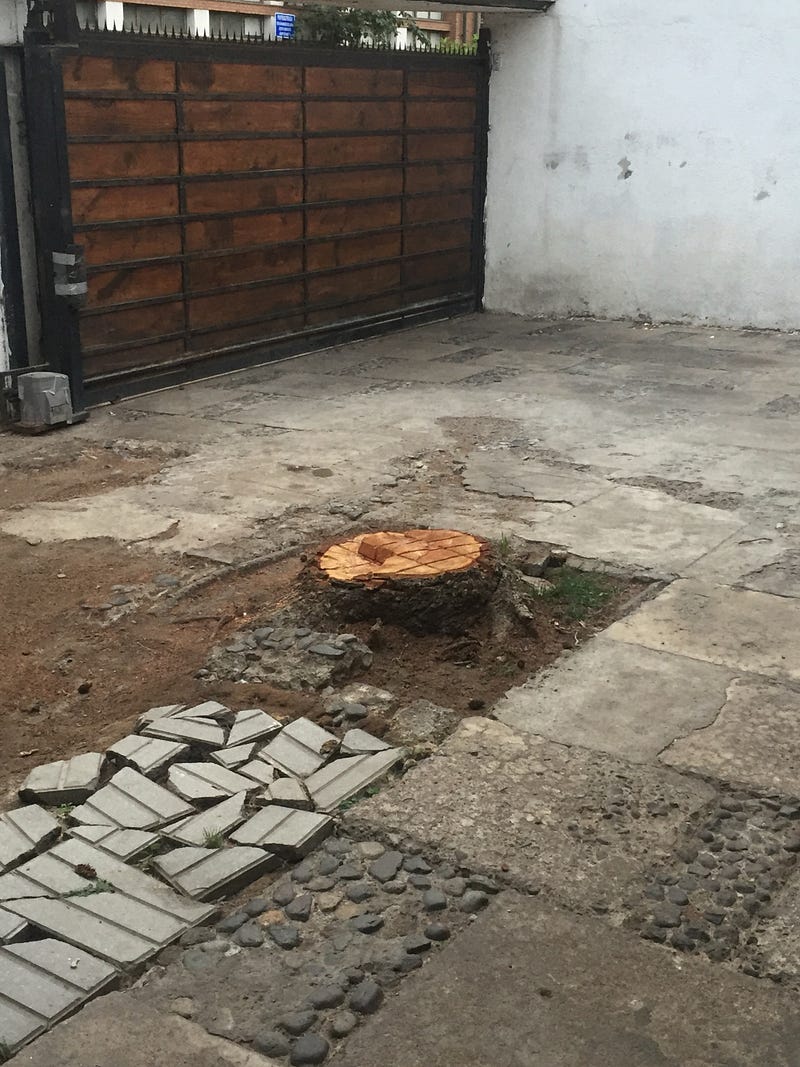
And before I walked out of the house, the felled tree caught my attention. I figured it could be a good photo, especially because it conveyed a message that left me thinking.
I tend to have these constellations of random thoughts that are not hard for me to put together. It started with a simple question: What does this image make me think of?
Deforestation
Sure. What else?
Well, that was a really tall tree that had to be felled because the trunk was splitting. We weren’t going to risk our house or our lives.
Okay, urbanization.
Good.
We are the invaders after all. Trees don’t kill us or get inside our houses to survive.
What else?
Well, it’s cloudy. It will rain today. It rarely ever rains now because of climate change.
Good.
And why am I leaving the house with a mask and gloves?
Because I’m in a pandemic.
What unites the three definitions?
The coronavirus outbreak may be just the beginning of mass pandemics.
Researchers thought intact natural environments with exotic wildlife threatened humans, as they hold viruses that lead to disease: Take HIV and dengue, for example.
But researchers now hypothesize that humanity’s destruction of biodiversity creates the conditions for new viruses such as Covid-19, the viral disease that emerged in Wuhan, to arise and create this threat to our survival. From our health to our ability to get the resources we need to survive (our global economy).
“We cut the trees; we kill the animals or cage them and send them to markets. We disrupt ecosystems, and we shake viruses loose from their natural hosts. When that happens, they need a new host. Often, we are it.” Wrote David Quammen, author of Spillover: Animal Infections and the Next Pandemic, in the New York Times.
“The disruption of pristine forests driven by logging, mining, road building through remote places, rapid urbanisation and population growth is bringing people into closer contact with animal species they may never have been near before” says Kate Jones, chair of ecology and biodiversity at UCL.
“We have created densely packed populations where alongside us are bats and rodents and birds, pets and other living things. That creates intense interaction and opportunities for things to move from species to species” says Eric Fevre, chair of veterinary infectious diseases at the University of Liverpool’s Institute of Infection and Global Health.
And the worst part is that covid 19 is nothing, it’s just the beginning. The majority of pathogens are yet to be found.
We humans are creating the perfect conditions for the spread of these diseases such as covid (and Mers and Ebola among others) by reducing the natural barriers between animals that host theses viruses and us.
Species that survive major landscape changes are now moving and mixing with different animals and humans.
And humans still don’t understand how damaging entire ecosystems, caused not only by deforestation but also by climate change, are leading to the close contact between humans and animals that cause these pandemics.
Human health research rarely ever fakes into consideration our surrounding natural ecosystems.
“Rodents and some bats thrive when we disrupt natural habitats. They are the most likely to promote transmissions such as Covid 19”. Says Richard Ostfeld, distinguished senior scientist at the Cary Institute of Ecosystem Studies in Millbrook, New York.
Yes, you read right.
Disrupt natural habitats.
What do deforestation and other harmful practices do to our ecosystem and natural habitats?
Disrupt it.
What does urbanization, a direct consequence of our industrial societies, do?
Disrupt natural habitats.
We are entering an era of constant emergency, in a pre-apocalypse. Globalization and travel enables disease to propagate faster than ever. We must all take this information very seriously and think of a well thought-of and fast solution. Otherwise, yes, welcome to the apocalypse.
Getting the message across is key. In this information era, information is the real gold. The real value.
And this is lifesaving information. This is earth-saving, humanity-saving information.
The solutions start with education and awareness. We must make people aware things are different now.
It’s not only about banning wildlife trade and markets (which should have never existed in the first place). It’s about rethinking society and our current lifestyle: Urban infrastructure, particularly within low-income settlements that are often overcrowded and in dangerously unsanitary conditions. This is a pressing, emergency call for urban development, for climate change action, and for capitalism as we currently know it — factories polluting the air and mass deforestation to construct highways — to end.
We must be prepared for the next pandemic, the next disaster, and make fast changes. It’s necessary, unless of course, you want to witness our certain, impending doom.
Please remember this image, for I know most of you are visual learners and will remember the photo better than this article. The photo will remind you of the four key definitions I have used in this article: Deforestation, climate change, urbanization and of course, our current pandemic.
Keep it and share the photo to all the people you can share it to. And remember these words I tell you, for saving our lives is up to us. Now.


