
Defeat Writer’s Block With These 3 Steps (Generate an Endless Flow Of Ideas)
How I’ve kept my content fresh for 20+ years

I’ve been creating content for 20+ years.
It’s demanding to keep going for a long time. Many new writers burst onto the scene with an abundance of ideas. But then run out of inspiration and quit because they dry up.
Fresh ideas don’t appear by magic. They need a strong process
When you are out of ideas. Your writing will get stale and you’ll struggle to attract readers. You stop making money. Writing loses its joy. Once that is gone is it impossible to keep going.
My idea conveyor belt gives me a constant flow of ideas. This keeps me excited about writing. It is almost effortless and takes very little time.
It involves 3 simple steps.
The Conveyor Belt (The 3-step process)
It takes work to build your conveyor belt.
But once it is set up. I promise you the ideas will be neverending.
The 3 steps are:
- Generate a bucketful of ideas
- Choose ideas for your next content
- Use those ideas to create your content
Let me show how these 3 steps work for me:
I have a bucket full of ideas (generate). I keep it in Evernote. You can keep it anywhere. (I’ll explain later where I get all these ideas from). Then at the end of the week I look in the bucket. And choose 4 ideas for next week’s articles. I put them in a Medium draft. Ready for writing (use).
Generating, choosing and using are 3 distinct tasks. They use your brain differently. You need to do them separately. If you’ve ever been in a team meeting where some people are brainstorming new ideas. Then someone starts evaluating them. You’ll see it immediately stops the idea flow. You don’t want that.
As I choose then use ideas each week my ideas bucket starts to get empty.
So I need to generate a fresh supply. Here’s how I do it:
Start with a healthy diet
If you want to produce fresh content you need to be taking in high-quality content.
Consuming a healthy diet will bring new thoughts. Every time you discover a new idea — put it in your ideas bucket.
Your input options are endless:
- Youtube
- Podcasts
- Blogs
- Audiobooks
- Books
- Conversations
- Message forums
Do what works for you. Resist the pressure to copy others. Avoid thinking ‘I’m looking for ideas’ — that will limit your learning. Consume whatever helps you grow.
Learning beyond your niche is crucial. Otherwise, you’ll just hear the same ideas recycled. I love learning about productivity, positive mindset and investing. This yields new ideas that cross over into writing.
If you are struggling to find the time. Pick one time-wasting activity (Tik Tok, Netflix, gaming). Reduce your time on it and fill that time with healthy content instead. Easy.
About 50% of my bucket comes from my regular input. The other 50% comes from deliberate exercises to generate ideas.
Here are 4 you can try:
1. New structures to inspire new thoughts
Our brains love to take the easy path
And the easy path is the one it took last week.
That’s why most of my early articles began ‘5 tips to’. My lazy brain wants to repeat the same thing. Over and over. Using a new structure for our content can trigger original thinking. A new style will add variety to our writing and keep readers interested.
There are endless structures you can choose from. Try these for starters
A life lesson
This happened to me and I learned X
Mistakes:
3 mistakes people make when investing their money
Resources:(youtube, podcasts, articles, books, website, people to follow)
5 best books for new creators
5 insights for new writers from Nicolas Cole’s interview
Lies people believe/controversial opinion:
People think the morning is the best time to create. It’s not.
3 toxic lies about making money online
Steps/process:
Follow this exact process to plan your day
7 steps to making your first £10K online
Create a grid with your main topics across the top and different structures down the side. Before I decided to focus on helping new writers I wrote about 4 topics. So this is my grid:
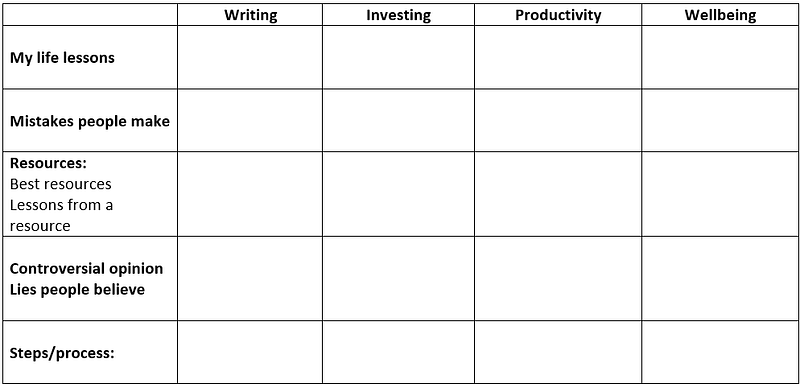
Try to fill in as many squares as possible. Write down anything that comes to mind. Here’s what mine looked like:
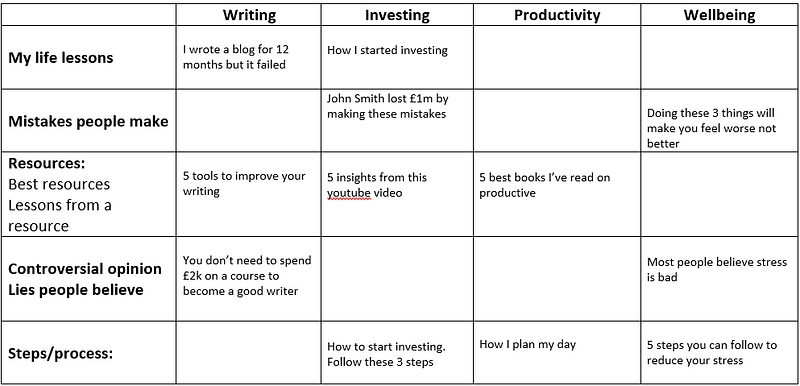
If nothing comes to mind for some of the boxes don’t worry. Move on and leave them blank. It’s not a test, it’s idea generation.
At the end of the session add any ideas you like to your ideas bucket.
Top tip: when this exercise gets stale. Change the type of idea in the left column. Look at your favourite creator, see what type of writing they use and update your column with it.
2. Get into your reader’s heads
Writers run dry of ideas because they spend too much time in their own heads.
What should I write about? This is the wrong question.
You can fix writer’s block by asking the right question.
What is your reader struggling with and how can you help them?
Here’s an exercise to help you do this:
- Write down 15 fears of your target reader
- Write down 15 frustrations of your target reader
Then turn these into ideas by switching them to a positive and adding ‘how to’. My target reader is new writers. So here’s an example from when I did this exercise
I am afraid no one will read what I write
Article idea: How to boost your confidence in writing so you want to publish every day
I am frustrated because I’ve run of ideas
Article idea: How to generate a neverending flow of new ideas
There will be some duplicates. But you’ll still generate 15–20 new ideas for your bucket. You can do this exercise with 15 problems, 15 worries, 15 wants and 15 desires as well.
3. Chat GPT is keen to fill your bucket
Chat GPT writes generic, bland articles.
So resist using it to write your articles.
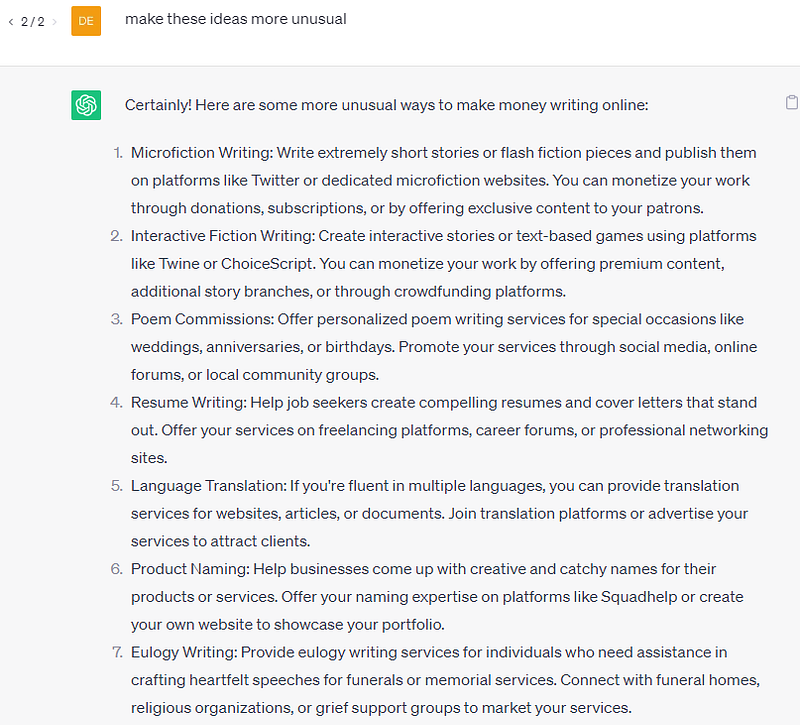
But it’s a brilliant brainstorming partner. It can help you get unstuck. The power of AI is dependent on the prompts you use. So experiment and try things out. Remember you are looking for ideas to add to your bucket.
Some prompts to try:
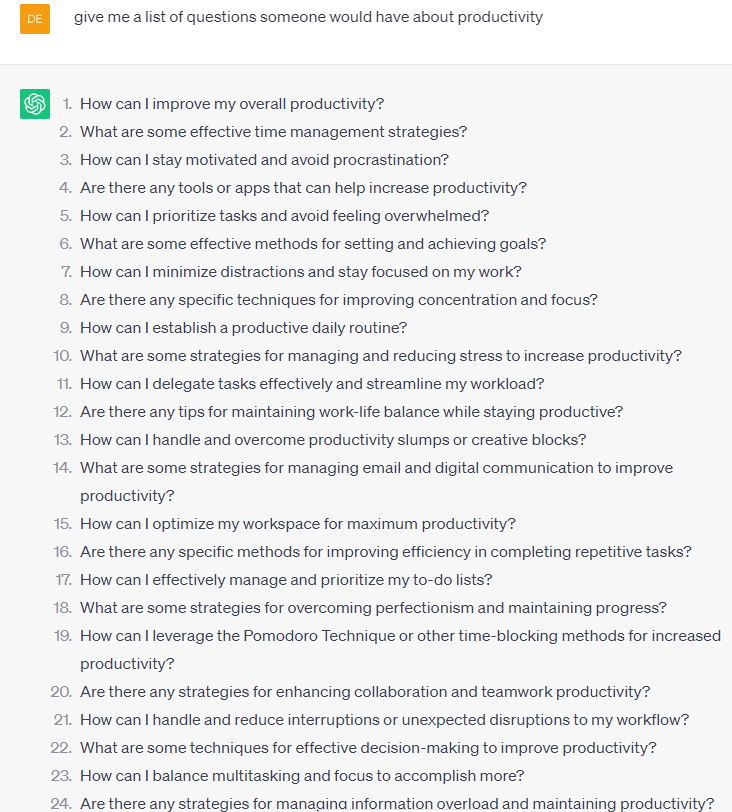
Give me 20 problems/frustrations/obstacles or hopes/aspirations a X might have.
I want you to give me a different answer to everyone else to this question:
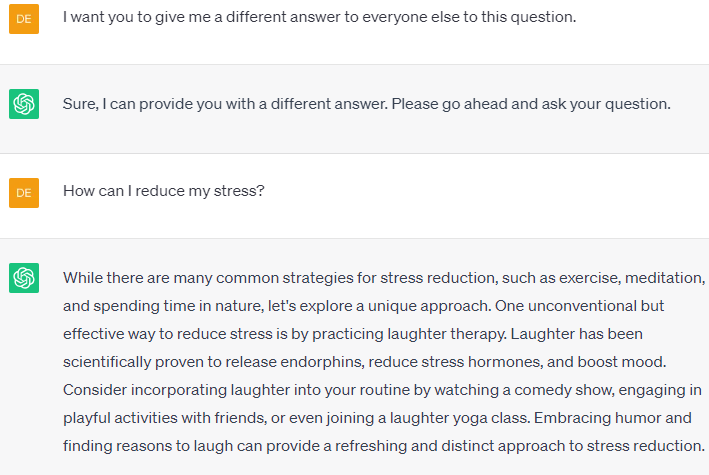
Start with a question. Then use follow-up questions to improve the answers. Give me 10 more. Make these funny. Make them more unusual. Make them for advanced writers.
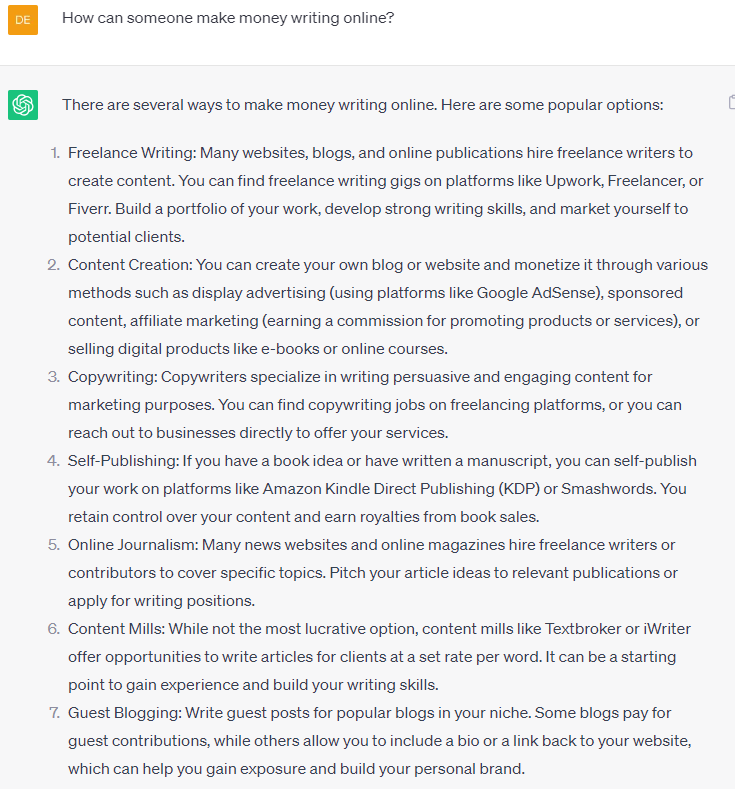
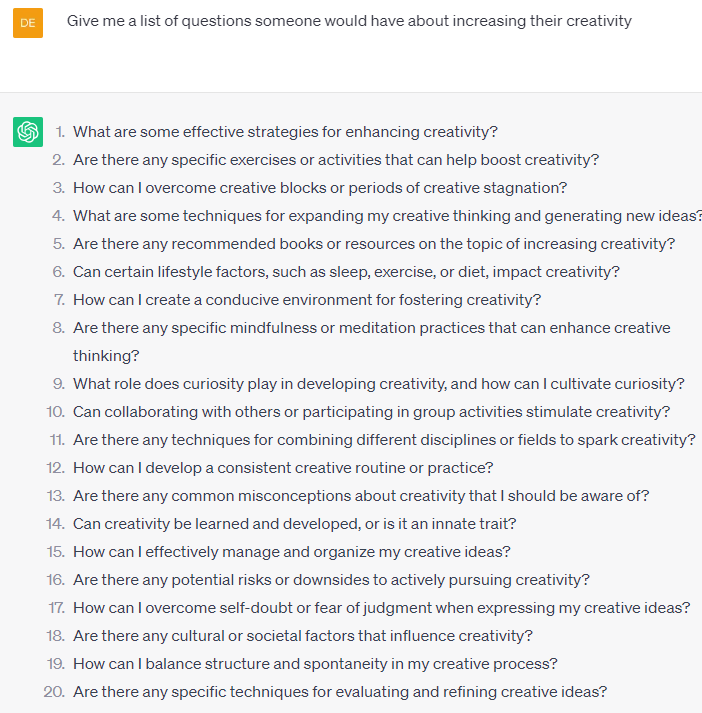
Give me a list of questions someone would have about X
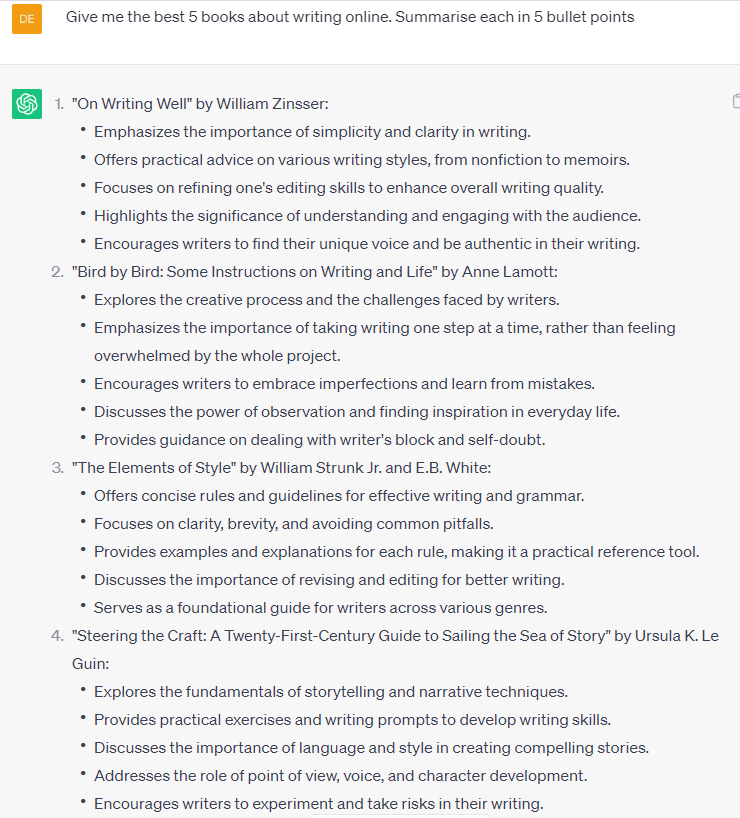
Resources. Give me the best 5 books on X. Summarise each in 5 bullet points. Give me a brilliant quote from each. Summarise Y book in 1000 words.
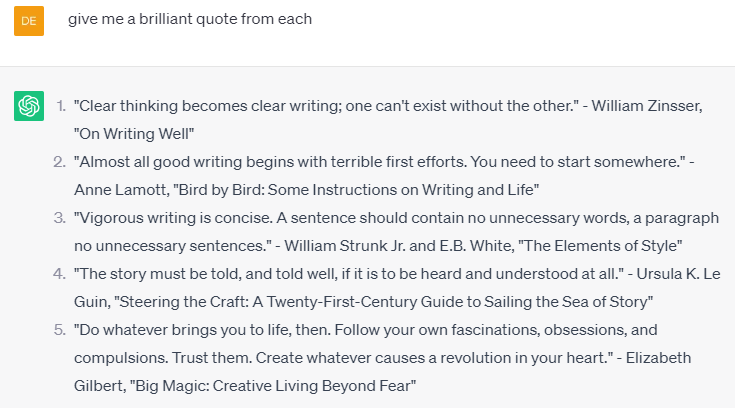
Every time ChapGPT sparks an idea you like. Add it to your bucket.
(and note down which prompts work well for you to reuse next time)
4. Dig into your data
There is gold hidden in your metrics.
Your data is a brilliant source of ideas. It comes from your readers which makes it exceptionally valuable.
Here’s how to dig into comments and numbers.
Assess Comments
Look at what people find most helpful. How can you write more about that? You could write a follow-up in-depth article or a try new structure to give a fresh angle.
Notice what questions readers ask. And what they reveal about themselves. Look for hopes, aspirations, fears or frustrations. How can you help them with these?
If you don’t have many comments. Look at interactions on big accounts who write on your topic. That will tell you what people want you to write about.
Assess Numbers
Once you’ve created a lot. Look at what is most popular.
Can you spot trends? Zero in on what gets the best engagement. Use Chat GPT to generate more ideas on this topic.
I find Twitter useful because there is a larger volume. I write 21 tweets and take the most popular 2 and turn them into my short-form article next week.
Responding to the data will boost your confidence. You know people want this.
I use one of these 4 exercises each month to top up my ideas bucket.
…
This is the conveyor belt.
Generate ideas. Each week Choose from my bucket. Then Use them to create compelling content.
The constant originality will engage your readers. And energise your writing.
Set up your conveyor belt and let the idea flow begin.
To become a compelling writer sign up for my weekly tips:


