Deep Learning (DL), Artificial Intelligence (AI) Accelerator Chips, Data Mining, and Medicine
AI Accelerators as a HealthCare tool to assist with Diagnoses of Disease or mining for Physician Clinical Judgment Data

Deep Learning (DL) algorithms employ multiple layers to mine quality features from the raw data. It is a Machine Learning (ML) method that enables learning without supervision, which traditional machine learning traditionally lacked.
Today we witness the emergence of more sophisticated and savvy Artificial Intelligence (AI) tools such as Federated Learning (FL) and AI Accelerator hardware. These technologies are intended to maximize their efficiency in refined data extraction. After all, data is raw information, and information is money and power.
The power of information harnessed through Deep Learning can complement every aspect of human life and slay their autonomy.
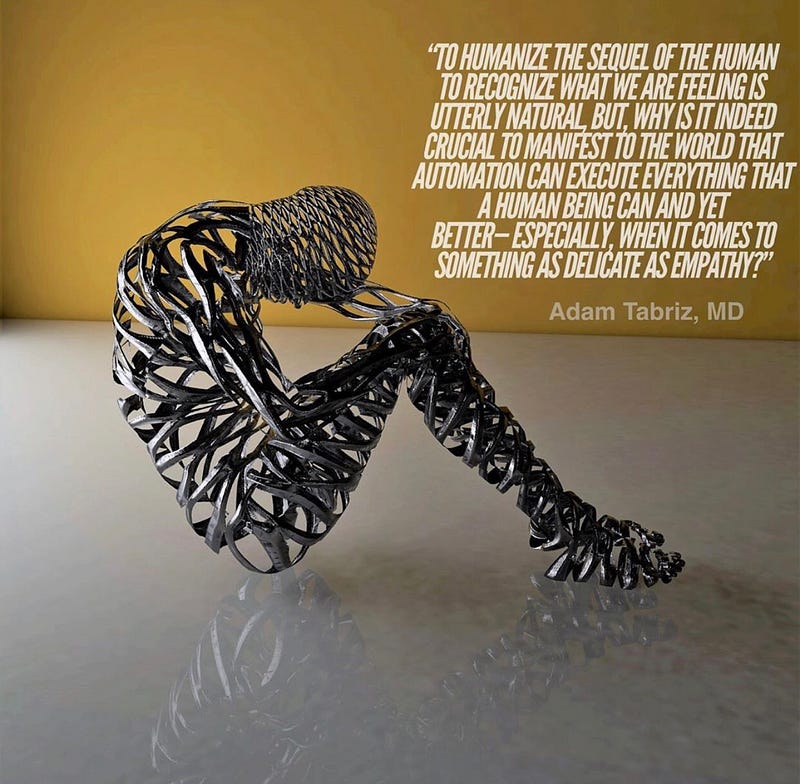
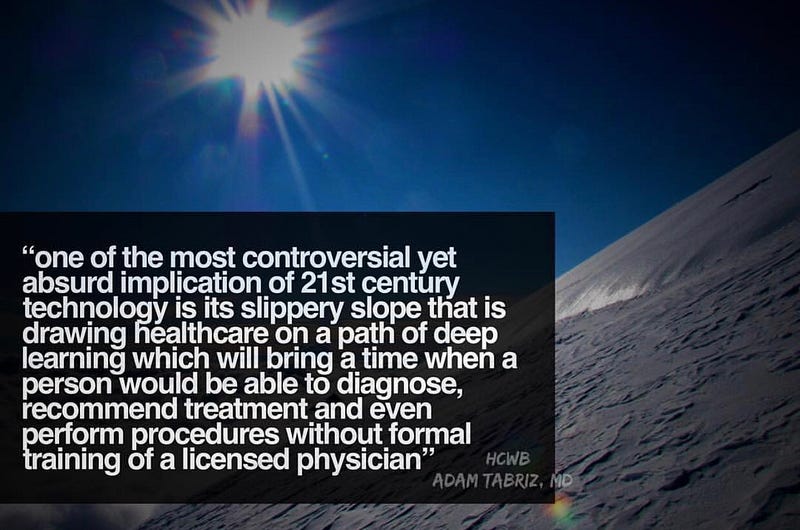
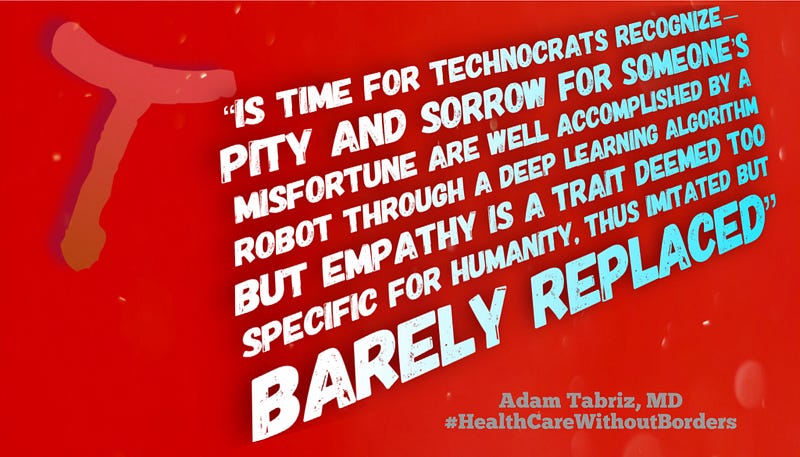
Today various AI solutions are being implemented in medical practice platforms to help reduce physician administrative burden and improve disease diagnostic precision. Parallel to that, the modern scheme's engineers contemplate doubling down on data commoditization and creating robots that will replace physicians.
Health information at the center of the Deep Learning realm exemplifies expanding healthcare technology. Its development is more vertical than the healthcare community can keep up with, establishing a chasm that facilitates makeshift scrutiny and nooks in the healthcare gap.
Artificial Intelligence Accelerators: the next frontier over Healthcare Hegemony
Artificial Intelligence is already rendering corporations more powerful than ever before. That is simply because the AI invites monopolization unless a certain level of transparency is maintained over their algorithms. And since two key factors dictate the quality of an AI algorithm, i.e., data and computing power, when data is fed into the neural or Deep Learning networks, artificial neurons detect patterns within data and harvest algorithms. It seems that if employing more data and tons of computing power, algorithms become more detailed and offer better outcomes.
Healthcare is a sophisticated sphere with unlimited raw Data, including physician clinical judgment. The clinical decision-making pattern is unique for every clinician. That makes it worthwhile for the companies to develop a technology that further refines existing yet, sophisticated algorithms. The type of technology is custom-tailored to every scenario, group, and individual. That is where the utility of AI Accelerator Chip and Federated Learning becomes more than ever crucial. Nevertheless, that further raises the tendency towards monopolization because of the positive feedback loop generated due to AI's dependence on data. If a corporation using AI gains the upper hand over its competitors, it will be very alluring to take the footpath of a self-perpetuating cycle of monopolization.

Incorporating AI accelerator hardware or a computer system can expedite Artificial Intelligence requisitions, emphasizing Artificial Neural Networks, machine vision, and machine learning. A typical AI-integrated circuit chip or accelerator comprises billions of MOSFET transistors. It is about accelerating the Deep Learning (DL) needed during training.
AI Accelerator Chips are specially designed for Artificial Neural Network (ANN) founded applications. Utmost ANN applications are situated for Deep Learning tenders.
Artificial Neural Network is a subfield of Artificial Intelligence and a machine-learning approach inspired by the human brain. It includes layers of artificial neurons, which are mathematical functions stirred by human neurons' functionality. The Artificial Neural Network can be built as a deep network with multiple layers. Machine learning applications using such networks are called Deep Learning. AI Accelerator Chip using ANN enhances the mining quality of medical data and physician decision-making trends. Naturally, suppose the technology application is made ethically. In that case, the chip can create a personalized healthcare product more opportune, computation speed faster, and ultimately leads to rapid understanding of the personal and social determinants of health and disease.
The Artificial Intelligence Accelerator revamps data transmission reliability by capturing the photonic effect to ensure desirable human-machine interactions. It permits users to monitor and control remote SFP+ modules from the central office without making any hardware.
Along with capturing relevant data for better diagnosis, the group of information utilized to facilitate Deep Learning is the challenge of capturing the right set of data on clinical decision-making. Implementing the chip takes Deep Learning right to the source. Hence, AI chips are the most disruptive infrastructure for Artificial Intelligence. By that measure, the impact of what Graph core is about to unleash in the world massively is beyond explanation.
Take-Home Message
Today, some data mining obstacles are patient privacy, data ownership, and the quality of the data itself. The increasing demand for data decentralization is one of the obstacles that corporate cartels must overcome to monopolize and commoditize physician and patient proprietary information. The data mining industry has invented Federated learning and AI-accelerated learning technologies to get around the decentralization hassle. Aligned with their mission, they have harnessed the power of real-time data analytics (RTDA), which addresses the data's quality and timeliness.
Real-time data analytics analyzes collected data as soon as it becomes available. Through RTDA, users gain acumens or can decide as soon as the data enters their system. It allows companies to react without pause while seizing timeliness or preventing problems before they occur. By comparison, batch-style analytics may take hours or even days to yield results. Consequently, group analytical applications often return only after the fact insights. Of course, With the ever-increasing size of centralized data silos, the speed of change is hard to interpret. Day in and day out, physicians make millions of clinical decisions, thus adding to an ever-growing data stream, making it irresistible to large corporations. On the downside, RTDA, to function at best, requires centralized silos of data. For that reason, RTDA becomes harder to deploy under ever-growing decentralized databases. That is where the Federated Learning and AI Accelerator Chips come to the rescue of RTDA.
Artificial Intelligence and all its predecessor technologies are great "instruments" to drag physicians out of administrative workload, make their roles efficient and complement patient care. However, free clinical judgment, besides raw clinical data, is what Dr. Robot needs to become a medic. Today, physician burnout and administrative mandates are many excuses that serve as corporate fabricated "Trojan horses." This time, the conqueror disguises invaders in the AI algorithm "The horse" to storm lifelong physician knowledge rather than the city.
Scientific novelties such as Data Analytics, Pharma, imaging, and biotechnologies are complementary scientific grounds to medicine, not the other way around. A medical practice entails a meaningful transition from the unbending applied science-based remedy to the domain of compassion. Hence, Medical practice must deluge the fairest of all scientific and technological developments within its core veracity boundaries.
Medical science is about instructions to the patient as individuals and not remedying a set of query outcomes and procedures.
Therefore, Balancing strategy and tactics in healthcare and harnessing them one by one for every patient case is necessary. And circumventing pitfalls and takeover of unethical cookie-cutter corporate medicine must be the ultimate priority. Delivering personalized care requires meticulous long-term and ongoing strategic planning that paves the Hippocratic trail while undergoing constant tactical updates ensuring every patient receives the most up-to-date customized medical attention.
The concept of big data's strategic and monetary value is irresistible to giant corporations as it arms them against other competitors. But patient lives are at stake. And until their algorithm and missions are rendered fully transparent, we will see more monopolization of the Healthcare industry, the Robotization of medicine, and physicians' and patients' enslavement.