avatarMerzmensch

Free AI web copilot to create summaries, insights and extended knowledge, download it at here

2259

Abstract

Deep Dream developer <b>Alex Mordvintsev</b>). In the case of DeepDream AI took a further step after the already intriguing capability of recognizing stuff.</p><p id="1768">To recollect, what did Google Deep Dream do:</p><ul><li><b>analyse </b>a photograph</li><li><b>recognize </b>a familiar patterns and objects</li><li>via several iterations <b>modify </b>the original image with own interpretation of recognized objects — with a kind of Echo Chamber effect.</li></ul><p id="6103">So for the beginning I just made a selfie.</p> <figure id="94e5"> <div> <div> <img class="ratio" src="http://placehold.it/16x9"> <iframe class="" src="https://www.instagram.com/p/40PM3LH24y/embed" allowfullscreen="" frameborder="0" height="640" width="658"> </div> </div> </figure></iframe></div></div></figure><p id="73c0">My unnerving selfie full of eyes. Then I let run various photos of mine via virtual DeepDream installation:</p> <figure id="2597"> <div> <div> <img class="ratio" src="http://placehold.it/16x9"> <iframe class="" src="https://www.instagram.com/p/BE0_VQ4n201/embed" allowfullscreen="" frameborder="0" height="640" width="658"> </div> </div> </figure></iframe></div></div></figure><p id="59b0">Dogs. Lot of dogs. Neural Networks trained AI recognized mostly in everything dogs.</p><p id="fdc8">Btw, the reason why so many dogs was obvious:</p><blockquote id="0894"><p>A neural network’s ability to recognize what’s in an image comes from being trained on an initial data set. In Deep Dream’s case, that data set is from ImageNet, a database created by researchers at Stanford and Princeton who built a database of 14 million human-labeled images. But Google didn’t use the whole database. Instead, they used a smaller subset of the ImageNet database released in 2012 for use in a contest… a subset which contained “fine-grained classification of 120 dog sub-classes.” (<a href="https://www.fastcompany.com/3048941/why-googles-deep-dream-ai-hallucinates-in-dog-faces">FastCompany</a>)</p></blockquote><p id="0396">Then I used my Merzmensch userpic (a self

Options

ie in a polished iron marble I shoot 2006):</p><figure id="168d"><img src="https://cdn-images-1.readmedium.com/v2/resize:fit:800/1*J-sZq_olILhYYq__xiU_YA.png"><figcaption>Photo: Merzmensch</figcaption></figure><p id="e4e8">The results were pretty weird, Brueghel’ & Bosch’esque.</p><figure id="cbe0"><img src="https://cdn-images-1.readmedium.com/v2/resize:fit:800/1*eaESKergk6ZlNsNnA60jLw.jpeg"><figcaption>Merzmensch Userpic, generated by Google #DeepDream</figcaption></figure><p id="69d2">Here was way more than just dogs. Tin can alike structures, caterpillar-ish creatures, it was mesmerizing to watch the alteration of the original photo — iteration for iteration.</p><p id="7105">This was a huge potential for new forms of arts. For new collaborations between a machine and a human. Because the concept of the world perception of a human doesn’t seem to distinguish from the cybernetic entity:</p><p id="a0a1" type="7">We (humans & AI) recognize in things we perceive the subjects we already know. We address to this perception as the only true one. And: we create the reality inside of our OS —either it is a complex brain-hormones collaboration, or sophisticated Deep Learning processes.</p><p id="bd11">DeepDream was just the beginning. Nowadays there are huge variety on experiments and inventions around AI and creativity. Let’s follow the tendencies in this blog.</p><p id="7e65"><i>And tell me, what do you think about Creativity and Artificial Intelligence? Are they compatible issues?</i></p><p id="7a1c"><b><i>This Article is published in <a href="https://www.datadriveninvestor.com/2019/01/28/ai-creativity-deep-dream-comes-true/">Data Driven Investor</a>.</i></b></p><h1 id="a1d5">SocialLink</h1> <figure id="69ed"> <div> <div> <img class="ratio" src="http://placehold.it/16x9"> <iframe class="" src="https://cdn.embedly.com/widgets/media.html?type=text%2Fhtml&amp;key=a19fcc184b9711e1b4764040d3dc5c07&amp;schema=twitter&amp;url=https%3A//twitter.com/merzmensch/status/1292884403274866688&amp;image=" allowfullscreen="" frameborder="0" height="281" width="500"> </div> </div> </figure></iframe></div></div></figure></article></body>

Deep Dream comes true

German Version

Artificial Intelligence always fascinated me. Not only as a useful set of tools, being continuously evolved. But also as an experiment field. Some years ago, as Neural Network based solutions popped up everywhere, it was a breakthrough, a silent one back to those days.

The fact of a system, learning and developing itself without direct influence of programmer was a beautiful one. And a terrifying one for some people, who was seeing a Terminator-esque danger of a total domination of machines smashing human skulls in the total AI Apocalypse.

Here is a takeaway, even before we start:

It’s not about the AI to be evil. It’s about ourselves, about people, being enabled to do evil things using AI. So why do you look at the speck of sawdust in our system eye and pay no attention to the controller in our own hand?

I personally was just overwhelmed by the possibilities for creativity, being provided with the usage of AI. Back to the early days of Neural Networks I was captivated by Google Deep Dream and installed its virtual instance on my laptop (you can right now check it out in the web based version provided by Deep Dream developer Alex Mordvintsev). In the case of DeepDream AI took a further step after the already intriguing capability of recognizing stuff.

To recollect, what did Google Deep Dream do:

  • analyse a photograph
  • recognize a familiar patterns and objects
  • via several iterations modify the original image with own interpretation of recognized objects — with a kind of Echo Chamber effect.

So for the beginning I just made a selfie.

My unnerving selfie full of eyes. Then I let run various photos of mine via virtual DeepDream installation:

Dogs. Lot of dogs. Neural Networks trained AI recognized mostly in everything dogs.

Btw, the reason why so many dogs was obvious:

A neural network’s ability to recognize what’s in an image comes from being trained on an initial data set. In Deep Dream’s case, that data set is from ImageNet, a database created by researchers at Stanford and Princeton who built a database of 14 million human-labeled images. But Google didn’t use the whole database. Instead, they used a smaller subset of the ImageNet database released in 2012 for use in a contest… a subset which contained “fine-grained classification of 120 dog sub-classes.” (FastCompany)

Then I used my Merzmensch userpic (a selfie in a polished iron marble I shoot 2006):
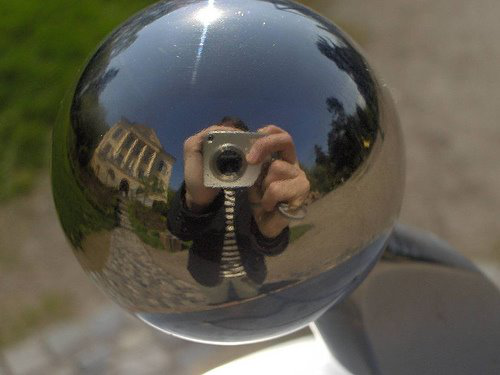
Photo: Merzmensch

The results were pretty weird, Brueghel’ & Bosch’esque.
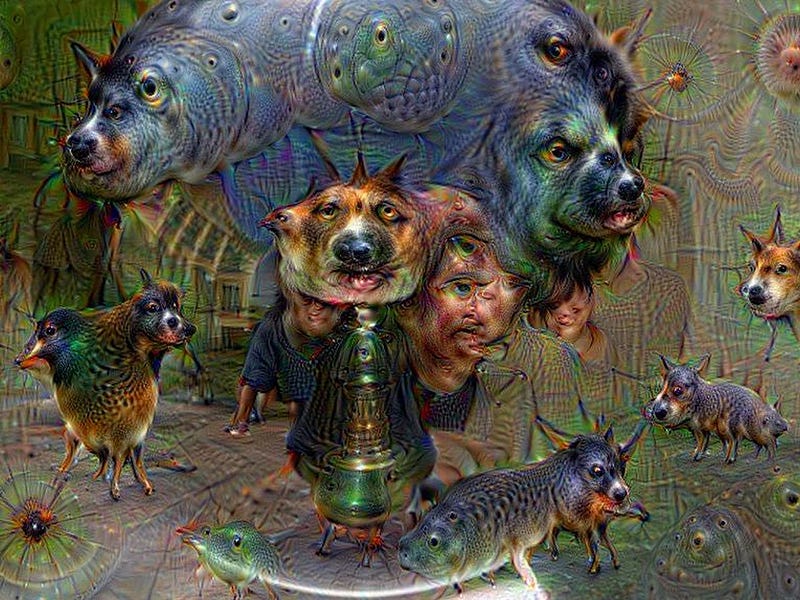
Merzmensch Userpic, generated by Google #DeepDream

Here was way more than just dogs. Tin can alike structures, caterpillar-ish creatures, it was mesmerizing to watch the alteration of the original photo — iteration for iteration.

This was a huge potential for new forms of arts. For new collaborations between a machine and a human. Because the concept of the world perception of a human doesn’t seem to distinguish from the cybernetic entity:

We (humans & AI) recognize in things we perceive the subjects we already know. We address to this perception as the only true one. And: we create the reality inside of our OS —either it is a complex brain-hormones collaboration, or sophisticated Deep Learning processes.

DeepDream was just the beginning. Nowadays there are huge variety on experiments and inventions around AI and creativity. Let’s follow the tendencies in this blog.

And tell me, what do you think about Creativity and Artificial Intelligence? Are they compatible issues?

This Article is published in Data Driven Investor.

SocialLink

Artificial Intelligence
AI
Deepdream
Neural Networks
Creativity
Recommended from ReadMedium