
Deconstructing Reality: An In-Depth Review of Peter Berger’s “The Social Construction of Reality”
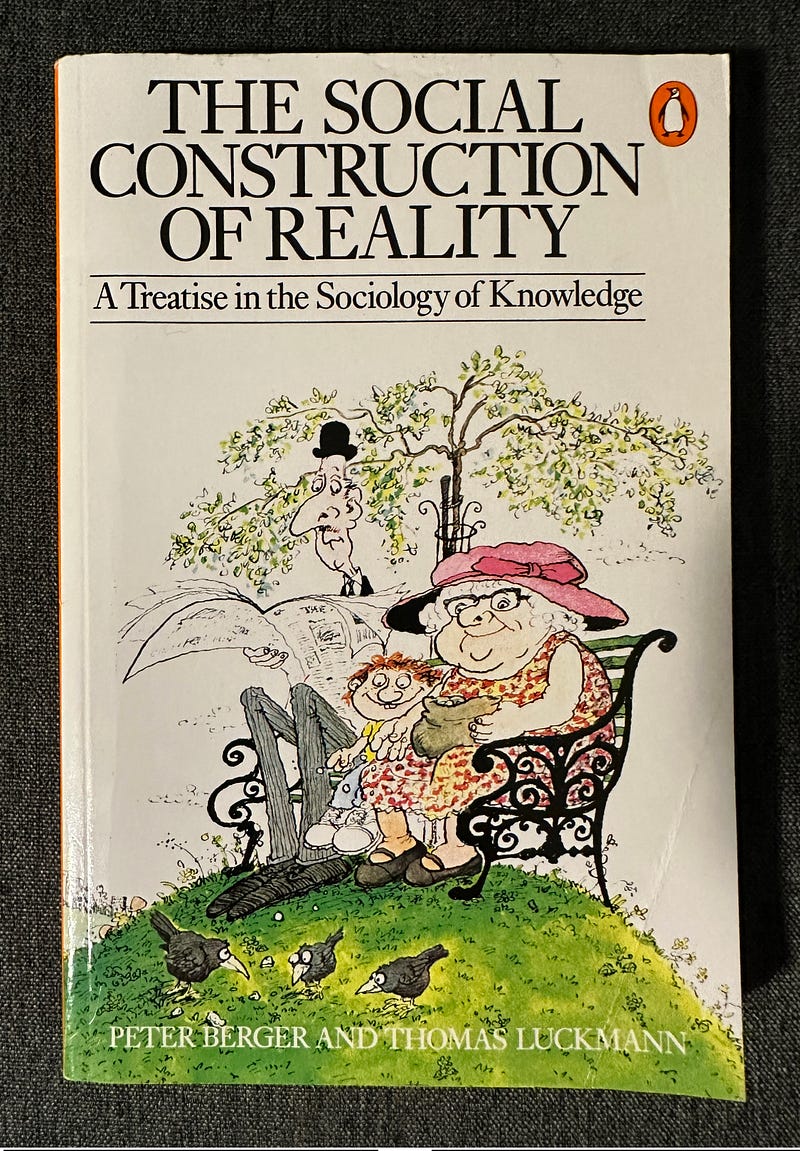
“The Social Construction of Reality” is a classic book written by sociologist Peter Berger and sociologist and theologian Thomas Luckmann. It was first published in 1966 and has since become one of the most influential works in the field of sociology.
The book’s central thesis is that reality is socially constructed, meaning that the world around us is not objectively real but rather a product of our social interactions and the meanings we attach to them. Berger and Luckmann argue that social reality is not only constructed but also institutionalised, meaning that social constructions become internalised within individuals and become part of their habitual ways of thinking and behaving.
The authors begin the book by examining how knowledge is constructed through social processes. They argue that knowledge is not simply discovered but rather created through social interaction and interpretation. They describe the process of “socialisation” through which individuals learn the rules, norms, and values of their society and acquire the knowledge necessary to function within it.
Berger and Luckmann then move on to discuss how social reality is institutionalised. They argue that institutions, such as religion, politics, and education play a central role in constructing and maintaining social reality. Institutions create and reinforce social norms and values, which in turn shape individual behavior and perceptions of reality.
One of the key contributions of the book is its analysis of how social reality is maintained through the use of symbols and language. Symbols, such as words, gestures, and objects, are used to communicate meaning and create shared understandings within a society. Language is particularly important in this process, as it allows individuals to communicate complex ideas and concepts and to create and transmit culture.
The authors also explore the role of power in social construction, arguing that those with greater power are able to shape and control social reality to a greater extent than those with less power. They discuss the ways in which power is used to maintain social hierarchies and to enforce social norms and values.
“The Social Construction of Reality” is a fascinating and thought-provoking book that challenges readers to question their assumptions about reality and the ways in which it is constructed. It is a seminal work in the field of sociology and has had a profound impact on the way that sociologists think about the social world.
One of the strengths of the book is its interdisciplinary approach, drawing on insights from philosophy, linguistics, and psychology to provide a comprehensive analysis of social construction. The authors also use a range of examples from different societies and historical periods to illustrate their arguments, making the book accessible and engaging to a wide audience.
However, some readers may find the book challenging to read due to its dense and academic style. The authors use complex terminology and concepts that may be unfamiliar to readers without a background in sociology or related fields.
In conclusion, “The Social Construction of Reality” is a must-read for anyone interested in the social world and the ways in which it is constructed. It offers a comprehensive analysis of social construction that challenges readers to question their assumptions about reality and the ways in which it is created and maintained.
Despite its academic style, the book is accessible and engaging, and its insights continue to be relevant and influential today.
Interested in supporting the writer of this book review? Consider joining Medium. By signing up via my referral link, I’ll get a small commission without incurring any additional cost to yourself! Plus, you’ll obtain unlimited access to the vast collection of stories on Medium.