Decolonizing Thanksgiving Toolkit Part II: Indigenous Peoples Today
Three years ago, I published a Decolonizing Thanksgiving toolkit for combatting ethnocentrism in schools by sharing resources for teachers, parents, and more. I wanted to add to and update part I of the toolkit (which was mainly history-focused) by providing new resources by Indigenous authors that feature contemporary Native peoples.
One of the greatest consequences about the way that Thanksgiving is often taught in the U.S. is that it confines Native peoples to the far past. In addition to this whitewashed history of the “First Thanksgiving,” this story doesn’t recognize Native peoples as citizens in the modern world, and it doesn’t teach about issues that matter to Native peoples today. Each of the books featured below depicts Native peoples as part of the contemporary U.S., featuring Native culture, identity, history, politics, language, and more.
Aiden, my 8-year-old, joined me in reviewing these books, and we hope you like these books as much as we did.
We are Grateful: Otsaliheliga
By Traci Sorell (Cherokee) and illustrated by Frané Lessac
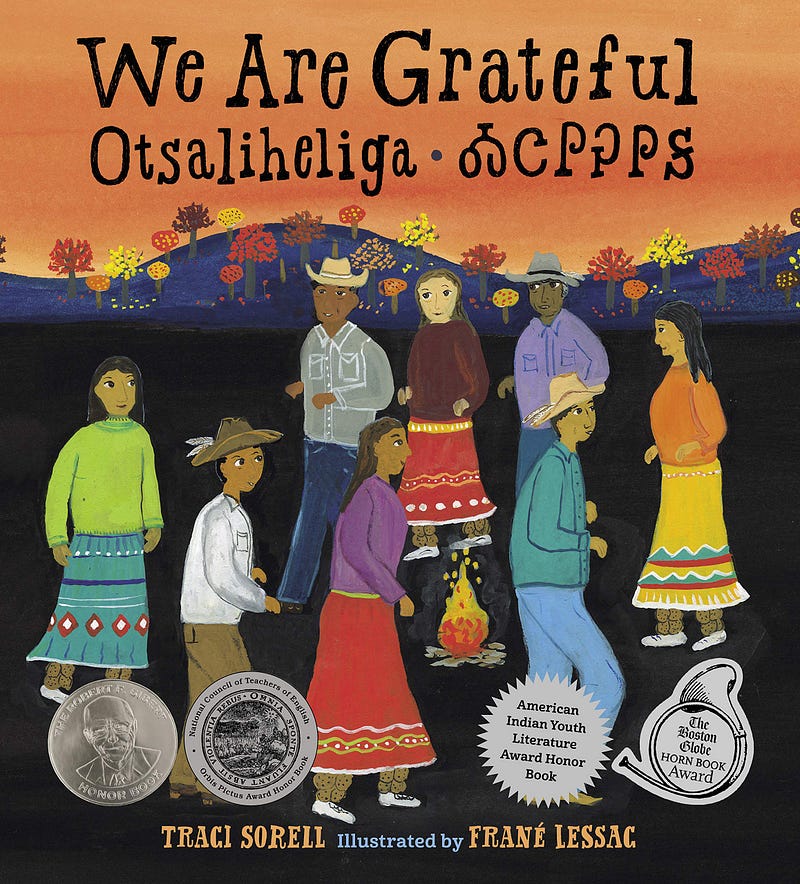
This richly-illustrated book follows a year of Cherokee celebrations and life, and it centers the idea of gratitude, or otsaliheliga (oh-jah-LEE-hay-lee-gah), which makes it a great alternative to the traditional Thanksgiving narrative. It weaves in Cherokee words, and ends with a glossary and the Cherokee syllabary.
Aiden’s review: This book was about the seasons and the people we love. I really liked the colored pictures. I liked how the seasons are a cycle — like on the first page and last page, it shows multiple seasons on one page. I liked the snowballs in the winter scene and the nature in the spring. The pages show the seasons changing like with the snow melting on the gravestones. In the summer, there are crops and the kids are having lots of fun. It shows us we should remember soldiers who have fought and died. We should have a good time with family and friends. We should be grateful for the seasons.
Fry Bread: A Native American Family Story
by Kevin Noble Maillard (Seminole Nation, Mekusukey band) and illustrated by Juana Martinez-Neal.
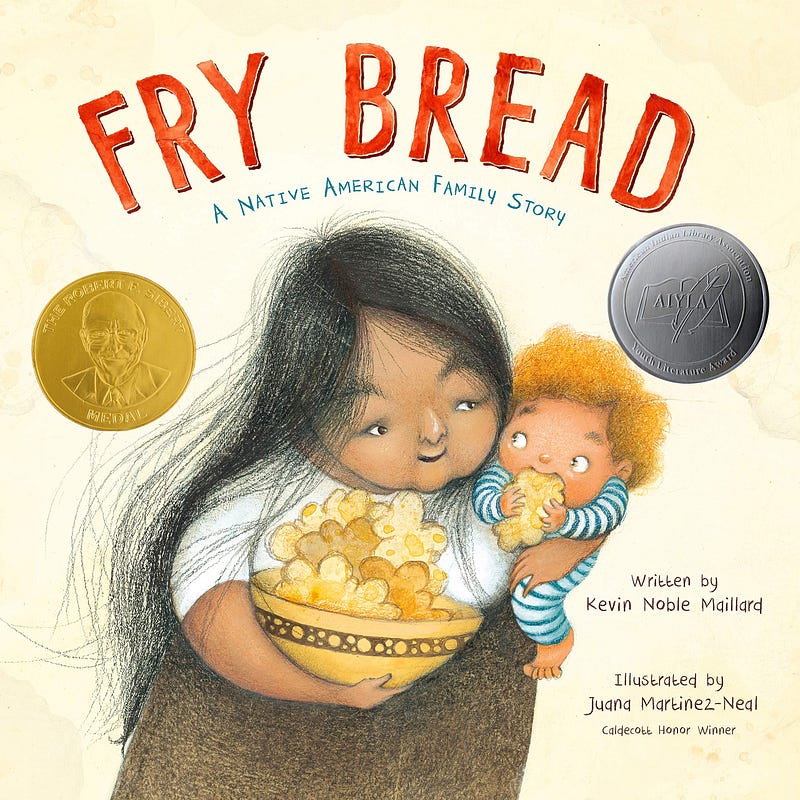
This book details the importance of cultural traditions, intergenerational conversations and knowledge. While not all Native peoples make fry bread, this book talks about food-based family time in a way that many cultures will identify with. The resources section at the end richly explores the cultural significance of fry bread as an impact of colonialism. Fry bread, like many foods, brings people together, and this book shows the ways in which it is more than just a food.
Aiden’s review: This book shows that fry bread is everything because it’s really good. I like the pictures because they were big and had pretty colors. I think people would like this book, and it includes recipes for fry bread.
Indigenous Peoples’ Day
By Katrina M. Phillips (Red Cliff Band of Lake Superior Ojibwe)
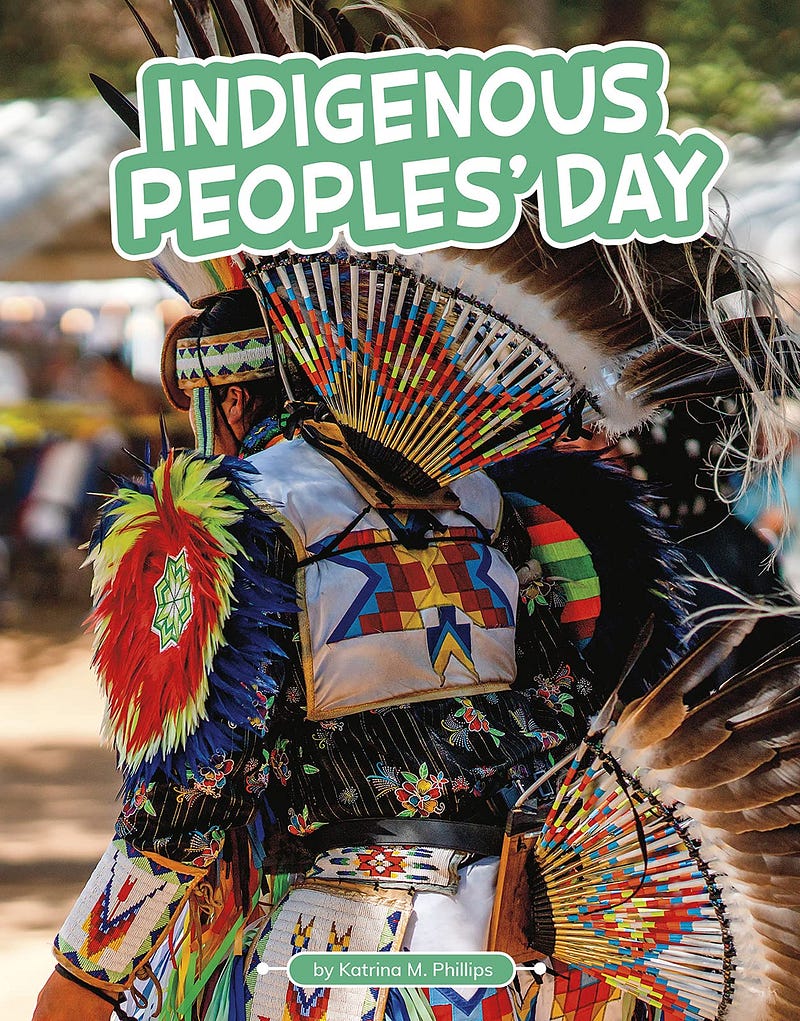
While Indigenous Peoples’ Day falls in October, this book still makes a great read year-round. This book not only tackles issues around colonization, it shows photographs of Native people in the contemporary world — showing food, culture, activism, and more.
Aiden’s review: This book is about Indigenous Peoples’ Day, and it tells you more about things you can do to celebrate Indigenous People’s Day. It shows you that Columbus didn’t discover America and why Columbus Day is a problem. My favorite parts are the pictures and the glossary for if there are words you don’t know.
We Are Still Here!: Native American Truths Everyone Should Know
By Traci Sorell (Cherokee) and illustrated by Frané Lessac
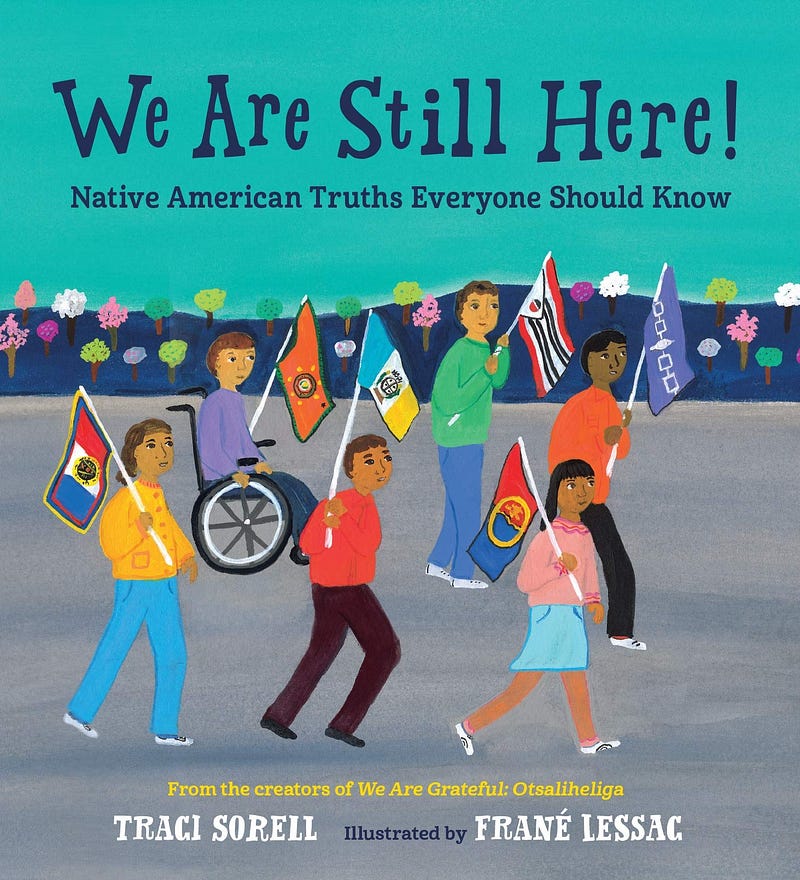
This book highlights concepts that impact Native peoples in the past and present. The book sets up 11 different concepts as a series of student reports, each read by a different person in the audiobook. The book repeatedly echoes “We are Still Here” to remind us that Native peoples exist and matter in our modern world.
This book highlights the following 11 concepts: following 11 concepts: “Assimilation,” “Allotment,” “The Indian New Deal,” “Termination,” “Relocation,” “Tribal Activism,” “Self-Determination,” “Indian Child Welfare and Education,” “Economic Development,” “Language Revival,” and “Sovereign Resurgence.” This book presents the concepts in a way that older elementary or middle grades students would be able to learn a lot from this even if some of it goes over their heads.
Aiden’s review: This book was about Native tribes and ways they were disrespected. I liked the presentation format with different voices from different people in the audiobook, and I liked how the teacher said their names and their presentation objective. I learned that Native peoples were disrespected when their lands was taken from them or sold. This was unfair to them. I liked how it had sound effects at the start of each presentation.
Look Grandma! Ni Elisi!
By Art Coulson (Cherokee) and illustrated by Madelyn Goodnight (Chickasaw)
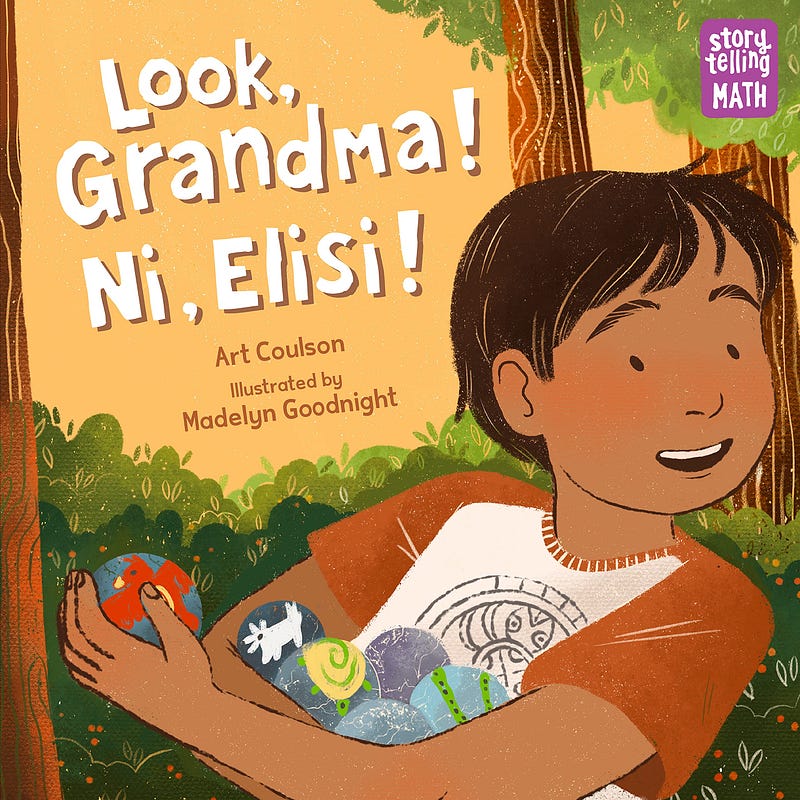
In this book, Bo, a Cherokee kid (“atsutsa” or “chooch”), searches for a container to display his hand-painted marbles for an upcoming holiday celebration. Bo’s grandma (“elisi”) tells him the display can’t be too big and gives him a mat to show him the size his container can be. Bo, by trial and error, tries out different containers from around his home until he finds the perfect one.
This book integrates Cherokee words and phrases throughout. The words aren’t defined until the back of the book where they appear in a glossary (“dikaneisdi”); however, the reader learns the meaning of these words through context. The book concludes with fun activities extending spatial awareness and reasoning, as well as more information about Cherokee marbles (“digadayosdi”).
(Aiden’s review coming soon!)
Powwow Day
by Traci Sorell (Cherokee) and illustrated by Madelyn Goodnight (Chickasaw)
Release Date: February 2022
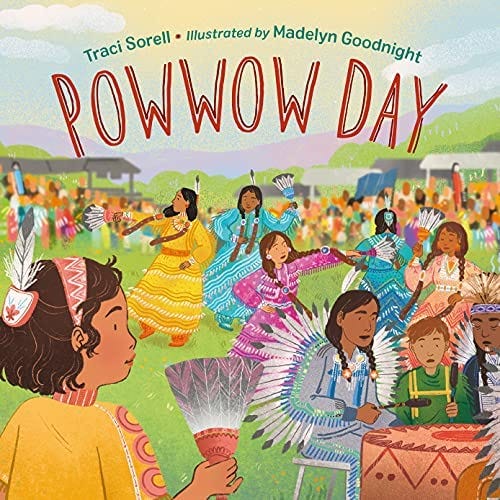
A young girl travels to the annual powwow, but is sick. She wants to get up and dance but watches instead. The book shares a message of the importance of community, healing, and ritual in Indigenous life.
Aiden: This book was about a girl at a powwow. I liked the pictures of the drums and the dancers, especially those that showed the details and colors of the powwow. I learned that powwows help Native peoples remember people who have served or died and/or help celebrate events. I think people will enjoy this book’s theme of how powwows help celebrate Native peoples.
I hope you’ll enjoy these books as much as we did. Please check out the Decolonizing Thanksgiving toolkit for other resources for parents, teachers, schools, and more. The toolkit includes more information on sharing resources with your children’s teachers, as well links to other books and web resources to learn more about Indigenous peoples and decolonizing Thanksgiving. In this piece, I edited Aiden’s reviews lightly to remove redundancies or for clarity. Thanks to the publishers and netgalley for digital advanced copies of some of these books, and to Rebecca Wingo for the edits.
*Please note that not all contemporary Native Americans make fry bread. It is a food many associate with settler colonialism and early Assimilation era rations.*