
Decoding Your Close Friends Group Dynamics
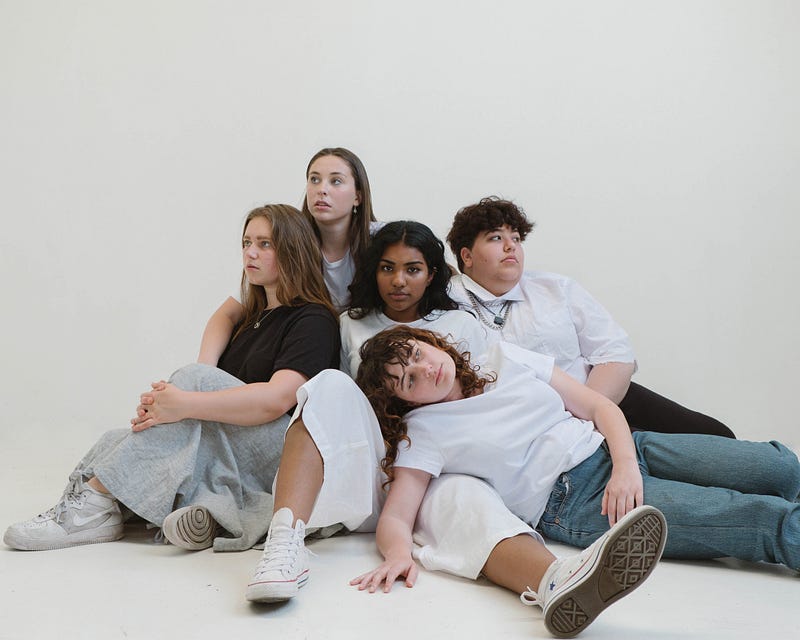
We all have friends. Degree of affinity varies, but we all have friends.
Most of us have close friend group — essentially, a group of friends who have been together for quite some time because of different reasons and now make up a very close-knit group. They could be college friends, sports team friends, from a cultural society, fraternity group friends or so on — but a group of friends who hang out together, plan trips together, watch movies together and are the first ones to be invited to a person’s wedding.
Those close friends.
On the face of it, it appears to be a very simple equation — a bunch of people with similar interests, sense of humour getting well together. But take a step back and you can see the multi-faceted personalities present in EVERY group. These different personalities interact differently and contribute in their unique ways to make the group a (hopefully) lifelong bond.
But more often than not, we see groups splitting up, friends not talking to each other any more, new friendships forcing people to distance themselves from ‘this’ group. The last one is actually pretty normal and does not necessarily translate into “splitting” of the core group. But the first two — these are pretty interesting. And avoidable.
Let’s see how. I’ll use two personal examples to share the core dynamic principles, working these relationships.
#1
In our college’s friend circle there was a person — let’s name him X — who used to be the “most chilled out” guy we knew. You could expect the world to collapse and X to relax and sip a beer. Over time, we moved out of college and it was some 2–3 years when we finally planned out a trip together — us 4–5 friends.
Now, during the trip, we observed that X had changed. Considerably. Not in the sense of becoming more chilled, but on the contrary more ‘critical’ of things. Thinking more closely, we realised, this criticality was not the thing that bugged us, but just the sheer change in X’s nature.
But why did bother us? Were we too naive to think he would never change? And what about other equally critical people in the group. Can’t he be just one of them?
The thing is, every group has a mix of personalities. Some chilled out, some critical, some quiet, some verbose. It is this messy mix which makes up a close-knit friend group. For every person who is talkative, there is someone in the group who is a good listener. Like opposites attracted to each other, the group is glued together. But over time, as all good things, this mix in personalities change. A strong polarity can come into the group. You might find, that the friends who were very easy to go out with, are now tough to share thoughts with. The reasons why this happen is multifold and seemingly obvious. New engagements, new experiences of people tend to leave a change in people.
Therefore, eventually, the glue binding your group together might appear to be not the same as before. The cohesiveness changes. Let’s understand this with a bit more depth, on “what” exactly changes.
At any given point look in your group and tag the following types of people. If any one of them is missing — it certainly means something is off-centred. Now the categories are 5, but your friends don’t need to be so many! People generally have a mix of at least two of these traits below. The important point to look for is — what types are missing?
- Energetic: The energy powerhouse of the group. Even if you are stuck in the middle of the road waiting for the next bus to come, or you are tired from a day of work and this friend meets you — you can be sure of getting energy from this person.
- Calm: On the other end of energetic, we have calm (most probably introverts) who are always there to lend an ear to you. They need energy buddies to move them out of their house and get going. Being good listeners, they can help deal you with your ugliest break-ups.
- Subtle: Drawing a fine line in between, subtle people appear inconspicuous and yet significant. These are the ones which can easily bridge the difference between energetic and calm personalities. They can tag along to ‘Energetic’s’ wildest idea and sit together with the ‘Calms’ for hours without saying a word.
- Clueless: These are the ones who take life as it comes and can be both carefree and worried. But they do not have a specific direction in life (yet) and are always there to add +1’s whenever you discuss of not doing anything ambitious in your own life. Therefore, they are not ‘lazy’ just ‘flowing-with-the-flow’ kinds.
- Intelligent: These are intelligent or smart people, either by sheer nature or by knowledge gained. You can always rely on them to know things and discuss your newest ideas, for they will always add their one cent to everything around them.
As soon as this mix gets changed and a number of members start showing a common type of nature — the group tends to become competitive and insecurity of their uniqueness in the group creeps in. The last part, in particular, starts generating friction.
On same lines, what happened with our group was, we already had Intelligent people in the group whereas X’s uniqueness was clueless. As soon as the intelligence quotient in the group increased, clashes on topics started erupting leading to an eventual uneasiness.
#2
I had another friend from school — let’s call him Y — who was this energetic, clueless person in the group, we used to hang out with most. After school, our ways separated. We were in touch through college infrequently and then on rare occasions in jobs. But Y’s nature seemed to be near normal (or rephrasing, same) in our virtual connects as we knew him. But here’s the thing about virtual connects. Whether it is email, WhatsApp or on-call — a person dons a different shade of his/ her personality suited to the person on the other end. Therefore, when we finally met after 4–5 years, Y came across as a completely changed man. He was still clueless, but so much a ‘calmer’. And yes, we were surprised. With less energy in our group, it was not the same.
Distance.
Distance is what changes things in any social relationship. Inadequate face-to-face interaction and different paced evolutions of individuals causes people to not lock-in with each other after years. Friends with whom I spent the whole college life were the ones with whom I was also evolving at the same rate. But this does not happen when you are distant and indifferent circumstance of life.
Yet, there are friends with whom I was in regular, frequent touch who still appeal to me the same. Not that we are the ’same’ people, but that we have changed together.
The phrase,
“.. and now they did not appear to be the same”
used throughout the passage does not mean it is a BAD thing.
Far from it.
Change as I noted, is unavoidable, and should be indeed celebrated. People will of course change from ‘clueless’ to ‘intelligent’ as they get older. The observations, meanwhile, are for just two things:
- Understanding “Why” your group does not feel the same way as x years ago.
- “What” elements, you as a group, can put in to make it feel kickin’ again!
Should you leave your group/ choose a new one basis these two things?
No. I definitely don’t think so. Friendships are better left organic, as like any real happiness in life! :)

Hi, I’m Shagun. I like to read and write about science, philosophy, society and business. Instead of writing on a whim, I take my time to read, understand, experiment and then write on interesting topics. Follow me here for other interesting articles.


