
Decoding Gen Z Memes: Tao and Celebration of the Absurd
Beyond the Flippancy: The Utility of “Uselessness”
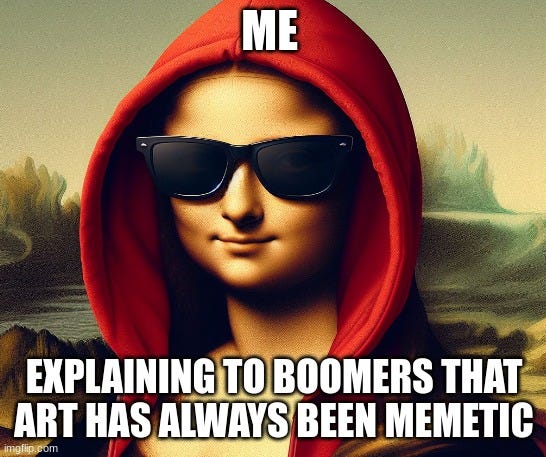
In the boundless digital realm, an extraordinary language thrives — the language of memes. To the enigmatic Gen Z generation, these cryptic yet ubiquitous cultural fragments are far more than transient amusement; they form a sophisticated code, an effervescent tapestry interwoven with humour, social commentary, and veiled profundities.
Let us embark on an insightful journey into the labyrinthine world of Gen Z memes, tracing their captivating parallels with the ancient Taoist philosophy of Zhuangzi, a master of embracing “the useless.”
Zhuangzi
The Zhuangzi is the seminal work of the influential Taoist philosopher Zhuangzi (often referred to as Zhuang Zhou), consisting of around 33 chapters.
It is a collection of philosophical writings, parables, anecdotes, and allegories that explore Zhuangzi’s philosophy, emphasizing themes like effortless action (Wu Wei 無為), the relativity of reality, equality of all things, and the beauty of a simple life.
Characterized by its humour, vivid imagery, and thought-provoking use of paradoxes and absurdist stories, the Zhuangzi conveys profound teachings in a playfully enigmatic manner, encouraging readers to challenge conventional notions of truth and embrace a harmonious existence in line with the Tao (道).
Taoism
The Tao (or Dao) is the central, defining principle that the entire philosophy and religious tradition of Taoism is based upon.
It represents the natural order of the universe. Key teachings focus on living simply, with humility and compassion. Living in harmony with the flow of the Tao brings peace and balance.
The ancient Tao Te Ching text advises letting go of desires.
It guides embracing the effortless way, aligning oneself with nature’s course. Following the Tao leads to enlightenment.
Navigating the Meme-scape: A Cartographer’s Toolkit
Picture a bustling marketplace, its stalls brimming with vibrant imagery, witty captions, and a cacophony of references. This is the essence of the meme-scape. To navigate this landscape adeptly, one must become a skilled explorer, equipped with the following tools:
The Chisel of Context: Each meme thrives on its specific context, like a delicate bloom in a secret garden. Comprehending the platform where it was shared (TikTok, Reddit, Instagram), the intended audience, and any recent events to which it alludes, unlocks the gateway to its true meaning.
The Lens of Cultural Literacy: Memes are riddled with cultural references — cinematic gems, melodious verses, even historical echoes. Recognizing these threads allows us to unravel the concealed jests and underlying contemplations.
The Decoder Wheel of Didascalies: Often the most potent element, the accompanying text, or “didascalie,” holds the key to a meme’s message. A seemingly innocuous image can metamorphose into a hilarious commentary or a profound observation through a well-crafted caption.
Beyond the Flippancy: The Utility of “Uselessness”
To the uninitiated, Gen Z memes may appear frivolous, even purposeless. However, beneath the surface stirs a potent rebellion against a society obsessed with productivity and achievement. These memes, with their absurdist humour and acceptance of the “useless,” resonate with Zhuangzi’s philosophy of the Tao.
Zhuangzi and the Art of “Wu Wei”
As aforementioned, Zhuangzi, a pivotal figure in Taoism, advocated for “Wu Wei,” translated as “effortless action” or “non-doing.”
His philosophy underscored attuning one’s existence to the ebb and flow of the cosmos, wholeheartedly accepting imperfections and flaws, and deriving delight from the here and now.
Similarly, Gen Z memes, through their celebration of the absurd and rejection of societal pressures, embody the essence of “Wu Wei.”
Case Study: Decoding a Meme Masterpiece
Let us dissect a popular Gen Z meme to illustrate the hidden depths:
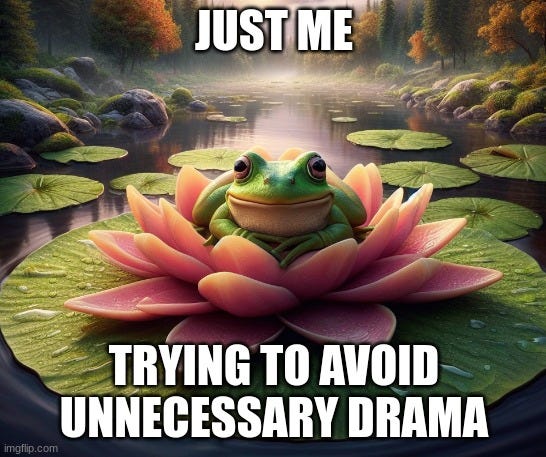
Image: A photo of a cartoon frog sitting peacefully on a lily pad, surrounded by a serene landscape.
Caption: “Just Me trying to avoid unnecessary drama.”
Analysis
Context: This meme is likely shared on social media platforms frequented by Gen Z, indicating a shared experience, a secret language among the tribe. Cultural Reference: The image employs the well-known “Pepe the Frog” meme format, originally associated with online mischief but now repurposed for various humorous situations, a shape-shifting spirit. Didascalie Decoded: The caption playfully expresses the desire to avoid unwanted conflict, a sentiment relatable to many in a world rife with social complexities, a sigh of longing for tranquillity.
The Echoes of Zhuangzi
This seemingly simple meme, with its peaceful imagery and humorous caption, echoes Zhuangzi’s teachings like a distant bell. The frog, representing the individual, chooses serenity over unnecessary struggle, aligning with the concept of “Wu Wei,” a harmonious dance with the natural rhythm of existence.
Beyond the Image: A Tapestry of Meanings
Gen Z memes often transcend their visual elements, branching out into diverse expressions — reworked song lyrics, viral dances, and even satirical news articles. Each format serves as a vehicle for self-expression, social critique, and commentary on the complex world surrounding them, a canvas upon which the collective consciousness paints its musings.
Exploring the Connections: A Journey Through Memes and Taoism
Here are some key themes explored in both Gen Z memes and Zhuangzi’s philosophy, like threads woven into a magnificent tapestry:
Embracing Imperfection: Memes often celebrate the quirky, the awkward, and the “unsuccessful,” challenging societal ideals of perfection and achievement. This mirrors Zhuangzi’s emphasis on accepting the natural order and finding beauty in the flaws, the imperfect perfection of the universe.
Challenging Authority: Memes frequently poke fun at societal norms, political figures, and established institutions, their laughter a defiant chime. This echoes Zhuangzi’s scepticism towards established authority and his advocacy for individual freedom, a call to dance to one’s tune.
Living in the Moment: Focusing on humour and the present moment, Gen Z memes often serve as a temporary escape from the anxieties of the future, a respite from the constant chase. This aligns with Zhuangzi’s concept of embracing the present and letting go of anxieties about the future and the past, a reminder to savour the fleeting beauty of the here and now.
Challenging Authority
Meme:
Image: A cartoon drawing of a dog sitting next to a fresh pile of poop that is still giving off smoke/steam.
Text: “When they insult our intelligence and expect us to call it ‘wisdom’”
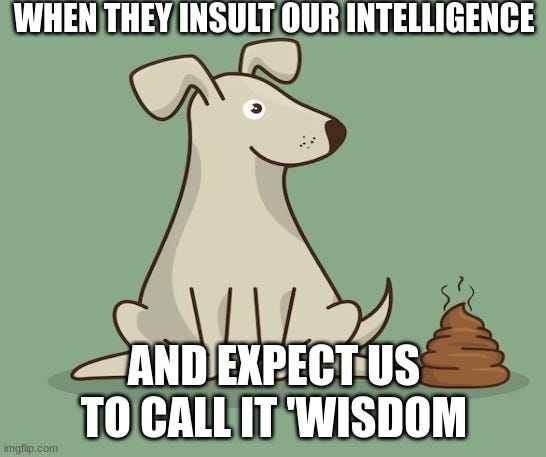
This meme uses the classic visual gag of a dog’s shameless defiance after leaving a mess, applying it as a metaphor for authorities’ disrespectful behaviour towards the public’s intelligence.
The cartoon dog’s serenity mirrors the unashamed audacity of political leaders who knowingly insult and deceive their citizens. The fresh, steaming pile of excrement it has deposited represents the “wisdom” and “truth” being served to the masses by those in power.
By using such a recognizable, amusing image, the meme frames the issue of authorities degrading public discernment in a lighthearted, comedic way that is still impactful. The juxtaposition of the stinky mess with the expectation of accepting it as “wisdom” creates an immediate sense of push-back and rejection.
Dominant narratives
This defiant rebuke of being forced to swallow falsehoods and incompetence aligns with Zhuangzi’s scepticism towards blindly trusting dominant narratives. The meme encourages the viewer to trust their senses and judgment, rather than obediently receiving such obvious insults simply because they come from established authorities.
A Bridge Between Generations and Philosophies
Gen Z memes, far from being a frivolous trend, offer a window into the world of a generation grappling with complex issues. By delving into their intricate layers, we discover a surprising resonance with the ancient philosophy of Zhuangzi. This connection shows how humour, irreverence, and the search for meaning are universal, capable of uniting generations and cultures across time and space, a shared dance of the human spirit.
What do you think of my article?
Feel free to leave a comment.
Thanks for reading.