
Decoding Funding Rounds: A Comprehensive Guide for Tech Job Seekers
After working remotely for three years, I’ve developed a running list of questions and notes that I accumulated after being thrown head-first into the startup world. I worked as a remote technical recruiter at a recruiting Software-as-a-service (SAAS) company and learned everything I knew about startups, technical sourcing, and tech sales from that role.
I’ve since moved on to another industry (non-profit), but quickly realized how many of my friends and former colleagues had questions that sending a long voice note could no longer adequately answer. That’s why I’m sharing this post.
I’ve experienced both the highs and lows of working at startups and having this information beforehand would have helped me navigate that time more strategically.
If you want to get a job in tech, read on to develop your understanding of what all of the startup terminology means as you search for the right role and the right company culture that fits your career goals.
Funding rounds are a critical aspect of the startup world.
It’s the process of raising capital from various types of investors to finance a company’s growth or expansion. The initial funding, also known as seed funding, is followed by a series of rounds, including Series A, B, C, and so on.
Each funding round represents a different stage of a company’s development and the amount of funding increases with each round.
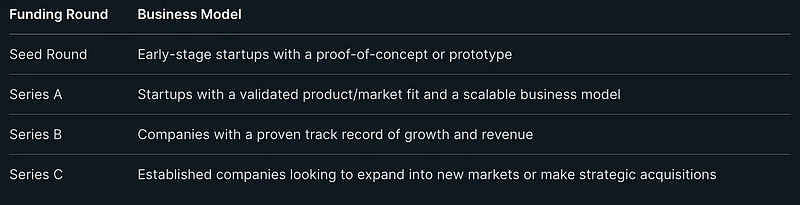
Seed funding is typically the first round and involves raising capital from angel investors, family, and friends. Series A funding is usually the next step, where startups raise money from venture capitalists to scale their business. Series B and C funding rounds are for more established companies looking to expand their operations or enter new markets.
Understanding funding rounds is crucial for entrepreneurs looking to raise capital for their startups. It enables them to plan their funding strategy, identify the right investors, and secure the funding they need to grow their business.

Different Stages of Funding Rounds
Funding rounds are the stages of investment that a startup goes through to raise capital. Each round represents a different phase of the startup’s growth, and the amount of money raised generally increases with each round. Funding can also be affected by a startup’s business model. Here are the different stages of funding rounds:
Pre-Seed Round
The pre-seed round is the earliest stage of funding, and it typically involves raising a small amount of money from friends, family, or angel investors. This round is used to develop the initial idea and create a prototype or proof of concept.
Seed Round
The seed round is the first official round of funding for a startup, and it usually involves raising between $100,000 and $2 million. This round is used to build the team and develop the product or service further.
Series A Round
The series A round is the first significant round of institutional funding, and it typically involves raising between $2 million and $15 million. This round is used to scale the business and expand into new markets.
Series B Round
The series B round is the second round of institutional funding, and it usually involves raising between $10 million and $60 million. This round is used to further scale the business and increase market share.
Series C Round
The series C round is the third round of institutional funding, and it typically involves raising between $30 million and $100 million. This round is used to accelerate growth and prepare for an IPO or acquisition.
Series D and E Round
Series D and E rounds are less common, and they are used to provide additional capital to companies that are already well-established and looking to expand further.
Bridge Round
A bridge round is a short-term round of funding that is used to provide additional capital to a startup between larger funding rounds. This round is used to bridge the gap between funding rounds and keep the startup running until the next round of funding is secured.
In conclusion, funding rounds are an essential part of the startup ecosystem, and they provide the capital necessary for startups to grow and succeed. Each round represents a different phase of growth, and the amount of money raised generally increases with each round. Knowing this information prior to jumping into your first role in tech allows you to make the best decision when it comes to your next job in tech.
What are your thoughts on funding rounds? Did this guide help you better understand or discover something new?
If you’re not a Medium member, and you would like to gain unlimited access to the platform, consider using my referral link right here or below to sign up. It’s $5 a month and you get unlimited access to my articles and many others like mine for the price of a latte!