Debt Collection and Power
Stories from Antiquity to Modern Times

Hey there! I heard there's a new idiom going around called "using punishment to collect debts," which means using punishment as a means to resolve debt issues. Recently, there's a female entrepreneur named Ma Yijia in China. She undertook some government projects in Liupanshui, Guizhou, but the government owed her money for 8 years without repayment. She has been pursuing the debt, but instead, the local public security detained her on charges of provocation and troublemaking. Prior to her, the lawyer and assistants who were handling her debt collection were also criminally detained because they posted information related to the debt and litigation on social media.
Speaking of which, in ancient times, there were wealthy merchants who lent money to the government but didn't end up with a good outcome.
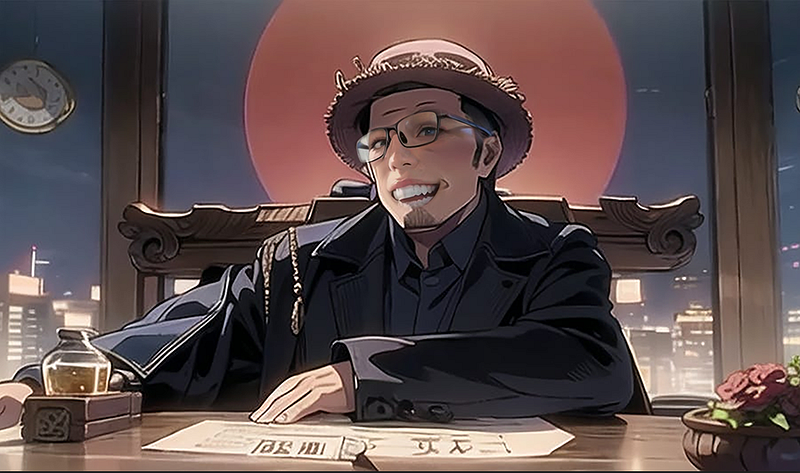
Paying off debts has been a matter of course since ancient times. However, if the government owes you money, it is best to weigh your own head
For example, the first one is Lv Buwei. He noticed a hostage named Chu in the Zhao Kingdom and believed he had the potential to become the Crown Prince of the Qin Kingdom. Lv Buwei financed his return to the Qin Kingdom and helped him reach an agreement with the King of Qin. However, in the end, Chu did become the King of Qin, and Lv Buwei served as the Prime Minister for several years. But he eventually felt that the King of Qin wanted to kill him, so he drank poison.

The second one is Shen Wansan. He was also a wealthy man who helped Zhu Yuanzhang build the city of Nanjing. He provided money and labor and even requested funds to reward the army. However, Zhu Yuanzhang became furious, considering it inappropriate for a wealthy person to reward the soldiers of the emperor, which he saw as disturbing the order of the people. He intended to kill Shen Wansan, but fortunately, Zhu Yuanzhang's wife, Empress Ma, persuaded him not to, arguing that although Shen Wansan was wealthy, he hadn't committed any illegal or disorderly acts and should be left to his own devices.

The last one is Hu Xueyan. He was known as a "red-topped businessman" who lent money to the government. He once lent money to Zuo Zongtang for suppressing the rebellion in Xinjiang, which resolved the financial issue. Zuo Zongtang praised his achievements, but in the end, the Qing court stripped him of his positions, and he died still owing the Qing government 60,000 taels of silver.

Actually, if you want my advice, it would be to catch more corrupt officials like Li Zaiyong. When he was the Secretary of the Communist Party of China in Liupanshui, he promoted many tourism projects, but many of them were inefficient and idle. Plus, during his tenure, the city's debt increased by over 300%, burdening the local government. Yet, he was later promoted and became a member of the Guizhou Provincial Party Committee, Deputy Secretary of the Provincial Government Party Group, and Deputy Governor. Now, he has been reported to be suspected of corruption and bribery, taking advantage of his position for personal gain. I think if more officials like him are apprehended, the female entrepreneur's money could be recovered.
However, I must emphasize that using punishment to collect debts is not an appropriate solution. The legal system should protect the rights of creditors and provide proper avenues to resolve debt issues, rather than relying on punishment. Such practices may lead to more problems, including social instability and erosion of trust in the rule of law.