
Dance Education
Death, The Choreography Of Guernica
Inspiration from Picasso’s painting and the morality of war.
In 1934 three former members of the Martha Graham Company, Jane Dudley, Sophie Maslow, and Anna Sokolow joined the ‘New Dance Group’, they aimed to make dance accessible for all through low tuition fees and dance works based on socio-political concern. (Au, 2002, 128–130)
Initially, the school gave classes in the Holm and Wigman technique and by 1940 also included the Martha Graham and Doris Humphrey techniques, as well as ballet, composition, ethnic and modern dance classes. Later Merce Cunningham and Lester Horton’s techniques were added to the curriculum which can be still seen to the present day.
In the early 20th Century the themes addressed were often anti-war, anti-racism, or anti-fascism, emerging at the time of War and repression on those who failed to conform, they dealt with contemporary issues that sought to bring about change in thought and opinion.
Onstage, New Dance Group was one of the many left-wing companies in the 1930s that became part of the Workers Dance League (later called the New Dance League), which in trade union halls and theaters sponsored concerts and spartakiades (annual concerts) that promoted social protest.
Sears, 2003, [online]
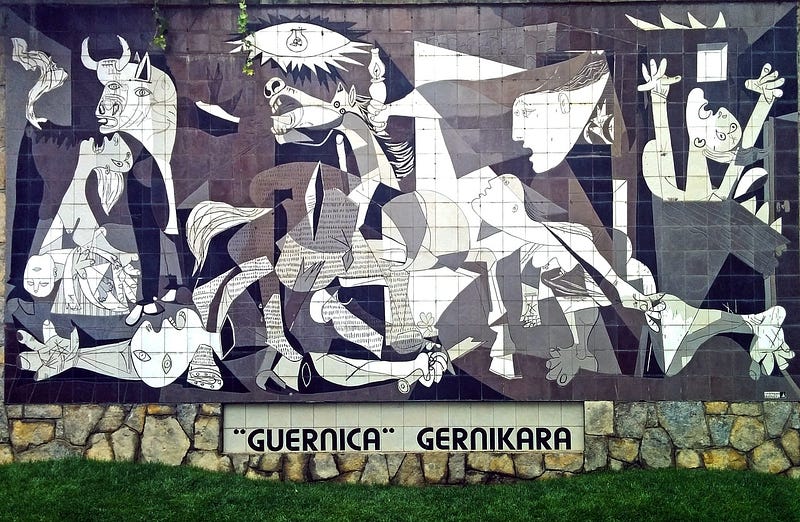
‘The Pursued’ by Joseph Gifford from The New Dance Group, was inspired by Picasso’s painting Guernica, which in turn was a reaction against the bombing of a small village in Spain in 1937, under the rule of General Franco. For three hours the small village of civilians were bombed and those trying to escape were shot. The village burned for three days and sixteen-hundred people were either killed or wounded.
Guernica is the cultural capital of the Basque people, seat of their centuries-old independence and democratic ideals. It has no strategic value as a military target. Yet some time later, a secret report to Berlin was uncovered in which Von Richthofen stated, “…the concentrated attack on Guernica was the greatest success,” making the dubious intent of the mission clear: the all-out air attack had been ordered on Franco’s behalf to break the spirited Basque resistance to Nationalist forces. Guernica had served as the testing ground for a new Nazi military tactic — blanket-bombing a civilian population to demoralize the enemy. It was wanton, man-made holocaust.
Stoner, 2009, [online]
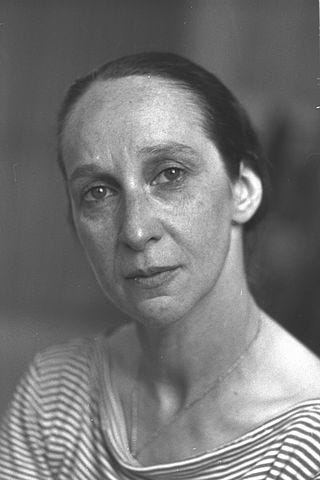
The daughter of Jews who fled Tsarist Russia to avoid economic and religious persecution, Anna Sokolow grew up in New York among the Jewish migrant community. It was quite possibly here amid the many left-wing movements that influenced Sokolow to create works about social and political injustice.
Like Gifford, Sokolow also choreographed a Guernica based piece. However, unlike Gifford, the causality of Sokolow’s work ‘Slaughter of the Innocents’ (1937) was an immediate reaction to watching the Guernica bombing of innocent civilians in the documentary Heart of Spain. (Warren, 1991, 67–71)
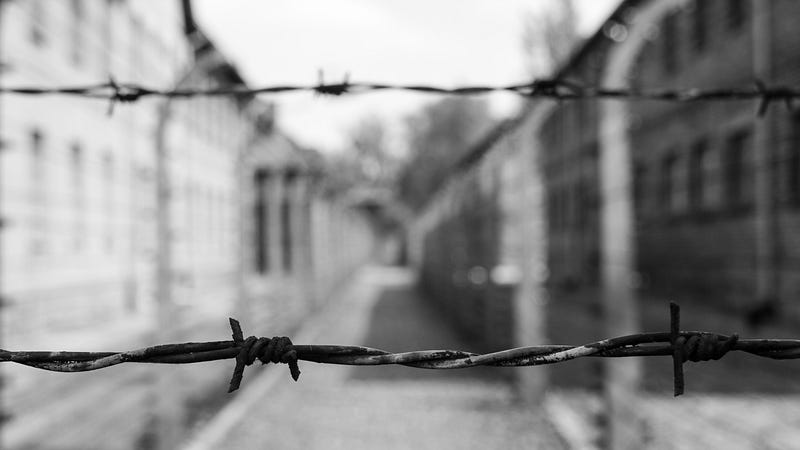
Throughout history, promises have been made by the leaders of various nations. In the case of fascism, a return to the golden age, where citizens would enjoy work, education, and wealth, with peace and love for all was proposed. However appealing this may have seemed on the surface, those who opposed the hierarchy or indeed did not conform to the ideal were punished or disposed of, showing the reality that horrendous acts of terror occurred under these regimes.
Sokolow claimed that her work was not political and was based on social and moral themes, (Sokolow in Rhodes, 1991, [video]) however, she used specific contemporary political events to make her audience consider the morality of war.
Article written by Drama Llama | Educator | Writer | Academic | Consultant