Summary
The web content titled "Death of a Leaf" poetically describes the process of a leaf's demise during autumn.
Abstract
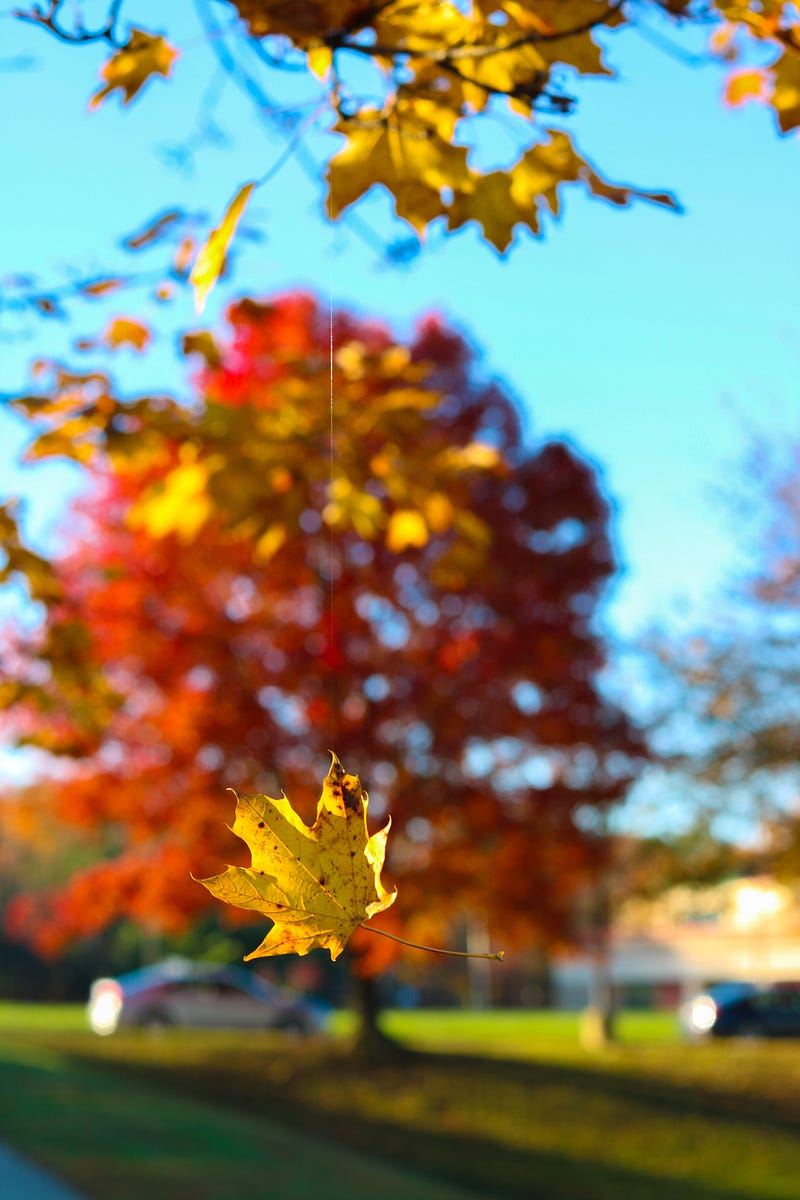
"Death of a Leaf" is a reflective piece that captures the dance of a leaf in its final stages of life, vividly illustrating its journey through the crisp autumn air. The leaf is depicted as whirling, swirling, falling, and twirling, succumbing to the season's chill. It struggles to hold on, trying to fly but ultimately failing and drying out. The poem describes the leaf's transition from vibrant life to a state of fading away, acknowledging the natural cycle of seasons, from light to darkness. The narrative culminates in an image of the leaf weeping and seeping into the earth, as it curls up for Mother Nature's long goodnight, symbolizing the end of its life cycle.
Opinions
- The author portrays the leaf's death as a graceful and natural part of the life cycle, emphasizing the beauty in the process.
- There is a sense of personification, as the leaf is described with human-like actions such as weeping and seeping, suggesting a deep connection between nature and human emotion.
- The imagery conveys a reverence for the changing seasons and the inevitable passage of time, with autumn representing both an end and a prelude to renewal.
- The poem reflects on the contrast between the leaf's vibrant past and its current state of decay, highlighting the bittersweet nature of change.
- The use of vivid sensory language, such as "Autumn nip and bite," evokes a strong sense of the season's impact on the natural world.