
Death by Custard and Other Unappetising Tales
The incomparable hell of school dinners in the 1960's
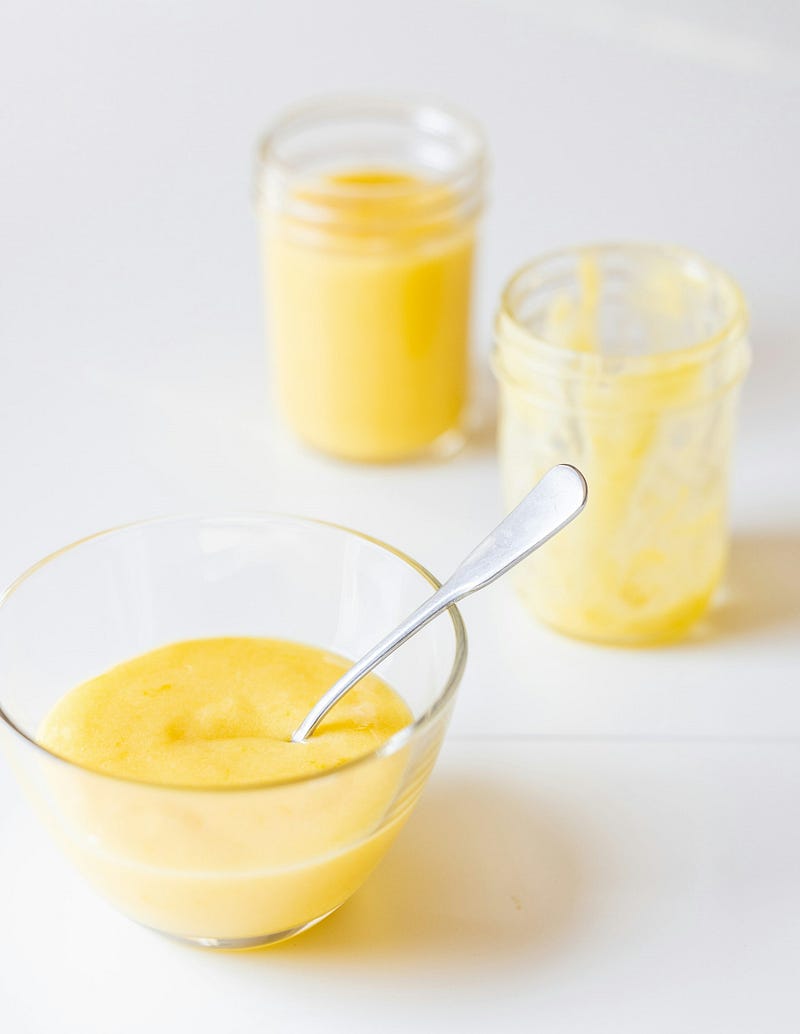
This story is in response to a prompt, Food for Thought, by Liberty Forest in Hope, Healing and Humour.
There it was. A massive jug of the pale, gloopy stuff. What tactic could I employ this time to avoid the necessity of actually having to eat it?
They called it custard, but it was unlike any other custard I’ve ever eaten. It was white, for a start, and everyone knows that English custard is yellow. It tasted of nothing except boiled milk — no sweetness or flavour. Just boiled milk cooked with some kind of starch.
I was five years old and school custard horrified me.
I went to a very strict school, run by a diminutive and eccentric Welsh woman called Miss Reeves. Even at the age of five, I could tell she was a bit strange. She wore moss green knitted suits, and skipped into school assembly like the other five-year-olds.
She was particularly strict about school meals. Everyone had to eat everything on their plate — no exceptions and no polite refusals. Whatever was served, we had to have a portion, even if it was something we truly disliked. Hence, school dinners were a daily ordeal of anxiety for many of us.
It was called dinner, but really it was the poorly disguised forced feeding of children, which was actually a form of torture. We would line up and go to our allotted tables, which would each be presided over by a member of staff who would serve us with huge spoons from stainless steel containers.
The three things that I truly couldn’t bear were the aforementioned school custard, pastry crust, which was so dry and tasteless that I simply couldn’t swallow it, and worst of all — gristly meat. The school beef stew consisted of a dark brown gravy full of lumps of meat riddled with transparent, chewy sinew. Even the sight of it would have me pale-faced and terrified as I tried to control my retching.
A few of us would attempt to disguise uneaten portions of food by chopping it into small pieces in the vain hope that whatever it was would be perceived as merely the leftover crumbs. The naivete of small children is adorably astounding.
The best you could hope for was to be allowed to sit on Mrs Stolling’s table. Mrs Stolling was the school receptionist — a plump, kind woman with a grandmotherly air about her. She was more lenient than some of the other staff, and although she would try to get us to eat everything on our plate, she wouldn’t go so far as to force a spoon between our tightly clamped lips or insist that we remain at the table until the last bite was down.
One warm summer day, I found myself faced with a large bowl of two of my nutritional nemeses. A leaden lump of apple pie — mostly inch thick, grey pastry, and the dreaded custard.
I’d poked it around the bowl and managed a few bites of the vaguely appley bits, but there was no way the remaining colossus of inedibility was going down my throat.
The first thing I saw, exhibited on her desk in all of its shameful quantity, was my bowl of uneaten pie and custard.
One by one, the other children were allowed to leave the table, but I wasn’t permitted to go out to play because I hadn’t finished my dessert. Eventually, I was left alone in the dining hall, abandoned to my fate, with strict instructions that I wasn’t to leave the table until the food was gone.
After ten minutes or so, and resigning myself to the stark fact that even my most menacing glare could not shrink the pie, I looked around me and realised that there was nobody else there. It felt risky, but I really, really wanted to go out on the school field to play with my friends, and so I quietly pushed my chair back, got to my feet, and strolled out of the door.
I was happily taking turns with a skipping rope when two older girls came walking across the grass with rather smug and bossy-looking expressions on their faces.
‘Miss Reeves wants to see you!’ they sang in unison, in that horrid ‘Nah nah nyah,’ tone that only eight-year-old girls can manage.
I felt the blood drain from my face and promptly burst into tears. Being summoned to the headmistress’s office was the very worst thing that could befall a child. It was the kind of thing that only happened to really naughty boys who hit one another or said rude words.
I walked, sobbing, into Miss Reeves office, flanked on either side by my minders. The first thing I saw, exhibited on her desk in all of its shameful quantity, was my bowl of uneaten pie and custard. It was, by now, stone cold and likely so stuck to the dish that Cook would need a jackhammer to remove it.
She pointed sternly at the pie, all the while giving me her most threatening glare over the rim of her ugly black glasses. I was told in no uncertain terms what a naughty, ungrateful, and disobedient child I was and that this must never happen again.
As awful as this was, I felt heart-lifting relief when I realised that she wasn’t going to force me to eat the rest of the pie. Apparently, a strict admonishment was enough to terrorise me into submission.
Honestly, the stuff that went on at that school would now be classified as child abuse, and I still shudder to think how many eating disorders must have been triggered by this kind of treatment. Incredibly, I’ve never suffered in that way, but that’s probably because my parents had an altogether healthier approach to food — my mother cooked good, wholesome food, and we weren’t forced to clean our plates.
However, the universe has a wonderful tendency to balance itself, and there followed a fantastic incident that happened just weeks later in the school dining hall.
Steven Robinson was a new boy who had just joined our class that day. I remember he was a big, blond, gentle boy, probably going through his own small hell on his first day at a strange school.

That lunchtime, I was on Mrs Stolling’s table, and Steven was sitting close by on the next table. It was Eggs Mornay for lunch. Hard boiled eggs in cheese sauce — something that I actually enjoyed and was heartily relieved to see on the table.
Many other children did not share my enthusiasm for Eggs Mornay, and Steven Robinson was one of them. He refused to eat and sat staring at his plate, despite the encouragement and insistence of the staff.
As I ate my lunch, with one eye on poor Steven, Miss Warner appeared. She was a tall, elderly woman who I privately believed to be a witch. She was wandering around the dining hall, coaxing children to eat their food.
She made the dire mistake of approaching Steven, and I watched in dismay as she leaned over him and tried to force a forkful of the cheesy egg into his mouth.
Steven’s response was utterly wonderful — he promptly threw up in her hair.
Our table descended into fits of shocked giggles while Mrs Stolling attempted to subdue us into paying no attention. I’ll never forget the hushed glee I felt as a highly embarrassed Miss Warner was forced to leave and go wash her hair. She reappeared later in a peculiar silky brown dressing gown. Was there no end to the weirdness?
In later years, I discussed the awful food incidents with my brother, whose own particular food hate was prunes. There was simply nothing he detested more, and unfortunately, prunes were a regular feature of the school menu.
How had he managed to survive eating the terrible things?
‘Easy,’ he explained. ‘I just stored them up in my cheeks like a hamster, and as soon as we were allowed out, I spat them into the shrubbery outside the headmistresses’ office.’
Sometimes the simplest solutions are the best. Now why hadn’t I thought of that?
May I also recommend Daniel Ng’s yummy offering?