
Death and Abandonment
How My Mother’s Suicide Impacted My Life.
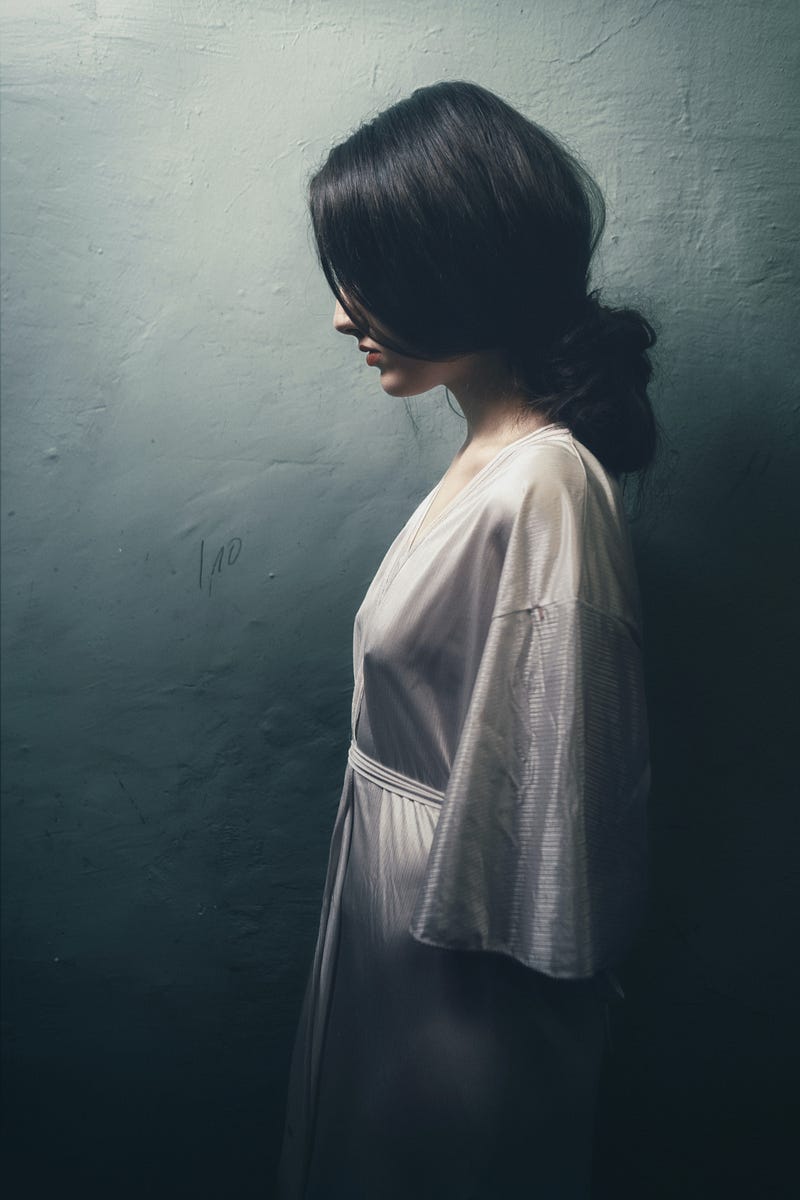
I was three months old, and my brother was a three-year-old when my mother committed suicide. Judith Nagy (Kuver) never made it to 30.
Her suicide wasn’t a quiet act, carried out in the late hours, private and silent, leaving herself to be discovered later, delivering some version of a melancholic goodbye. Instead, it was sudden, unprovoked, and violent.
My father, at 35, was at the peak of his physical strength, earning potential and mental fortitude. He had a wonderful little family. A wife he’d known was the love of his life from the first words she’d returned to his. He had begun building a life in a part of the world that breathed out beauty and possibility with each sunrise and, with each sunset falling behind magnificent mountains, promised dreams of peace and wonder.
Then the trauma came, and he was gone. Seated in his lap when his wife dispatched her soul to another place, the shock was too great. The event was too horrific to comprehend. His mind collapsed, and it would be some time before he was able to come back to his sons.
Obviously, I couldn’t have known him before that time, but the man who made it back from his abyss was far different from the man he had intended to become.
When we read about experiencing the death and loss of someone, we have a tidy five-step staircase to ascend, guiding us through the process of what to expect. Those stages are denial, anger, bargaining, depression, and acceptance. But, through my experience, I would add one more category: Abandonment.
I think my father was unable to proceed through that process. I believe that the shock obliterated the five stages. Like my brother and me, he had only abandonment.
A common statement about suicide is that it’s a selfish act. I would somewhat agree, but I would learn many years later that in my mother’s case, her decision was one of sacrifice, not despair in her state of mental illness. I’ll come back to this near the end.
Being an infant, I hadn’t the mental capacity to acknowledge what had taken place. A mother carries a child to birth, and a bond forms throughout that time, and then, God willing, a beautiful, healthy baby is placed in her arms. The mother knew this baby was coming. She knows it belongs to her. It is her child.
But does a newborn know its mother? Does a baby know it belongs to someone? If true, does a baby recognize when that bond is severed? Does a baby know abandonment? Could I have known then that I would be one piece in a family puzzle that didn’t fit from that infantile age?
A pattern of attachment and abandonment would repeat itself during my first three years of life.
My mother’s parents came to Canada from Hungary sometime after their daughter died. From what I have pieced together, my father fell apart — spending more time in the hospital psych ward undergoing such treatments as electroshock therapy than at home. He had lost his mind, and they were trying to jolt it back. He would come home, try and function, only to fall apart all over again. He had no control over his emotional range.
My grandparents cared for us, my brother and me, for as long as the Canadian government allowed their stay. Finally, after two years, they had to return to Hungary. My father was still considered unfit to be in charge of us alone. However, he did maintain enough awareness to realize that if he couldn’t pull together a solution to keep his sons, he would lose us to the government foster care system.
He found enough courage to convince himself, the doctors, and the childcare authorities that he was the best provider for his sons. The authorities relented when he brought in a girlfriend of my mother’s to be a live-in nanny.
That situation was not sustainable. During my father’s bouts of what we now know as PTSD, he would banish the nanny from the house and then hand us off between two different families for care. These periods could last weeks, sometimes months. I can barely comprehend the battles he must have had with himself alone in the house during those times.
Neighbours later told of hearing him in yelling matches with himself — a Jekyll and Hyde routine. One-half was unwilling to face going on, pleading for relief, begging for escape. The other half demanded to find some dignity, challenging himself to seek courage, meet his responsibilities, and learn acceptance.
Finally, the stronger side won. He began to rebuild his life. He managed to act like everything was normal. He faked acceptance and ignored the abandonment. He returned to work full time, was home afterward, and understood that his sons needed a mother full time.
My father held on to what he knew and loved: being Hungarian. Though my knowledge of the details is thin, my father somehow returned to Romania — the parts of pre-WWI Hungary. It was not a vacation or a poignant retracing of his youthful footsteps; he went to find a wife.
This was in the 1970s, and Hungary was a stiff, red, communist satellite country during the bitter years of the Cold War. One couldn’t just up and decide to leave the country to emigrate somewhere else, especially a Western capitalist someplace else. It was only a dream for most Hungarians, but my father held a golden ticket.
He was a Hungarian, born and raised. He sent money to his family since settling in Canada. He had dutifully paid the communist government any taxes it declared fit to collect through his family’s assets. He had a trade that paid well with a company that offered security. My father owned a home in a small city with the backdrop of endless mountain peaks and forests as far as the eye could see.
The brain works in funny ways we don’t understand. In all that time of mental duress, nerve-convulsing electroshock treatments, stress, and responsibility, my father still possessed one of his most vital traits: The man had charm.
Although his formal education concluded in grade six, he loved poetry, opera, classical music, astronomy, and science. He was a practical-minded man who was a fundamental romantic.
Back in Romania, he met a woman who, one way or another, checked his list. They spent fewer than twelve hours in each other’s company. Over the following few months, through airmailed letters, he charmed, romanced, and beguiled her. He proposed, and she accepted.
Next was a flurry of governmental exchanges, cutting red tape and paying ever-increasing fees to the communist government to allow their marriage and her extraction. My father made it all work and got himself a new Hungarian wife and us a Hungarian mother.
All should have been on a well-corrected course, but that one thing came back again and again, like my mother’s ghost haunting him and nipping at me: abandonment.
There were two main problems for me growing up. The first was my brother; he hated me, but who could blame him? He had a loving mother until I showed up. It must have started with her giving the new baby more time and attention, but then she was gone. I was still there. But his mother was never coming back.
Worse still was that he was abandoned by both parents much more significantly than me. He was a spritely three-year-old boy, communicative and bright. Shit deal to get a new baby brother, have your mother disappear and your father? You’re not sure how much you’ll see him, and he’s suddenly different too.
The second is by some cruel twist of nature; I was the spitting image of my mother. My father couldn’t bear to look at me without seeing her, and God only knows what else he saw.
It only got worse as I grew. The older I got, the more I looked like my mother; when my father looked at me, I saw frustration, pain, and turmoil. There were no hugs and few tender moments when I was just a boy wanting his father’s unconditional love. Instead, the closer I tried to get to him, the further he kept me away.
To both my father and brother, there was a subconscious thread of responsibility tied from my birth to my mother’s death.
When my stepmother arrived on the scene, I rebuked her. Soon after, a new baby arrived, my little sister. Not only did I become the middle child, but I became the lost child. I wanted little to do with my mother. I wanted my father’s attention, who wanted little to do with me.
My brother remained close to my father, a source of pride and a boy to protect, teach and nurture. My new little sister took the time and attention of my stepmother. As a result, I found the black sheep persona quite rewarding for attention, even if for all the wrong reasons.
I was constantly in trouble, doing what was mandated by my father to appease my stepmother while breaking every family rule I could.
From 11 to 13, I ran away from home at least four times. Having grown up in the mountains, gone through the Cub Scout program, and spent every free minute in the woods, I had grandiose dreams of living like Tom Sawyer and Huckleberry Finn.
The first time was an overnighter in the woods with a close friend. Though I was determined to make a go of it, my partner chickened out after the next day’s lunch and would have to be caught or killed. He made for home and gave up the location of my camp.
The second attempt was with better planning and strength in numbers. Having gathered together my neighbourhood group of pals, each having grievances with the oppression of parental rule, we planned to head to the backwoods hike-in-only lake and establish our own “Lord of the Flies” colony. That lasted a few days. Then we started dropping in numbers.
I can only remember one excuse given by the biggest and strongest of our group for needing to go home. He explained to us that he was hypoglycemic, and to combat this debilitating disease, he required a ready supply of cheese. By the end of day two, we ran out of cheese. It was a staggering loss. When the weaker ones saw the strongest bolt for home, they quickly followed. Then, it was only me, firmly staking my camp and resolute in my decision that life in the wild was better than life at home.
Attempt number three was nearly successful. It was a significant undertaking, with planning, distractions, misinformation, and an equally distraught and determined partner. We went deeper into the woods than ever before and kept moving. Relying on hunting trails, a compass, and well-supplied, we travelled approximately 35 kilometres in two and a half days.
The search efforts undertaken to find two missing boys presumably lost in the woods were widespread and severe. Nevertheless, our mountain towns’ search and rescue group was competent and coming into darkness on the third day we were found. When I rode back with my buddy and his father, I remember the bits of the lecture and then him bringing me to his home before returning me to mine with the ominous suggestion, “I don’t think it’s a good idea to hand you over to your father just yet.”
Attempt number four was more efficient. Using an alias, I boarded a Greyhound bus straight from school at day’s end. By supper time, suspicions were up. While I was comfortably seated looking out the window and leaving my troubles behind, the cops had told my father they had a good lead that I was headed eastbound with a two-hour head start. By that time, I thought I was home free. My boots were off, I had a cold Pepsi, and my Walkman played Bruce Springsteen’s “Born to Run.”
When I saw the reflection of red and blue flashing lights in the dark tint of the passenger seat window, I knew it was for me.
When the bus pulled off the road, I had my boots back on and my stuff packed into my school bag. When the police officer radioed in that he had me and all was well, the dispatcher told him that my father wanted a word with the officer; the dispatcher added that it was a conversation best held in private. The cop looked at me and asked me if I would wait outside the car.
When he beckoned me back in, he asked me if it would be alright if he took me for a cheeseburger before heading back to town. I was suspicious and asked why. The police officer said that my father had demanded to meet us halfway and then have me returned to his possession. The officer did not think that was a wise idea and that my father should wait at home. Any added delay in my return could only be beneficial to my well-being.
If you’re still with me, we are almost at the point where things get better. But as the saying goes, it’s going to get worse first. A lot worse.
My return home came without the usual tirade from my father. He didn’t say much. I didn’t say much. No, that guilt-laden tongue-lashing would come from my stepmother. Once unleashed, her words were wicked, unfiltered, and cruel. Her lectures chased you around the house, relentlessly beating you into submission. I’d rather have had the willow switch, but when I removed my boots, the corner where my whipping stick would usually sit, silently taunting me until bedtime, was bare.
The cut from her words went deeper than the flesh, further than the bone- her words bit into my core. She told me, “You will do the same as your mother. I can see it. It’s in you, and you will kill yourself too. This is your destiny.”
Scarring words to say to anyone, let alone a child, never mind that it’s your child. I have never forgotten those words, the way she told them, seething with venom, her bottom row of small, tightly packed teeth bared with her jaw jutting towards me, eyes strained tightly with loathing, hunched over and leaning into me with her hands balled up in upturned fists.
I have used that experience, those words, as a catalyst to overcome adversity. To deny falling into a spiral of depression and in the darkest moments when I contemplated that final choice. It was spite to prove her wrong that pulled me back.
Then, my father surprised me. He asked me to go for a walk with him in the evening. This didn’t happen. He went for a walk every night. He had never invited me to join him.
Furthering the surprise, he spoke to me. He admitted to the death of the illusion of our family. He expressed that he understood that I wasn’t ok — that he had failed to hold together a family unit. He asked me if I wanted to be a part of the family, and I answered that I didn’t. I told him that I didn’t fit in with this family.
That abandonment returned. He conceded and promised to find a solution.
When he asked me the following question, I found my courage to match his. He told me to think about what upsets me so profoundly, to talk to him about what that was. I remember being terrified. Scared of hearing myself tell the truth. I was afraid to ask him the questions I carried in the back of my mind for as long as I could remember — I wanted to know about my mother.
Walking side by side in the quiet stillness of the mountain town, I asked him to tell me about her. He stopped for a moment, saying nothing. I stopped and waited, looking at him and down at my feet.
I knew it hurt him. I knew that pain had never left. I was asking him to bring alive the worst thing he’d ever gone through, to push aside all the effort he had mustered to move on from a life and death that haunted him still.
I learned a few things about her, but not much. No small nuances of personality, no specific memories of experiences, of their courtship, her arrival from Hungary to Canada, or how she managed to adapt. Nothing about what made her laugh, favourite things, or foods. Nothing about the reason behind her death. My mother remained a stranger, a person I could never make real.
The walk continued home in silence, neither of us knowing what else to say or how to say it. There remained an abyss between us. The void in my being here while her abandonment remained.
The following year, I moved away from my family. Unable to secure a foster home in town, he relented and placed me in the care of my birth mother’s close friend, who lived in a busy metropolis of the neighbouring province. I would spend my grade 9 school year in a city five hours away, and I changed my identity. I wanted to be as normal as possible. Unfortunately, my given name in a small redneck mining town did me no favours in making friends and fitting in. In the big new city, I registered for school as “Mike,” the most common name I could think of. Everybody likes Mike. That school year was the best, but when it ended, everything crashed.
I got mixed up with the wrong crowd. During that summer off school, I was scooped into a younger family’s nomadic, criminal lifestyle. I fell off the map. First, I spent a month or so working alongside my new patriarch as a farmhand in a nowhere prairie town, then moved again to the capital city, living in its worst quarter. I drifted further and further away from a life worth having.
It culminated with me moving into the care; no, it wasn’t care, it was ownership. I somehow became a possession of a worse troop of humans, and then death came looking for me. I remember only three events.
1. Having some adult man’s hands around my throat while he had me half hanging off the roof of an apartment building.
2. Being identified by Mall security as a missing kid and the ensuing attempts to capture me. (I had no idea my father had listed me as a missing kid.)
3. My father suddenly walked into the apartment where I was living, telling me to grab anything that mattered to me in a bag and get in the car, waiting outside with my brother and then being driven home. He was followed out by the man keeping me. It was the only time I saw my father intent on violence against another man. I was shocked that I mattered that much.
My father brought me home and set a series of rules and a tightly structured schedule that would last until the following year. There was no leniency, no three-strike rule. Sitting on his desk was the paperwork signing over my guardianship to his brother in Hungary and documentation of the mandatory four-year conscription into Hungary’s communist-led national army.
He brought death to the idea of losing his son. He saved my life.
Things steadily improved. I shed all the bad habits. I got through the withdrawal from my hash addiction; smoking and drinking were prohibited, friends were pre-selected, and my free time was nil.
I became a serious student. I consumed everything about my Hungarian heritage. I got a job, found a natural talent, and worked hard. I discovered fly fishing, and the rivers became my solace.
I fell in love with every girl in town and had a few love me back. Life became normal. I emerged from the death spiral as a better human being. I was thankful every day.
My father died from cancer when I was 21. In the last years of his life, we mended old wounds. We came to like one another, and finally, after everything, he became proud of who I was.
I still know very little about my birth mother. I would have to do some research to tell you the date of her death, her birthday, where she is buried, the date of their marriage, or anything else that would seem to be a mundane detail.
But I know she was a beautiful, tiny, dainty, soft-spoken woman and a talented artist. I know I look like her. Revisiting the earlier point about her death, I know that it wasn’t a selfish act. In her mind, it was a sacrifice. The demon in her mind gave her an ultimatum. His voice was overbearing and constant. Death was coming. It was her choice, whether it would be our life or hers. She died to save her sons.
Now, regardless of the hardships, the challenges of my life circumstances, and the growing mess the world seems to be sinking into, I’m ok. More than anything, though, is the fact that I love my life. However, I ended up here. I love this life.


